

Modern Bookkeeping Techniques for Small Businesses
Key Takeaways
- Automation and AI are revolutionizing bookkeeping by reducing manual tasks and improving accuracy.
- Cloud-based solutions offer real-time access to financial data, facilitating better decision-making.
- Outsourcing bookkeeping services can be a cost-effective strategy for small businesses.
In today’s dynamic business landscape, small businesses must adopt modern bookkeeping practices to remain competitive and maintain financial health. Implementing innovative methods can streamline operations, enhance accuracy, and provide valuable insights for strategic decision-making. For instance, partnering with experienced firms like RMP Accounting, which specializes in tailored accounting services for small businesses, can offer expert guidance to simplify finances and support business growth, improve cash flow management, reduce costly errors, strengthen financial reporting, and help business owners focus more time and energy on scaling their operations with confidence.
Embracing Automation and AI
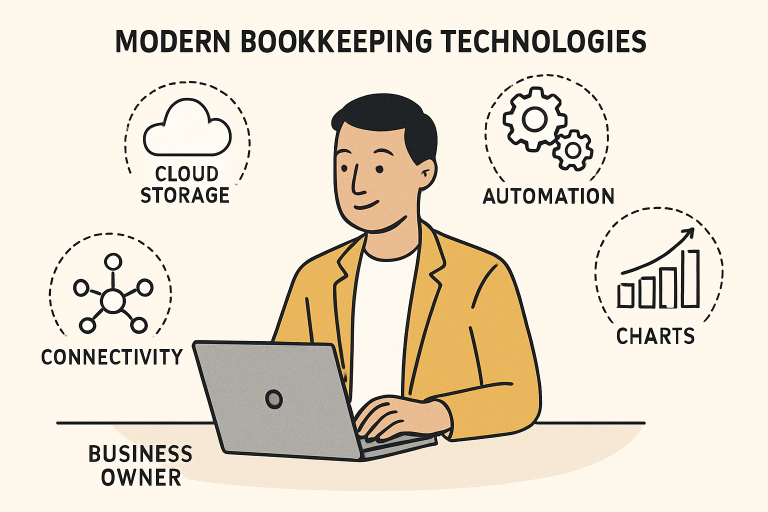
Automation tools are transforming bookkeeping by streamlining repetitive and time-consuming tasks. Platforms like QuickBooks, Xero, and FreshBooks automate data entry, transaction categorization, and reconciliation processes, reducing human error and increasing efficiency. Additionally, Artificial Intelligence (AI) and Machine Learning (ML) are enhancing bookkeeping capabilities by analyzing large datasets and identifying patterns. AI-powered tools can predict cash flow trends, flag anomalies, and provide insights for better decision-making, enabling real-time financial analysis and allowing small businesses to respond quickly to changing economic conditions.
Leveraging Cloud-Based Solutions
Cloud-based bookkeeping solutions offer unparalleled accessibility, enabling business owners and bookkeepers to access financial data from anywhere, at any time. This flexibility is particularly beneficial for small businesses with remote or distributed teams. Cloud platforms facilitate collaboration, enabling multiple users to work on financial records simultaneously and ensuring everyone stays on the same page. Moreover, cloud-based solutions provide real-time updates, ensuring financial data remains current. This immediacy enhances decision-making and enables businesses to monitor their financial health continuously. Real-time data also simplifies tax preparation and compliance by ensuring records are always up to date.
Integrating with Other Business Systems
Modern bookkeeping solutions are increasingly integrating with other business systems, such as Customer Relationship Management (CRM) software, e-commerce platforms, and payroll systems. This integration eliminates the need for manual data entry and ensures consistency across different business functions. For example, sales data from an e-commerce platform can automatically sync with the bookkeeping system, streamlining revenue tracking and reporting. Such seamless connectivity enhances operational efficiency and provides a holistic view of the business’s financial health.
Exploring Blockchain Technology
Blockchain technology is poised to revolutionize bookkeeping by providing a secure and immutable ledger for financial transactions. Each transaction recorded on a blockchain is time-stamped and cannot be altered, ensuring the integrity of economic data. This immutability enhances transparency and reduces the risk of fraud. Additionally, blockchain simplifies auditing by providing a clear, verifiable trail of transactions. Auditors can access a comprehensive and accurate record of financial activities, reducing the time and effort required for audits. This efficiency can result in cost savings for small businesses and increased trust in their financial reporting.
Considering Outsourced Bookkeeping Services
Outsourcing bookkeeping services to specialized firms is becoming a popular trend among small businesses. This approach offers cost-effective solutions by reducing the need for in-house staff and associated expenses. Professional bookkeepers bring expertise and experience, ensuring accurate financial records and regulatory compliance. Outsourcing also allows business owners to focus on core operations while leaving financial management to experts. This strategy can lead to better financial health and informed decision-making.
Implementing Real-Time Financial Dashboards
Modern platforms like FreshBooks or Wave make it easier than ever to visualize profits, expenses, and trends on the fly—so you can make faster, smarter decisions. Real-time financial dashboards provide a comprehensive view of a business’s economic status, enabling proactive management and strategic planning. These tools can be customized to display key performance indicators relevant to the company, facilitating quick assessments and adjustments as needed.
Adopting Embedded Bookkeeping Tools
Embedded bookkeeping tools are integrated directly into business operations, providing seamless financial management without the need for separate accounting software. While these tools can be convenient, it’s important to assess whether they meet the business’s comprehensive needs. In some cases, supplementing embedded tools with traditional bookkeeping methods may be necessary to ensure accuracy and compliance. Business owners should evaluate the capabilities of embedded tools and determine if they align with their financial management requirements.
Staying Informed on Regulatory Changes
Small businesses should stay informed about regulatory changes and ensure their bookkeeping practices align with compliance requirements. Keeping abreast of tax laws, financial reporting standards, and industry-specific regulations is crucial to avoid penalties and maintain good standing. Regular consultations with financial advisors or accountants can help businesses navigate the complex regulatory landscape and implement necessary adjustments to their bookkeeping practices.
In conclusion, adopting modern bookkeeping techniques is essential for small businesses aiming to enhance efficiency, accuracy, and strategic decision-making. By embracing automation, leveraging cloud-based solutions, integrating with other business systems, exploring blockchain technology, considering outsourced services, implementing real-time dashboards, adopting embedded tools, and staying informed on regulatory changes, small businesses can position themselves for sustainable growth and success.

