How to Choose Between Cross Cut and Micro Cut Shredders
Document security matters more than ever in today’s world. Whether you run a business or simply want to protect your personal information at home, choosing the right paper shredder is essential. This guide will walk you through everything you need to know about selecting between cross cut and micro cut shredders for your specific needs.
Understanding Different Shredder Types
Paper shredders come in various styles, each offering different levels of security. The three main categories are strip cut, cross cut, and micro cut models. Each type processes documents differently and provides varying degrees of protection.
Strip cut machines are the most basic option. They slice paper into long vertical strips. However, these strips can potentially be reassembled by determined individuals. Therefore, they offer minimal security for sensitive information.
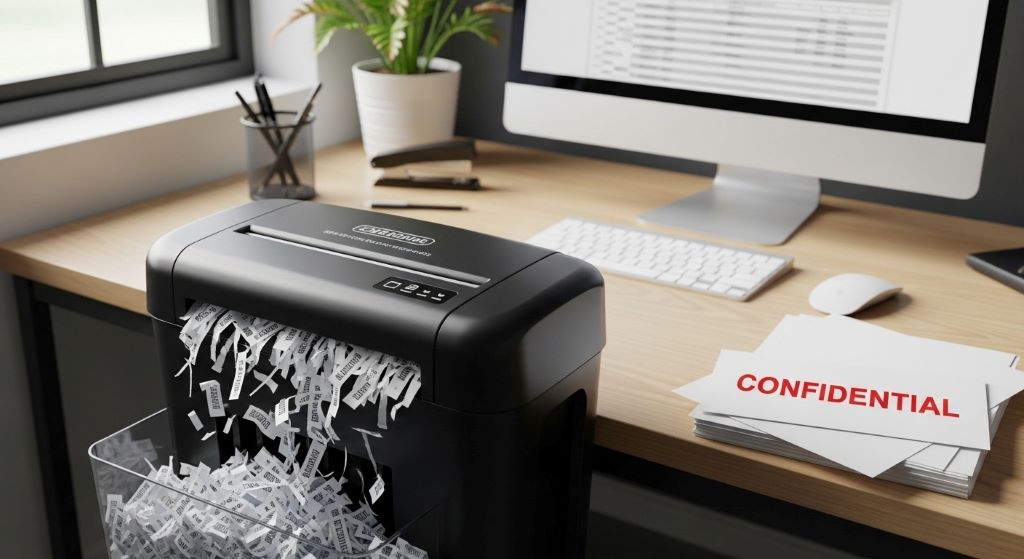
Cross cut shredders take security further by cutting paper both vertically and horizontally. This creates small rectangular or diamond-shaped pieces that are much harder to reconstruct. They strike a balance between security and practicality for most users.
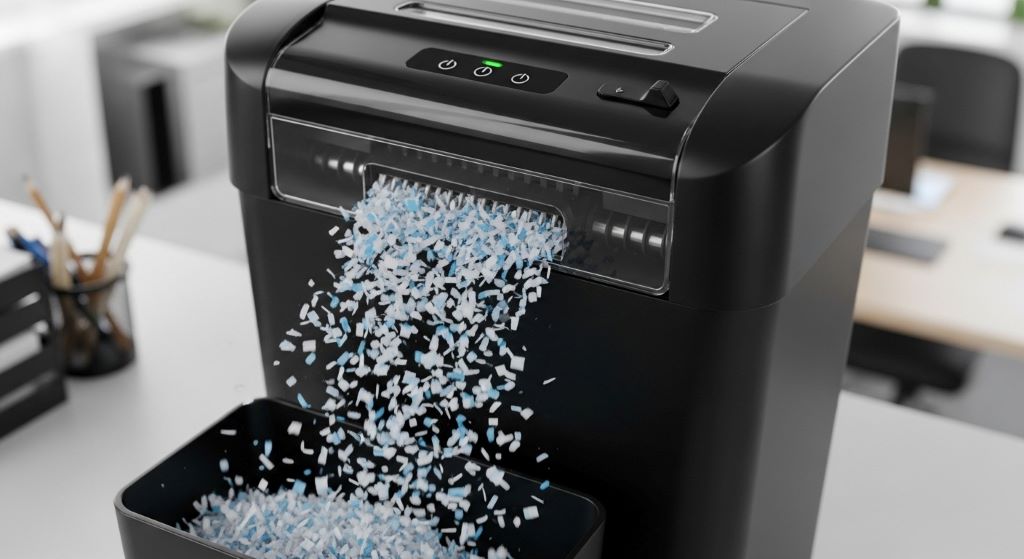
Micro cut shredders provide the highest level of security available for home and office use. They produce tiny confetti-like particles that make document reconstruction virtually impossible. These machines are ideal for highly sensitive materials.
Evaluating Your Security Needs
Before purchasing a shredder, assess what types of documents you need to destroy. Personal mail and everyday paperwork require less security than financial records or confidential business documents. Additionally, consider any industry regulations that might apply to your situation.
Healthcare providers must comply with HIPAA regulations when disposing of patient information. Financial institutions face similar requirements under various privacy laws. Even small businesses handling customer data should prioritize document security to maintain trust and avoid legal issues.
Home users typically need moderate security for bills, credit card offers, and tax documents. However, anyone dealing with identity theft concerns might prefer maximum protection. Think about the potential consequences if someone accessed your discarded information.
Security Levels Explained
Shredders are classified by security levels ranging from P-1 to P-7. Understanding these ratings helps you make an informed decision about which machine meets your requirements.
P-1 and P-2 levels include basic strip cut shredders. These provide minimal security and are suitable only for non-sensitive documents. Most people should avoid these for personal information.
P-3 and P-4 levels encompass standard cross cut models. They offer good security for typical home and small business needs. The comparison between strip cut vs cross cut clearly shows the advantage of these higher-rated machines for protecting personal data.
P-5 through P-7 levels represent micro cut and specialized high-security shredders. Government agencies and organizations handling extremely sensitive data typically require these levels. The micro cut benefits include superior protection against identity theft and corporate espionage.
Performance Considerations
Beyond security ratings, several performance factors affect your shredding experience. Sheet capacity determines how many pages you can shred at once. Higher capacities save time but often come with higher price tags.
Run time indicates how long the machine can operate before needing a cooldown period. Continuous-duty shredders handle large volumes without stopping, while others require breaks after several minutes. Consider your typical shredding sessions when evaluating this feature.
Bin size matters for convenience. Larger bins mean fewer interruptions to empty waste. However, bigger bins also mean heavier bags to carry when full. Balance capacity with practicality based on your physical workspace and strength.
Noise levels vary significantly between models. Some machines operate quietly enough for open office environments, while others are quite loud. If you share workspace with others, quieter operation becomes more important.
Cross Cut Shredder Advantages
Cross cut shredders offer several compelling benefits for average users. They provide solid security without excessive cost or maintenance requirements. Most models handle standard paper loads efficiently and fit comfortably in home offices.
These machines typically shred faster than micro cut models because they make fewer cuts per page. This speed advantage matters when processing large stacks of documents regularly. Additionally, they consume less power during operation.
The waste they produce compacts reasonably well in collection bins. This means you empty the bin less frequently compared to strip cut models. However, the pieces are still small enough to prevent easy reconstruction of sensitive information.
Maintenance requirements remain minimal with cross cut shredders. Regular oiling keeps the cutting mechanism running smoothly. Most quality models last several years with proper care and reasonable use.
Micro Cut Shredder Benefits
Micro cut shredders excel at providing maximum document security. They transform paper into tiny particles measuring just a few millimeters. This level of destruction makes reconstruction extremely difficult, even for skilled professionals with time and resources.
Organizations handling highly confidential information benefit most from these machines. Law firms, medical offices, and financial institutions often choose micro cut models to protect client privacy. The peace of mind they provide justifies the additional investment.
Another advantage comes from waste volume reduction. Because the particles are so small, they compact more efficiently than larger pieces. This means fewer trips to empty the bin, despite the bin often being smaller on these compact machines.
Modern micro cut shredders have improved significantly in speed and reliability. While they still operate more slowly than cross cut models, the gap has narrowed considerably. Many current models handle everyday shredding tasks quite efficiently.
Comparing Costs and Value
Price differences between shredder types can be substantial. Basic cross cut models start around fifty dollars for personal use. Commercial-grade versions range from several hundred to over a thousand dollars depending on capacity and features.
Micro cut shredders command premium prices due to their sophisticated cutting mechanisms. Entry-level home models begin around one hundred dollars. Professional machines easily exceed several thousand dollars for high-volume applications.
However, price alone doesn’t tell the complete story. Consider the value of the information you’re protecting when making budget decisions. Spending extra for appropriate security often proves worthwhile compared to potential identity theft consequences.
Operating costs also factor into long-term value. More complex shredders may require more frequent blade sharpening or maintenance. Energy consumption varies between models, though this rarely represents a significant expense for home users.
Special Features to Consider
Modern shredders include various features that enhance convenience and functionality. Jam prevention technology automatically reverses paper when it detects potential blockages. This feature reduces frustration and extends machine life.
Some models handle materials beyond paper. They shred credit cards, CDs, DVDs, and even staples without damage. This versatility eliminates the need to remove fasteners before shredding, saving considerable time.
Safety features protect users from accidents. Automatic shutoff prevents operation when the bin is removed or the door opens. This becomes especially important in homes with curious children or pets.
Waste viewing windows let you see when the bin needs emptying without opening the unit. This small convenience prevents overfilling and potential jams. Some advanced models even include sensors that alert you when bins approach capacity.
Making Your Final Decision
Choosing between cross cut and micro cut shredders ultimately depends on your specific circumstances. Assess your security requirements honestly and match them to appropriate shredder capabilities.
For most home users, a quality cross cut shredder provides adequate protection. It balances security, speed, and cost effectively. Unless you handle exceptionally sensitive documents regularly, this level suffices for typical needs.
Businesses should evaluate their document security policies and any regulatory requirements. Professional environments often justify investment in micro cut technology for comprehensive protection. The additional cost becomes negligible compared to potential liability from data breaches.
Consider future needs alongside current requirements. Your situation may change over time. Purchasing slightly more capability than you need today can prevent the need for replacement later. However, avoid overspending on features you’ll never actually use.
Maintenance and Longevity
Proper maintenance extends shredder life significantly. Regular oiling of cutting blades prevents buildup and maintains smooth operation. Most manufacturers recommend oiling after every few uses or based on sheet count.
Avoid overloading the machine beyond its rated capacity. Forcing too many sheets at once causes jams and strains the motor. Taking an extra moment to feed appropriate amounts prevents damage and extends equipment life.
Empty waste bins before they overflow. Overfilled bins can cause paper to back up into the cutting mechanism. This creates jams and potentially damages the shredder. Regular emptying also reduces fire risk from paper dust accumulation.
Store shredders in appropriate environments. Excessive humidity can damage electronic components and cause paper to stick together before shredding. Keep machines in climate-controlled spaces when possible for optimal performance and longevity.
Environmental Considerations
Shredded paper can typically be recycled with regular paper waste. However, check with your local recycling facility about any specific requirements. Some areas prefer certain particle sizes or have restrictions on mixed materials.
Micro cut particles sometimes face recycling challenges due to their tiny size. They can slip through sorting screens at recycling facilities. Nevertheless, many programs still accept them. Contact your waste management provider for specific guidance.
Consider the environmental impact of your shredder choice. More powerful machines consume more electricity during operation. However, higher security might mean you can recycle shredded documents instead of disposing of them as trash, which offers environmental benefits.
Some manufacturers now produce shredders using recycled materials and energy-efficient motors. If environmental responsibility matters to you, research brands committed to sustainable manufacturing practices. These options often cost slightly more but align with green values.
Conclusion
Selecting the right shredder involves balancing security needs, budget constraints, and practical considerations. Cross cut shredders serve most home and small business users well, offering solid protection at reasonable prices. They shred quickly and require minimal maintenance while providing security sufficient for typical documents.
Micro cut shredders deliver maximum protection for highly sensitive information. They excel in professional environments where document security is paramount. Though more expensive and slightly slower, they provide unmatched peace of mind for confidential materials.
The comparison of strip cut vs cross cut clearly demonstrates why cross cut represents the minimum security level for personal information. Meanwhile, understanding micro cut benefits helps you decide if that additional protection justifies the investment for your situation.
Evaluate your specific requirements carefully. Consider what information you need to protect, how often you shred, and your budget constraints. Match these factors to appropriate shredder specifications for the best long-term value and security.
Frequently Asked Questions
Can cross cut shredders handle credit cards and CDs?
Many cross cut shredders include separate slots for destroying credit cards and optical media. However, not all models offer this feature. Check specifications before purchasing if you need to shred items beyond paper. Models with this capability typically cost slightly more but provide valuable versatility.
How often should I oil my shredder?
Most manufacturers recommend oiling cutting blades after every two hours of use or approximately every dozen shredding sessions for home users. Some models feature automatic oiling systems that eliminate manual maintenance. Regular oiling prevents jamming and extends the life of cutting mechanisms significantly.
Is micro cut really necessary for home use?
For most households, cross cut security proves sufficient for typical documents like bills and bank statements. However, if you handle highly sensitive information or have experienced identity theft, micro cut technology offers additional peace of mind. Assess your personal risk tolerance and document sensitivity when deciding.
What causes shredder jams and how can I prevent them?
Jams typically result from overloading the machine beyond its sheet capacity or feeding folded or wrinkled paper. Prevent jams by respecting capacity limits, removing paper clips and staples when required, and feeding paper evenly. Regular blade oiling also reduces jam frequency significantly.
Can I recycle shredded paper from micro cut shredders?
Most recycling programs accept shredded paper regardless of particle size. However, some facilities prefer larger pieces because tiny particles can escape sorting equipment. Contact your local recycling center for specific guidelines. Some communities offer special bins or programs for shredded paper collection.
Related Topics:
Accentuate your office with contemporary reception chairs
Practical Steps for Enhanced Office Productivity