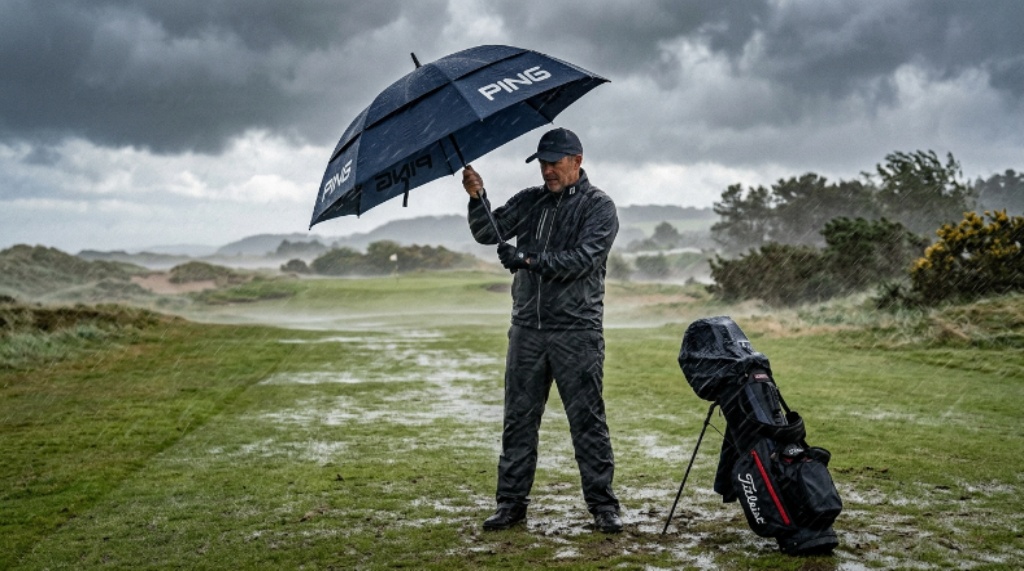
Best Windproof Golf Umbrellas for Stormy Golf Days
Every golfer knows the feeling. You are midway through a round, the sky turns grey, and within minutes the wind picks up and the rain starts hammering down. A flimsy umbrella in that situation is worse than useless. It flips inside out, soaks your gear, and ruins your focus entirely.
The right golf umbrella, however, changes that experience completely. A well-built windproof umbrella keeps you dry, holds its shape in strong gusts, and lets you focus on the game rather than battling your own equipment. The challenge is knowing which ones actually deliver on that promise.
This guide covers everything you need to know about finding the best windproof golf umbrella for stormy conditions. From construction details to key features, you will finish this article ready to make a smart and confident choice.
Why Ordinary Umbrellas Fail on the Golf Course
Most people own at least one standard umbrella. They work well enough for a quick walk to the car or a short wait at a bus stop. However, they are simply not built for the open, exposed conditions of a golf course.
Golf courses are wide open spaces. There are no buildings or trees to break the wind across the fairway. Gusts can change direction suddenly and hit with surprising force. A standard umbrella has a single-layer canopy stretched over a rigid frame. When wind hits it from underneath, the canopy acts like a sail and either flips inside out or pulls you off balance.
Additionally, most consumer-grade umbrellas are too small to protect both you and your equipment. A golf bag contains expensive clubs, gloves, and other gear that you need to keep dry. Therefore, size, structure, and wind resistance are the three factors that matter most when choosing a golf umbrella.
What Makes a Golf Umbrella Windproof
Not all golf umbrellas marketed as windproof are built the same way. Understanding what actually makes an umbrella wind-resistant helps you avoid misleading claims and focus on what counts.
Fiberglass Shaft and Frame
The shaft and frame of a golf umbrella take the brunt of wind pressure. Steel shafts are heavy and prone to snapping under stress. Fiberglass, on the other hand, is lighter and far more flexible. It bends under pressure rather than breaking. This flex-and-return quality is what allows a fiberglass-framed umbrella to survive gusts that would destroy a steel-framed one.
Look for umbrellas that use fiberglass throughout the entire frame, not just the main shaft. Fiberglass ribs and spokes distribute wind stress more evenly and prevent the frame from collapsing under uneven pressure.
Vented Canopy Design
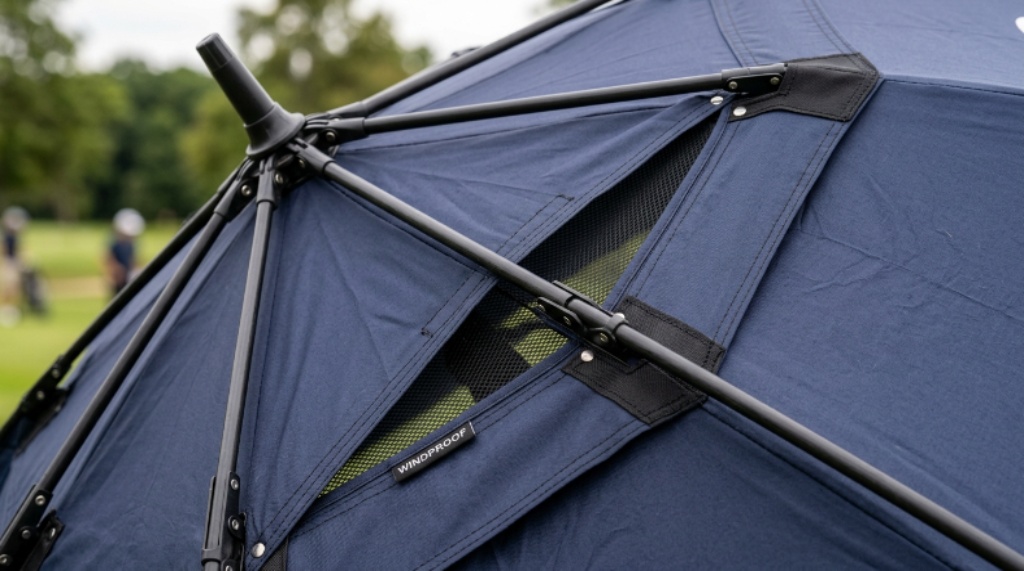
A vented canopy is one of the most important wind-resistance features in any golf umbrella. Vents are gaps built into the canopy that allow wind to pass through rather than build up pressure underneath. This simple design principle dramatically reduces the chance of inversion.
The most effective version of this is the double canopy golf umbrella. A double canopy golf umbrella has two layers of fabric with an open channel between them. Wind enters through the lower layer and exits through the gap between the two layers. This relieves pressure on the entire canopy and keeps the umbrella stable in conditions that would flip a single-canopy design instantly.
Canopy Size and Coverage
Golf umbrellas are larger than standard ones for good reason. A canopy measuring 60 to 68 inches in diameter is common for golf-specific models. This size provides enough coverage for the golfer and their bag simultaneously.
However, larger canopies also catch more wind. Therefore, the best golf umbrellas for stormy days combine a large canopy with vented construction to manage wind resistance without sacrificing coverage.
Handle and Grip Quality
A rubberized or contoured grip makes a real difference when you are holding an umbrella in wet, windy conditions. A slippery handle is not just frustrating. It is a safety concern on a golf course where a gust can turn a poorly gripped umbrella into a projectile. Look for handles with ergonomic shaping and a non-slip coating that remains secure even when your hands are wet.
The Double Canopy Design Explained
The double canopy golf umbrella deserves a closer look because it represents the most significant engineering advancement in golf umbrella design. It is the feature that most clearly separates a recreational umbrella from one built for real storm conditions.
In a double canopy design, the outer canopy sits over a slightly smaller inner canopy. The gap between them creates a wind channel. When a strong gust strikes, air flows through this channel rather than pushing against a single flat surface. The result is a stable, controlled umbrella that resists inversion far better than any single-layer alternative.
Additionally, the double canopy design tends to shed water more efficiently. Rain hits the outer canopy and runs off before it can reach the inner layer. This keeps you drier even in heavy downpours. The two-layer construction also adds a degree of insulation, which is useful on cold, wet autumn and winter rounds.
Many of the most respected names in golf equipment now produce double canopy models as their flagship umbrella. This is no longer a niche feature. It has become the benchmark for serious golfers who play in all weather.
Key Features to Look for When Buying
Shopping for a storm-proof umbrella can feel confusing with so many options available. These are the features worth focusing on before making a purchase.
- Fiberglass frame and ribs for flexibility under pressure
- Double canopy or vented single canopy for wind relief
- Canopy diameter of at least 60 inches for full coverage
- Auto-open mechanism for quick deployment in sudden rain
- UV-resistant fabric that also doubles as sun protection
- A secure, ergonomic handle with a non-slip grip
- A carry sleeve or strap for easy attachment to a golf bag
Each of these features contributes to both performance and convenience. An umbrella that ticks most of these boxes will serve you reliably across many seasons.
How to Use Your Golf Umbrella Effectively in Wind
Even the best storm-proof umbrella performs better with correct technique. Using it the wrong way reduces its effectiveness and shortens its lifespan.
In strong wind, angle your umbrella into the direction of the gusts rather than holding it straight up. Tilting the canopy toward the wind reduces the surface area the gusts push against. This lowers the risk of inversion and reduces the effort needed to hold the umbrella steady.
Additionally, avoid holding your umbrella fully extended in a crosswind when you are not actively using it for rain cover. Lower it slightly when walking between shots. This keeps the canopy from acting as a sail and makes walking far more manageable in strong gusts.
When storing your umbrella after a round, always let it air dry before placing it in the sleeve. Packing a wet umbrella promotes mildew growth and can weaken the fabric over time. A few minutes of air drying extends the lifespan of any golf umbrella considerably.
Caring for Your Golf Umbrella Between Rounds
A quality golf umbrella is an investment. Treating it well keeps it performing at its best for several years.
After every wet round, open the umbrella fully and leave it to dry in a ventilated space. Avoid drying it in direct sunlight for extended periods, as prolonged UV exposure can degrade the canopy fabric over time. However, a few minutes of sun to speed up drying will not cause any lasting damage.
Inspect the frame periodically for bent or cracked ribs. A single damaged rib compromises the structural integrity of the entire canopy. Many manufacturers sell replacement ribs, making a minor repair far more practical than a full replacement.
Clean the canopy occasionally with a damp cloth and mild soap to remove dirt and salt residue from course conditions. Avoid harsh cleaning products that can strip the water-repellent coating from the fabric. A simple rinse and gentle wipe is usually all that is needed.
Budget vs. Premium: What Should You Spend
Golf umbrellas range from around $20 for basic models to over $100 for premium constructions. The price difference reflects real differences in materials, wind resistance, and longevity.
Budget models may include some golf-specific features but often use lower-grade frames that struggle in genuinely stormy conditions. They may perform well in light rain but fail quickly when the wind picks up seriously.
Mid-range options between $40 and $70 often represent the best overall value. At this price point, you can expect fiberglass framing, a vented or double canopy, and reliable construction that holds up across multiple seasons. For most recreational golfers, this range offers everything they need.
Above $70, you enter professional-grade territory. These umbrellas use premium fabrics, reinforced frames, and precision-engineered venting systems. They are built for golfers who play frequently in harsh conditions and want an umbrella that performs flawlessly every time.
Therefore, set your budget based on how often you play in wet weather and how long you want the umbrella to last.
Conclusion
Playing golf in stormy weather does not have to mean a miserable round. The right umbrella transforms bad conditions from a frustrating obstacle into a manageable inconvenience. Focus on fiberglass construction, vented canopy design, and adequate size when making your choice.
A double canopy golf umbrella offers the best wind resistance available in a golf umbrella today. It handles gusts, sheds rain efficiently, and holds its shape when cheaper options would already have flipped inside out. Pair it with correct usage technique and proper care, and it will serve you through many seasons of unpredictable weather.
Whether you spend $40 or $100, choosing a purpose-built storm-proof umbrella is one of the smartest upgrades any serious golfer can make. Your clubs, your clothing, and your scorecard will all benefit from staying dry when the weather turns.
Frequently Asked Questions
What size golf umbrella is best for stormy conditions?
A canopy diameter of 60 to 68 inches is ideal. This size covers both the golfer and their bag comfortably. Larger canopies catch more wind, so look for models that combine size with a vented or double canopy design to manage wind resistance effectively.
Are double canopy golf umbrellas really more windproof than single canopy ones?
Yes, significantly. The gap between the two canopy layers allows wind to pass through rather than building pressure underneath. This dramatically reduces the risk of inversion and keeps the umbrella stable in gusts that would flip a single-canopy design inside out.
How long should a quality golf umbrella last?
A well-made fiberglass-framed golf umbrella, properly cared for, can last five to ten years. Cheaper models with steel frames typically last one to three seasons before the frame weakens or the canopy fabric deteriorates.
Can I use a golf umbrella for activities other than golf?
Absolutely. Golf umbrellas are among the most capable umbrellas available. Their size and wind resistance make them excellent for spectating at outdoor events, walking dogs in bad weather, or any situation where you need serious rain and wind protection.
What should I do if a rib on my golf umbrella bends or breaks?
First, check whether the manufacturer sells replacement ribs. Many premium brands do, and replacing a single rib is straightforward and cost-effective. If replacement ribs are unavailable, contact the manufacturer directly, as many quality brands offer a warranty or repair service for structural damage.