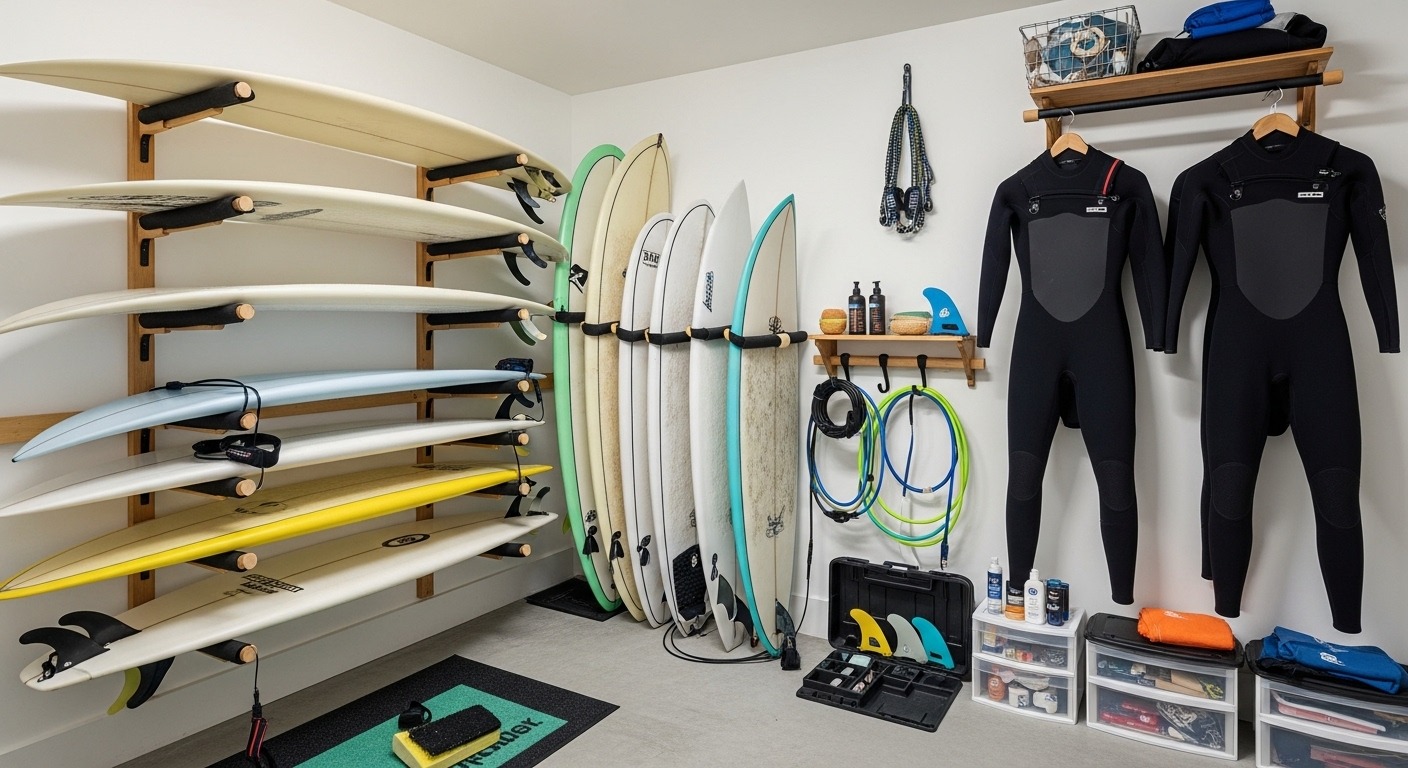
How to Store Surf Equipment Without Damage
Surf gear is built for waves, saltwater, and impact. But improper storage can shorten its lifespan faster than rough surf. Many surfers invest hundreds or even thousands of dollars in boards, fins, leashes, and wetsuits, yet overlook proper storage practices. The result? Warped surfboards, rusted fins, damaged accessories, and equipment that fails when you need it most.
Storing surf equipment correctly protects your investment and ensures your gear performs consistently in the water. Whether you are a beginner with a single board or an experienced surfer with a full collection of accessories, a proper storage system matters. Using a surf gear bag and a reliable surf accessories organizer can prevent scratches, corrosion, and loss of small equipment.
This guide explains how to store surf equipment safely using proven methods. You will learn how to protect surfboards, organize accessories, manage wetsuits, and avoid common mistakes. The goal is simple: keep your gear clean, organized, and ready for your next surf session.
What Is the Best Way to Store Surf Equipment?
Short answer: The best way to store surf equipment is to clean it after use, dry it completely, protect it from sunlight and heat, and organize accessories using a surf gear bag or surf accessories organizer.
Surf equipment includes multiple components: boards, fins, leashes, wax, wetsuits, traction pads, and repair kits. Each item has different storage requirements, but the core principles remain the same.
- Keep equipment dry to prevent corrosion and mold
- Avoid direct sunlight or extreme heat
- Store accessories in a dedicated organizer
- Protect surfboards from pressure and impact
- Separate wet items from dry gear
According to surfboard manufacturing guidelines, prolonged exposure to heat above 120°F (49°C) can damage epoxy or polyester boards. Leaving a surfboard inside a hot car can cause delamination, where the fiberglass separates from the foam core.
Proper storage protects not only the board but also small accessories that are easy to lose. This is where a surf gear bag and surf accessories organizer become essential.
Why Is Proper Surf Equipment Storage Important?
Short answer: Proper storage prevents physical damage, corrosion, UV degradation, and premature wear on surf equipment.
Surf gear faces harsh environmental conditions. Saltwater, sand, and sunlight can degrade materials quickly.
Common issues caused by poor storage include:
- Rust on fin screws and metal components
- Warped surfboards from heat exposure
- Mold growth on wetsuits
- Lost accessories such as fin keys or wax combs
- Scratches from stacking boards incorrectly
For example, a 2023 surf equipment retailer study found that over 35% of surfboard warranty claims were related to heat damage or improper storage rather than manufacturing defects.
This highlights a simple truth: most equipment damage happens outside the water.
How Should You Store Surfboards Safely?
Short answer: Store surfboards horizontally on racks or vertically with padding in a cool, shaded location.
Surfboards are the most valuable piece of surf equipment. Proper positioning protects the board from pressure dents, warping, and structural damage.
Recommended Surfboard Storage Methods
- Wall-mounted surfboard racks
- Freestanding board racks
- Padded vertical storage stands
- Board bags for travel and protection
A rack system keeps boards elevated and prevents contact with hard surfaces. Padding reduces pressure points that could dent the board.
| Storage Method | Advantages | Best For |
|---|---|---|
| Wall Rack | Saves space | Home garages or surf rooms |
| Vertical Rack | Easy access | Small apartments |
| Board Bag | Protection during transport | Travel and outdoor storage |
Never stack boards directly on top of each other without padding. Pressure over time can deform the foam core.
How Do You Organize Small Surf Accessories?
Short answer: Use a surf accessories organizer or surf gear bag with compartments to store fins, leashes, wax, tools, and repair kits.
Small surf accessories often get misplaced because they are stored loosely in backpacks or cars.
A dedicated surf accessories organizer solves this problem by separating equipment into labeled compartments.
Items That Should Be Organized Together
- Surfboard fins
- Fin keys and screws
- Leashes
- Surf wax
- Wax combs
- Repair kits
- Traction pads
A well-designed surf gear bag typically includes waterproof compartments and mesh pockets. This allows wet accessories to dry while keeping tools and hardware protected.
Professional surfers often maintain multiple organizers for different board setups. This speeds up preparation and prevents lost equipment.
What Is a Surf Gear Bag and Why Do Surfers Use It?
Short answer: A surf gear bag is a specialized storage bag designed to organize and transport surf accessories safely.
Unlike standard backpacks, surf gear bags are designed with waterproof materials, reinforced stitching, and dedicated compartments.
Typical features include:
- Water-resistant fabric
- Separate fin pockets
- Tool compartments
- Ventilation panels
- Shoulder straps for transport
These features prevent corrosion and allow surfers to carry essential gear in one place.
For surfers who travel frequently, a surf gear bag reduces setup time and ensures no equipment is forgotten before a session.
How Should You Store Wetsuits and Surf Clothing?
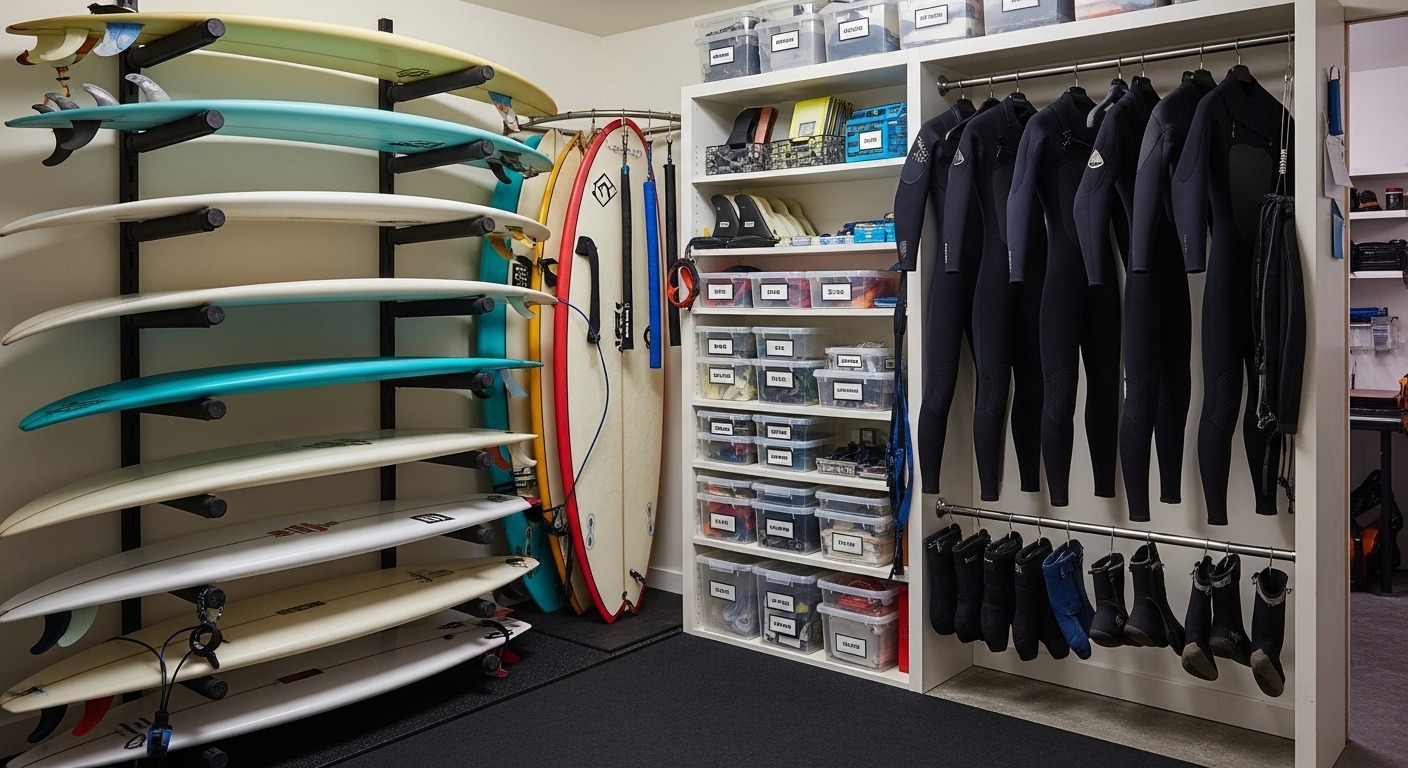
Short answer: Rinse wetsuits with fresh water, dry them completely, and hang them on wide hangers in a ventilated area.
Wetsuits require careful storage because neoprene can stretch or degrade when stored incorrectly.
Best Practices for Wetsuit Storage
- Rinse with fresh water after every session
- Dry inside-out first
- Hang using wide neoprene hangers
- Avoid direct sunlight
- Store in a ventilated closet or rack
Improper drying can cause odor, bacteria growth, and neoprene damage.
Research from diving equipment manufacturers shows that proper rinsing and drying can extend wetsuit lifespan by 30–40%.
Where Should You Store Surf Equipment at Home?
Short answer: Store surf equipment in a cool, dry location such as a garage, storage room, or surf rack area.
The environment where equipment is stored matters as much as the storage method.
Ideal storage conditions include:
- Temperature below 30°C (86°F)
- Low humidity
- No direct sunlight
- Good ventilation
Many surfers convert part of their garage into a dedicated surf storage space.
This setup usually includes:
- Wall racks for boards
- Hooks for wetsuits
- Shelves for accessories
- A surf accessories organizer
- A surf gear bag for travel
This system keeps gear accessible while protecting it from environmental damage.
What Are Common Mistakes When Storing Surf Equipment?
Short answer: The most common mistakes include leaving boards in hot cars, storing wet gear, stacking boards without protection, and misplacing accessories.
These mistakes lead to avoidable equipment damage.
Top Storage Mistakes Surfers Make
- Leaving boards in vehicles during hot weather
- Storing wet wetsuits in sealed bags
- Throwing accessories loosely into backpacks
- Exposing boards to direct sunlight
- Ignoring corrosion on metal components
A simple system using a surf gear bag and surf accessories organizer prevents most of these problems.
Organization is often the difference between gear that lasts for years and gear that fails within months.
Conclusion: How Can You Protect Your Surf Gear Long-Term?
Surf equipment represents both financial investment and passion for the sport. Protecting it requires simple habits: cleaning gear after use, keeping it dry, organizing accessories, and storing boards in safe environments.
Using a reliable surf gear bag ensures essential items stay together and protected. A dedicated surf accessories organizer prevents small tools and fins from being lost or damaged.
These simple storage practices extend the life of surfboards, wetsuits, and accessories while keeping your equipment ready for every session.
If you want to protect your surf investment, start by organizing your gear today. Create a storage system that works for your space, invest in proper organizers, and make surf equipment care part of your routine.
The result is simple: better-performing gear, fewer repairs, and more time enjoying the waves.
Frequently Asked Questions
How should surfboards be stored when not in use?
Surfboards should be stored on padded racks in a cool, shaded environment. Avoid heat, pressure, and direct sunlight to prevent warping or delamination.
Can you store surfboards vertically?
Yes. Surfboards can be stored vertically with padding on the floor and wall to prevent pressure dents. This method works well in small spaces.
What is the purpose of a surf gear bag?
A surf gear bag helps organize surf accessories such as fins, wax, leashes, and repair tools. It protects equipment and simplifies transport.
How do you prevent rust on surf fins?
Rinse fins and metal components with fresh water after use, dry them thoroughly, and store them in a surf accessories organizer to prevent corrosion.
Where should wetsuits be stored?
Wetsuits should be stored on wide hangers in a ventilated space away from direct sunlight. This prevents stretching and material degradation.
Can surf equipment be stored in a garage?
Yes. A garage is a suitable location if it stays cool and dry. Using wall racks, storage hooks, and organizers keeps equipment protected.
What temperature damages surfboards?
Surfboards can be damaged at temperatures above 49°C (120°F). Heat can cause delamination or soft spots in the board.
Read More Also: Why the Forest of Dean is a Great Place for an Autumn Getaway
Find out: Sunset Picnics NYC Free Group Invites