How to Pick Top Dog Toys for Apartment Dogs
Living in an apartment with a dog is a joy, but it comes with a unique challenge: keeping your furry friend entertained without driving your neighbors crazy. The wrong toy can mean endless barking, destructive chewing, or a bored pup with pent-up energy. You need gear that suits smaller spaces, respects shared walls, and still provides the mental and physical stimulation your dog craves. That’s why finding the top dog toys for apartment dogs requires a different strategy than shopping for a dog with a big backyard. This guide breaks down exactly what to look for, which toys are worth your money, and which ones to leave on the shelf.
Key Takeaways
- Prioritize quiet toys like rubber chewers and soft plush options to maintain good relationships with neighbors.
- Interactive puzzle toys and snuffle mats are essential for burning mental energy when physical space is limited.
- Rotate a small selection of toys (5-7) weekly to keep your dog engaged without cluttering your apartment.
- Avoid hard plastics, squeaky toys, and balls that bounce erratically, as they are noise hazards and can damage walls or furniture.
- Durability and size are critical; choose toys that are appropriately sized for your dog’s breed and chewing strength to prevent hazards.
Why Apartment Living Changes the Toy Rules
In a house with a yard, a dog can chase a ball for hours or entertain itself by patrolling the fence line. An apartment dog doesn’t have that luxury. The environment is confined, and the margins for error are smaller. A toy that is perfect for a suburban backyard—like a hard lacrosse ball—can become a disaster in a 700-square-foot flat. The constant thudding on hardwood floors and the risk of breaking a window or a TV screen make certain toys impractical. Furthermore, your dog’s energy doesn’t disappear just because the walls are thin. If you don’t address that energy with the right tools, your dog will find its own ways to burn it off, which often involves barking at hallway noises or chewing your baseboards. You need toys that foster calm behavior and independent play without requiring a massive open space.
What Makes a Toy “Top Tier” for Small Spaces?
Selecting toys for an apartment isn’t just about picking the most popular item at the pet store. It’s about strategic selection based on your living constraints and your dog’s specific needs. Here are the non-negotiable criteria you should use to evaluate any potential purchase.
Noise Level: The Silent Factor
This is the single most important factor for apartment dwellers. Squeaky toys are a common default, but they can be a nightmare for neighbors sharing a ceiling or floor with you. Look for toys that are either completely silent or produce only a soft, low rumble. Heavy rubber toys (like those from Goughnuts or West Paw) make minimal noise when dropped on carpet and a dull thud on wood. Avoid anything with a high-pitched squeaker unless you have a detached house. If you need a mentally stimulating option, puzzle toys and snuffle mats are completely silent because they don’t involve tossing or chewing loudly.
Durability vs. Gentleness
You need a balance. If your dog is a heavy chewer, you need tough rubber. However, you also need to protect your floors and walls. Hard nylon bones or antlers are durable but can scratch hardwood floors when your dog drops them. They also carry a risk of chipping teeth if used too aggressively. In an apartment, a better choice is a “chewable” rubber toy that has a little give—it’s easier on your dog’s teeth and less likely to damage your security deposit.
Space Efficiency and Size
You don’t have infinite storage. Giant tug ropes or oversized plush toys take up valuable floor space and are hard to clean in a small washer. For apartments, medium-sized toys (approximately 6–10 inches long) are usually ideal. They are big enough to be safe but small enough to be tucked away in a toy basket. Also, consider toys that serve double duty—for example, a rubber toy that can be stuffed with treats works for chewing, fetching, and mental enrichment.
The Top Toy Categories for Apartment Dogs
Indoor play is vital for keeping an apartment dog mentally sharp and physically exercised, but true well-being goes beyond physical activity. While engaging puzzle toys, soft squeakers, and interactive feeders prevent boredom within smaller living spaces, active play can also expose sensitive paws and coats to indoor allergens. If frequent play leads to redness or persistent itching, knowingantiseptic antifungal dog shampoo helps treat skin infections ensures your pet stays comfortable, healthy, and ready for their next indoor session.
Interactive Puzzle Toys: The Energy Burners
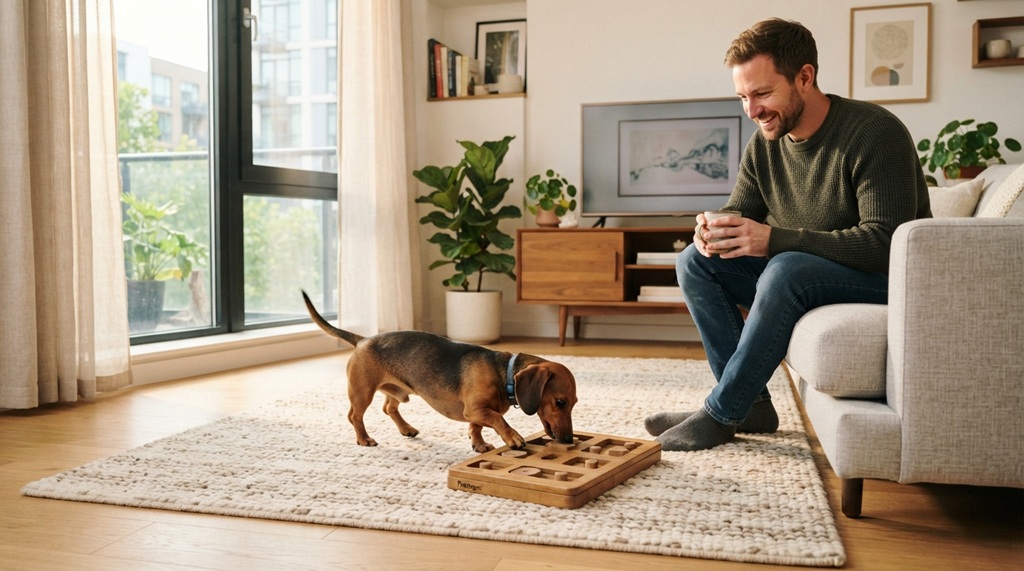
Physical exercise is limited in an apartment, so mental exercise becomes paramount. Puzzle toys are the best tool for this. They require your dog to figure out how to get treats out of sliding compartments, under lids, or from within a complex structure. A 15-minute puzzle session can be as tiring for a dog as a 30-minute walk. Look for puzzles like the Nina Ottosson range or simpler treat-dispensing balls. These toys keep your dog engaged, quiet, and satisfied while you’re working from home or watching TV.
Snuffle Mats: The Foragers
Snuffle mats are fabric mats with long strands where you hide kibble or treats. Dogs use their noses to find the food, tapping into their natural foraging instincts. This is a fantastic activity for apartment dogs because it requires zero space and makes zero noise. It also slows down fast eaters and provides a calming activity that can help reduce anxiety, especially during thunderstorms or fireworks.
Soft Rubber Chew Toys: The Floor-Friendly Option
Choose toys made from soft, flexible rubber (like those from West Paw or Planet Dog). These are durable enough to withstand aggressive chewers but soft enough to be gentle on teeth and quiet on floors. The “squish” factor also provides a satisfying chewing sensation for dogs who are mouthy. You can even stuff these hollow rubber toys with peanut butter or frozen broth to extend the play session. Unlike hard plastic or nylon, these won’t scuff your walls or make your downstairs neighbor hate you.
Which Toys to Avoid in an Apartment Setting
Knowing what to avoid is just as important as knowing what to buy. Many popular toys are simply incompatible with apartment living. Here is a list of common offenders and why you should skip them.
| Toy Type | Why to Avoid in an Apartment | Better Alternative |
|---|---|---|
| Hard Plastic Balls (e.g., Lacrosse) | Bounce erratically, hit walls, create loud thudding on floors, and risk breaking valuables. | Fabric “flat” fetch toys or soft rubber balls. |
| Squeaky Plush Toys | High-pitched squeaking is annoying to neighbors and encourages continuous squeaking. | Quiet plush toys or rubber toys without squeakers. |
| Antlers / Hard Nylon Bones | Scratch hardwood floors, are extremely loud when dropped, and pose a dental fracture risk. | Soft rubber chew toys that are “give” under pressure. |
| Ultra-Small Toys | Easily lost under furniture, pose a choking hazard, and are easily thrown over balconies. | Medium-sized toys (around 6-8 inches) that are too large to swallow. |
Generally, if a toy is extremely hard, extremely loud, or very small, it’s a bad fit for your apartment. Stick with toys that are flexible, dishwasher-safe, and large enough to be safe but small enough to be stored easily.
How to Rotate Toys for Long-Term Engagement
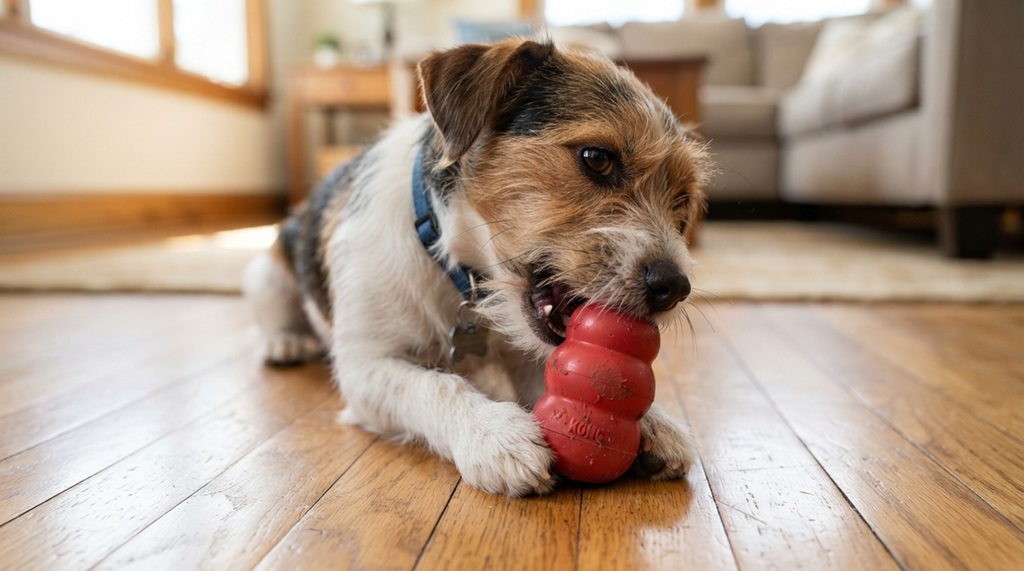
One of the biggest mistakes apartment dwellers make is leaving all toys out at once. In a small space, this creates clutter, and the novelty wears off quickly. A dog who sees the same ten toys every day gets bored fast. Instead, implement a rotation system. Keep out only 3-5 toys at a time. Every week, swap them out for the toys you have stored in a closet or bin. When an “old” toy comes back after a week off, it feels brand new to your dog. This keeps your dog interested and entertained without you having to buy new toys constantly. It also makes it easier to keep your apartment tidy, as you constantly have a manageable number of toys to pick up.
Practical Tips for Playtime in Tight Quarters
Even with the perfect toy, the way you play matters just as much as the toy itself. Here are some practical tips to ensure playtime is safe, quiet, and effective inside your apartment.
- Use a “Place” Command: Teach your dog to chew their toys on their designated bed or mat. This protects your floors and gives your dog a clear boundary for where play happens.
- Sweep Before Play: Small debris on the floor can get caught in rubber toys and cause your dog to ingest something harmful. A quick sweep before a play session prevents this.
- Utilize Frozen Stuffed Toys: Freeze a hollow rubber toy filled with wet kibble or yogurt. This creates a “long-lasting” treat that keeps your dog occupied for 20-30 minutes, perfect for when you need a quiet phone call.
- Supervise New Toys: Always supervise your dog the first time you introduce a new toy. This helps you determine if the toy is durable enough for their specific chewing style or if they are trying to swallow pieces.
Frequently Asked Questions
Are puzzle toys better than exercise for apartment dogs?
Not better, but different. While physical exercise is still necessary for bathroom breaks and joint health, mental stimulation is often more effective for tiring out a dog in a small space. Puzzle toys provide cognitive challenges that exhaust a dog’s brain, reducing hyperactivity and boredom barking without needing a large physical area.
Can I give my dog a squeaky toy if I’m on the ground floor?
Yes, but with caution. If you are on the ground floor with no neighbors below, the noise is less of an issue. However, your neighbors on the sides might still hear it through shared walls, especially in modern apartment complexes with thin drywall. If your dog is persistent, it’s still safer to choose a quieter alternative.
What is the best material for quiet dog toys?
Soft, pliable rubber is the best material for quiet play. It absorbs impact, reducing noise when dropped, and it doesn’t have the hard surface that creates a clattering sound. Natural rubber (like latex) is also less likely to cause a loud noise on hard flooring than hard thermoplastics or nylon.
How do I stop my dog from destroying toys too quickly?
If your dog destroys toys within minutes, they are likely too easy to break. Move up to “extreme chewer” lines from brands like West Paw or Goughnuts, which offer lifetime guarantees. Additionally, redirect destructive behavior by using interactive puzzle toys that don’t require durable destruction to get the reward.
How many toys should an apartment dog have?
You should own around 10-15 toys total, but only have 4-5 available at any one time. Storing the rest and rotating them weekly keeps your dog interested and prevents toy fatigue.
Conclusion
Choosing the right toys for your apartment dog is about more than just grabbing something cute from the shelf. It’s about adapting to your environment to ensure your dog is happy, your belongings are safe, and your neighbors remain friendly. Focus on quiet, durable, and mentally engaging options like puzzle toys, snuffle mats, and soft rubber chews. Avoid hard plastics and loud squeakers, and remember to rotate your dog’s playthings regularly to keep things exciting. By being strategic about your choices, you can create a stimulating, fun, and peaceful living environment for both you and your pup. Start by evaluating your current toy basket, remove the noise hazards, and replace them with the quiet, brain-boosting essentials your dog truly needs.