How to Buy the Right Pasta Maker for Your Kitchen
Fresh homemade pasta is one of the great joys of cooking. The taste and texture are incomparable to anything from a packet. However, making pasta by hand without the right equipment can be exhausting and inconsistent. A good pasta maker changes everything. It turns a labor-intensive process into something enjoyable and repeatable.
The challenge is that the market is full of options. There are manual machines, electric models, and all-in-one appliances that promise to do everything for you. Prices range from under thirty dollars to several hundred. Knowing where to start is not always easy.
This guide is designed to cut through the noise. Whether you are a complete beginner or someone who has made pasta before and wants to upgrade, you will find practical advice here to help you make the right choice.
Why Owning a Pasta Maker Is Worth It
Many home cooks hesitate before buying a pasta maker. They wonder if they will actually use it. This is a fair concern. However, once you taste fresh pasta made at home, it is hard to go back.
Fresh pasta cooks in two to three minutes. It absorbs sauces beautifully and has a tender bite that dried pasta simply cannot replicate. Additionally, making your own pasta allows you to control the ingredients. You can use whole wheat flour, add spinach for color, or experiment with different egg ratios to achieve the texture you prefer.
A pasta maker also opens the door to a wide range of shapes. Fettuccine, tagliatelle, lasagne sheets, and ravioli all become possible with the right machine and a little practice. Therefore, the investment pays off quickly for anyone who cooks pasta regularly.
The Two Main Types of Pasta Makers
Before diving into specific features, it helps to understand the two broad categories of pasta makers available today.
Manual Pasta Machines
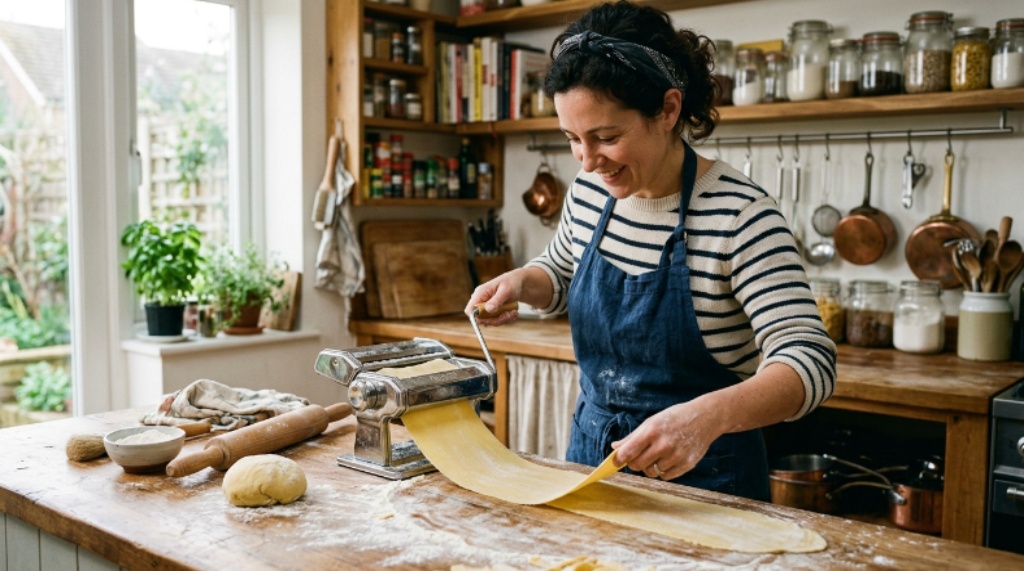
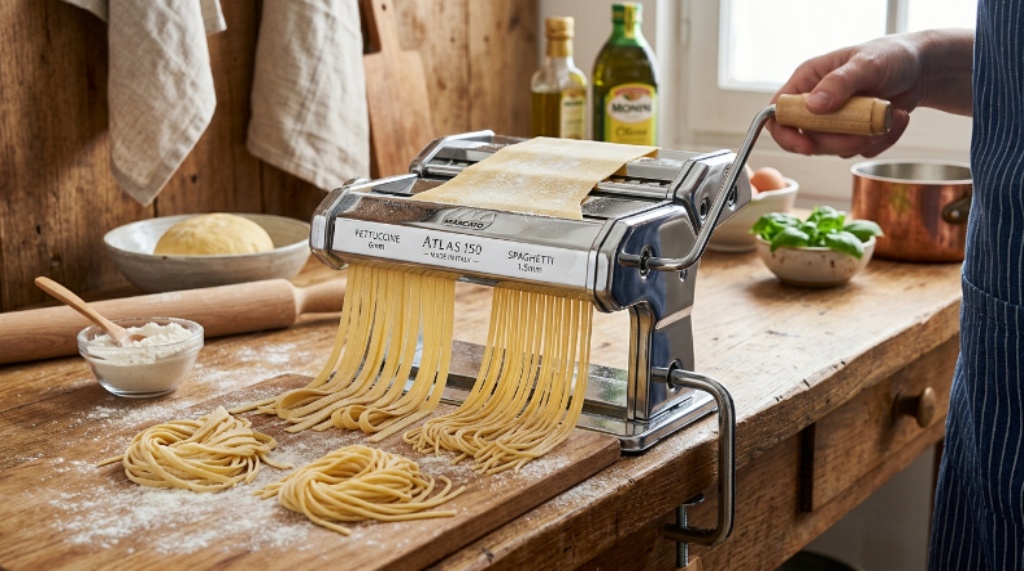
Manual machines are the traditional choice. They are powered entirely by hand, using a clamp to attach to your counter and a handle to roll the dough through the rollers. They are simple, reliable, and generally more affordable than electric models.
Most manual machines come with adjustable thickness settings, typically ranging from one to nine. They also include one or two cutting attachments for basic shapes like spaghetti and fettuccine. Additionally, they are easy to clean because they have fewer components and no electrical parts to worry about.
For anyone following beginner pasta machine tips, a manual roller is often the recommended starting point. It teaches you the fundamentals of pasta making and gives you full control over the process.
Electric Pasta Makers
Electric pasta makers fall into two sub-categories. The first type is an electric roller, which works like a manual machine but uses a motor to drive the rollers. This frees up both hands and makes the process faster and less tiring.
The second type is an all-in-one extruder. These machines mix the dough, knead it, and push it through a die to create specific shapes. You simply add flour and eggs, press a button, and fresh pasta comes out the other end. However, this convenience comes at a higher price. Additionally, extruder machines can be harder to clean and may produce a slightly different texture than rolled pasta.
Key Features to Evaluate Before You Buy
Choosing a pasta maker is easier when you know what to look for. Use this pasta appliance checklist as your guide when comparing models.
Roller Width
The width of the rollers determines how wide your pasta sheets will be. Most manual machines have rollers around 150mm wide, which is standard and works well for most shapes. Some premium machines offer wider rollers, which can be useful for making large lasagne sheets.
Thickness Settings
Adjustable thickness settings give you control over the final texture of your pasta. Look for a machine with at least six settings. More settings give you greater flexibility, especially when making delicate shapes or working with different types of flour.
Build Quality and Materials
A pasta maker that is built to last will be made from stainless steel or heavy-duty chrome-plated steel. These materials are sturdy, easy to wipe clean, and resistant to rust. Avoid machines with a large number of plastic components in the roller mechanism, as these tend to wear out quickly with regular use.
Additionally, check that the clamp is solid and grips your countertop securely. A machine that wobbles or shifts during use makes the rolling process frustrating.
Attachments and Accessories
Basic machines come with a fettuccine and spaghetti cutter. More versatile sets include attachments for linguine, pappardelle, and lasagne. Some brands sell additional cutters separately, which lets you expand your options over time.
If variety is important to you, look for a machine from a brand that has a wide range of compatible accessories available. This approach lets you start simple and grow your collection gradually.
Ease of Cleaning
Pasta dough is sticky. Leftover dough can harden inside the rollers if not removed promptly. Most manufacturers recommend using a dry brush to clean the machine rather than washing it with water. Therefore, look for machines with smooth rollers and simple disassembly to make cleaning as easy as possible.
Manual vs. Electric: Which One Is Right for You?
The answer depends on how often you plan to make pasta and what your priorities are.
If you are new to pasta making, a manual machine is usually the better starting point. It is more affordable, easier to understand, and teaches you the process from the ground up. Most beginner pasta machine tips point toward a manual roller precisely because it gives you a feel for the dough and builds your skills gradually.
If you cook pasta frequently, have limited hand strength, or want to involve children in the process, an electric roller can be a worthwhile upgrade. It speeds things up considerably and reduces physical effort without changing the outcome.
An all-in-one extruder is best suited to cooks who want maximum convenience and do not mind a slightly different texture in the finished pasta. These machines are also ideal for making shapes like rigatoni or penne, which are impossible to achieve with a standard roller.
How Much Should You Spend?
Price is a practical consideration for most buyers. The good news is that you do not need to spend a lot to get a reliable machine.
Entry-level manual pasta makers typically cost between $25 and $50. At this price, you can find machines that perform well and include basic attachments. They may not last as long as higher-end models, but they are a great way to test your interest without a large financial commitment.
Mid-range options, priced between $50 and $120, generally offer better build quality, more thickness settings, and additional attachments. These are the best value for most home cooks.
Premium manual machines from well-known Italian brands can cost $150 or more. They are exceptionally well-built and can last a lifetime with proper care. Additionally, premium electric models can reach $200 to $400 or beyond, depending on features and brand reputation.
Therefore, the best approach is to start with a clear sense of how often you will use the machine and choose a price point that reflects that commitment.
A Simple Setup Guide for First-Time Users
Getting started with a new pasta maker is straightforward. Here are the basic steps to follow on your first use.
- Attach the machine firmly to the edge of your counter using the clamp.
- Set the rollers to the widest thickness setting before starting.
- Prepare your pasta dough and rest it for at least thirty minutes before rolling.
- Fold and roll the dough through the widest setting three to four times to develop structure.
- Gradually decrease the thickness setting with each pass until you reach your desired thinness.
- Pass the sheet through your chosen cutting attachment and dust with flour to prevent sticking.
Following these steps consistently will help you produce even, smooth pasta every time.
Common Mistakes to Avoid
Even with a good machine, small errors can affect the outcome. Here are a few things to watch out for.
Using too much water in your dough is a frequent issue. Wet dough sticks to the rollers and tears easily. Additionally, skipping the resting period means the gluten has not relaxed, making the dough hard to roll and prone to springing back.
Not dusting with flour between rolls is another common mistake. A light dusting keeps the sheets separate and prevents them from clumping together after cutting. Finally, running dough through too quickly can create uneven sheets. Take your time and let the machine do the work.
Conclusion
Buying the right pasta maker comes down to understanding your cooking habits and knowing what features matter most. Start with a clear sense of how often you will use the machine, what shapes you want to make, and how much you are willing to spend.
Manual machines are the ideal choice for beginners and occasional cooks. Electric models suit those who want speed and convenience. Whichever type you choose, focus on build quality, roller width, thickness settings, and ease of cleaning. Using a pasta appliance checklist when comparing models will help you avoid impulse purchases and choose with confidence.
Fresh pasta at home is one of the most rewarding things you can make in a kitchen. With the right machine and a little practice, it will quickly become a regular part of your cooking routine.
Frequently Asked Questions
What is the best pasta maker for beginners?
A manual roller machine is the best choice for beginners. It is affordable, easy to use, and teaches you the fundamentals of pasta making. Look for a stainless steel model with at least six thickness settings and a basic set of cutting attachments.
How do I clean a pasta maker properly?
Most pasta makers should not be washed with water, as this can cause rust. Instead, use a dry pastry brush to remove dried dough from the rollers and attachments. For stubborn bits, a wooden toothpick works well. Always clean the machine shortly after use before the dough hardens.
Can I make gluten-free pasta with a standard pasta maker?
Yes, you can. However, gluten-free dough behaves differently from wheat-based dough. It tends to be more fragile and may require a slightly wider thickness setting to prevent tearing. Adding a binding agent like xanthan gum can also help the dough hold together during rolling.
How long does homemade pasta last?
Fresh pasta can be stored in the refrigerator for up to two days. For longer storage, allow the cut pasta to dry completely and then store it in an airtight container. Alternatively, you can freeze fresh pasta on a tray before transferring it to a freezer bag, where it will keep for up to three months.
Do I need a special type of flour for homemade pasta?
Italian “00” flour is the most commonly recommended choice. It is finely milled and produces a smooth, silky dough. However, regular all-purpose flour works well too. Semolina flour is a popular option for extruded shapes, as it gives the pasta a firmer texture that holds up well to hearty sauces.