How to Select Sunglasses for Deep Sea Fishing Adventures
Deep sea fishing presents unique challenges that require specialized gear. While most anglers focus on rods, reels, and tackle, one crucial piece of equipment often gets overlooked. Your eyes need serious protection when you’re spending hours on the open water under intense sunlight. Choosing the right sunglasses can mean the difference between a successful fishing trip and a miserable experience with eye strain and fatigue.
The ocean environment creates conditions unlike any other fishing situation. Sunlight reflects off the water surface, doubling your exposure to harmful rays. Additionally, saltwater spray, wind, and glare make seeing fish movements extremely difficult without proper eyewear. This guide will help you select sunglasses that protect your vision while improving your ability to spot fish and navigate safely.
Understanding the Ocean Environment and Your Eyes
Before selecting sunglasses, you need to understand what makes deep sea fishing so demanding on your eyes. The open ocean offers no shade or relief from the sun. Water reflects up to 100 percent of UV rays, meaning you’re getting hit from both above and below.
This constant exposure leads to several problems. Eye fatigue sets in quickly when your eyes work overtime to filter out glare. Squinting for hours causes headaches and makes it harder to concentrate on fishing. Over time, repeated UV exposure without protection can cause serious damage including cataracts and macular degeneration.
The salt spray adds another challenge. Ocean water dries on your lenses, leaving a film that obscures your vision. Wind carries this spray even on relatively calm days, making lens care an ongoing concern during your trip.
Glare presents the most immediate problem for anglers. That bright reflection off the water makes it nearly impossible to see beneath the surface. Spotting fish, reading water conditions, and navigating safely all become much harder when glare overwhelms your vision.
Essential Features for Deep Sea Fishing Sunglasses
Not all sunglasses work equally well for offshore fishing. Certain features make a dramatic difference in performance and protection. Understanding these elements helps you make an informed choice.
Polarization stands out as the most critical feature. Polarized lenses contain a special filter that blocks horizontal light waves while allowing vertical waves to pass through. Since glare bounces off water horizontally, polarization eliminates most of that blinding reflection. This technology lets you see through the water surface to spot fish, structure, and hazards.
UV protection must be complete. Look for sunglasses that block 100 percent of both UVA and UVB rays. This protection isn’t negotiable when you’re spending entire days on the water. Cheap sunglasses might reduce visible light without blocking UV rays, which actually makes the problem worse by allowing your pupils to dilate and absorb more harmful radiation.
Lens color affects how well you see in different conditions. Each tint serves a specific purpose and performs better in certain situations. Understanding these differences helps you choose correctly or decide if you need multiple pairs for varying conditions.
Frame durability matters significantly in the harsh marine environment. Saltwater corrodes many materials quickly. Lightweight yet strong frames withstand the punishment of offshore fishing while remaining comfortable during long days.
Fit and coverage determine how well your glasses protect you. Frames should wrap around your face to block light from the sides. Gaps let in peripheral light and reduce the effectiveness of polarization. However, the fit shouldn’t be so tight that it causes pressure points or discomfort.
Choosing the Right Lens Color
Lens color represents one of the most confusing aspects of selecting fishing sunglasses. Different tints excel in specific conditions. Making the right choice enhances your vision substantially.
Gray lenses provide the most natural color perception. They reduce brightness without distorting colors, making them ideal for bright, sunny days on open water. Gray works well when you need to judge distances accurately or when true color matters for identifying fish species.
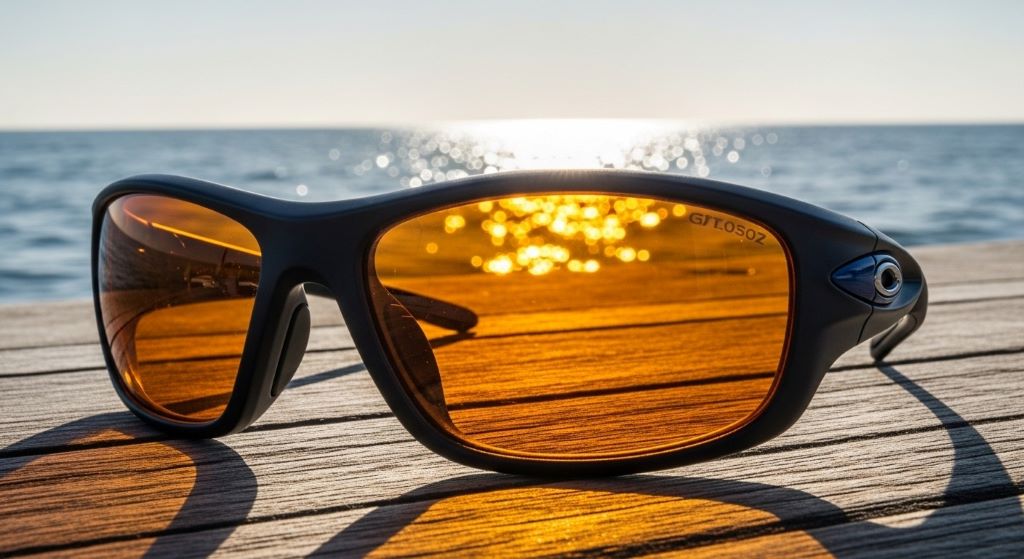
Amber or copper lenses enhance contrast significantly. They filter out blue light, which bounces around more in the atmosphere and creates haze. These lenses make it easier to see definition in clouds, spot birds diving on baitfish, and detect subtle changes in water color that indicate fish activity. Many offshore anglers prefer copper for its versatility across different conditions.
Green lenses offer a balance between contrast enhancement and color accuracy. They work well in variable light conditions, from bright sun to partly cloudy skies. Green tints reduce glare effectively while maintaining good depth perception.
Yellow lenses excel in low-light conditions. They maximize available light, making them perfect for early morning departures or late afternoon fishing. However, they provide too much brightness in full sun and can cause eye strain in intense light.
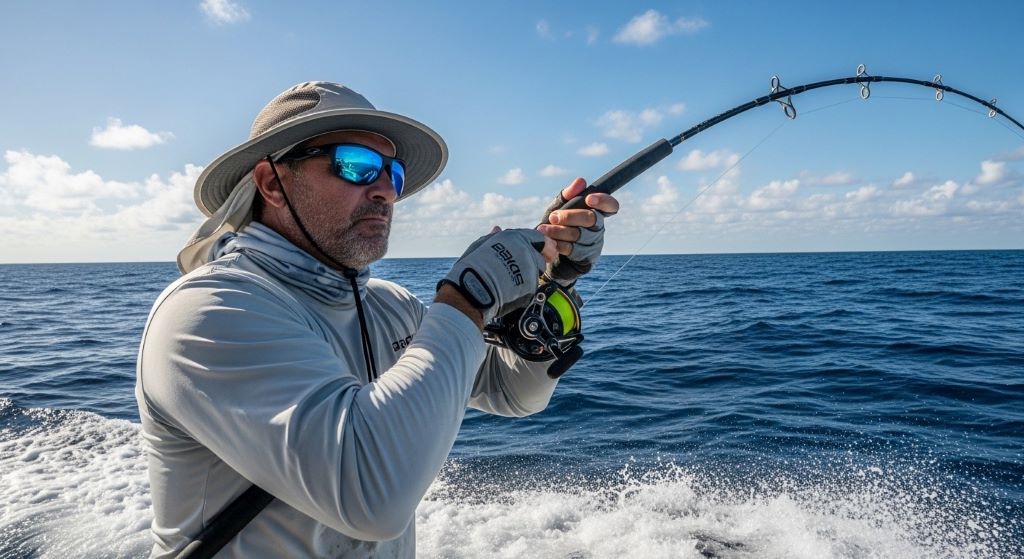
Blue or purple mirror coatings on any base tint add an extra layer of glare protection. These mirrors reflect additional light away from your eyes. They’re particularly useful in extremely bright conditions on open water where every bit of glare reduction helps.
Material Considerations for Offshore Eyewear
The materials used in both lenses and frames significantly impact performance and durability. Understanding these differences helps you select offshore eyewear that lasts and performs consistently.
Glass lenses offer superior optical clarity and scratch resistance. They provide the crispest vision available and maintain their clarity for years. However, glass is heavier than other options and can shatter on impact, creating a safety concern. Some anglers accept these tradeoffs for the exceptional visual quality glass provides.
Polycarbonate lenses are extremely impact resistant and lightweight. They’re virtually unbreakable, making them safe for active fishing where accidents happen. Polycarbonate costs less than glass and performs well in most situations. The downside is that it scratches more easily and may not provide quite the same optical clarity as glass.
Trivex lenses combine many advantages of both glass and polycarbonate. They offer excellent optical clarity, impact resistance, and are lighter than glass. Trivex costs more than polycarbonate but less than high-end glass lenses. This material represents an excellent middle ground for serious anglers.
Frame materials must resist saltwater corrosion. Stainless steel, titanium, and high-quality plastics work well. Avoid cheap metals that rust or corrode quickly in marine environments. Nylon frames offer excellent durability and flexibility while remaining lightweight.
Rubber nose pads and temple tips prevent slipping when you sweat or get spray on your face. These grippy materials keep your glasses secure even during active fishing. Look for adjustable nose pieces that let you customize the fit.
Protecting Your Investment in Ocean Fishing Accessories
Quality fishing sunglasses represent a significant investment. Proper care extends their life and maintains performance. The harsh offshore environment demands attention to maintenance.
Rinse your glasses with fresh water after every trip. Saltwater left to dry on frames and lenses causes corrosion and clouding. A quick rinse removes salt and prevents long-term damage. Use lukewarm water rather than hot water, which can damage lens coatings.
Clean lenses regularly with appropriate products. Avoid paper towels or clothing, which can scratch lenses. Use a microfiber cloth designed for eyewear. Spray lens cleaner or mild soap and water work well for removing stubborn salt residue and oils.
Store your sunglasses in a hard case when not in use. This protection prevents scratches and accidental damage. A case also keeps your glasses secure in rough seas when you’re not wearing them. Choose a case that floats if you drop it overboard.
Apply anti-fog solutions as needed. Temperature changes and humidity cause fogging, especially when you move between air-conditioned cabin spaces and hot deck areas. Anti-fog treatments maintain clear vision in these situations.
Inspect your glasses regularly for damage. Check that screws are tight, hinges work smoothly, and lenses show no cracks or deep scratches. Address small problems before they become major issues that compromise your vision or safety.
Additional Features Worth Considering
Beyond the basics, several advanced features enhance performance for serious offshore anglers. These additions might not be necessary for everyone, but they solve specific problems effectively.
Side shields or wraparound designs block peripheral light that reduces polarization effectiveness. The more completely your glasses seal against your face, the better they work. However, too much wrap can distort peripheral vision, so finding the right balance matters.
Interchangeable lenses let you adapt to changing conditions without carrying multiple pairs of glasses. This system works well if you fish in varied weather or different times of day. The ability to switch from gray to copper lenses, for example, provides flexibility.
Floating frames or retention straps prevent losing your glasses overboard. Deep sea fishing involves lots of movement, bending, and reaching. A retention strap keeps glasses secure during these activities. Floating frames give you a chance to retrieve dropped glasses before they sink.
Ventilation in frames reduces fogging. Small vents allow air circulation without letting in significant light. This feature helps when you’re moving between temperature extremes or during high-intensity activities that cause sweating.
Prescription compatibility matters if you need vision correction. Many quality fishing sunglasses accommodate prescription inserts or custom prescription lenses. Don’t compromise your vision correction to get good sun protection.
Fitting Your Sunglasses Properly
Even the best sunglasses perform poorly if they don’t fit correctly. Taking time to ensure proper fit maximizes comfort and effectiveness.
The bridge should sit comfortably on your nose without pinching or sliding. Adjustable nose pads let you customize this fit. The glasses should feel secure without creating pressure points that cause headaches during long days.
Temples should rest lightly against your head without squeezing. They need to be snug enough to stay in place but not so tight they cause discomfort. Many quality frames have adjustable temples that bend to match your head shape.
Lenses should sit close to your face without touching your cheeks or eyelashes. This distance blocks light from entering around the frames while preventing smudging from contact with your face. The wraparound design should extend toward your temples for maximum coverage.
Try the glasses on with any hats or visors you typically wear fishing. Make sure they sit comfortably together and don’t interfere with each other. The combination should feel natural and stay secure during head movements.
Test the glasses in different positions. Look up, down, and side to side. Bend over as if reaching for tackle or working with fish. Your glasses should stay in place during all these movements without constant adjustment.
Budget Considerations and Value
Quality fishing sunglasses range from affordable to extremely expensive. Understanding what you get at different price points helps you make a smart investment.
Entry-level polarized sunglasses start around fifty dollars. At this price point, you get basic polarization and UV protection. Materials and construction may be less durable, but they work fine for occasional anglers or those starting out.
Mid-range options from 100 to 200 dollars offer significantly better quality. Lenses provide superior clarity, frames use more durable materials, and construction quality improves noticeably. This range offers excellent value for regular anglers.
Premium sunglasses cost 200 to 400 dollars or more. You’re paying for the finest optical quality, advanced materials, and meticulous construction. Professional anglers and serious enthusiasts often invest at this level for the best possible performance.
Consider how often you fish when deciding on budget. If you’re on the water every weekend, investing in quality makes sense. The improved vision and comfort justify the cost. Occasional anglers might be perfectly satisfied with more affordable options.
Remember that protecting your eyes has long-term health implications. Vision damage from UV exposure accumulates over years. Spending more on quality protection now may save you from serious problems later.
Signs You Need New Fishing Sunglasses
Even quality sunglasses don’t last forever. Recognizing when to replace them ensures you maintain proper protection and performance.
Scratched lenses significantly reduce visibility and can cause eye strain. Deep scratches that you notice while wearing the glasses mean it’s time to replace them. Minor surface scratches might be acceptable, but anything that affects your vision should trigger replacement.
Damaged polarization shows up as areas where glare suddenly becomes visible. If you notice patches where polarization no longer works, the lens coating has deteriorated. This damage usually can’t be repaired.
Loose or broken frames compromise both fit and protection. Hinges that won’t stay tight, arms that bend out of shape, or frames that sit crooked all indicate replacement time. Poor fit reduces effectiveness dramatically.
Faded or peeling lens coatings mean the UV protection may have degraded. If mirror coatings are coming off or lenses show discoloration, they’re no longer providing full protection.
Generally, quality fishing sunglasses should last three to five years with proper care. If yours are older and showing wear, consider replacing them even if they seem functional. Protection standards improve over time, and newer glasses may offer better performance.
Testing Before Buying
Whenever possible, test sunglasses before committing to a purchase. This hands-on evaluation reveals information that specifications alone can’t provide.
Look at different surfaces while wearing the glasses. Check how well they cut glare on water if you have access to it. Notice how colors appear and whether the tint feels comfortable to your eyes.
Wear the glasses for at least 15 minutes. Initial comfort sometimes fades quickly if fit isn’t quite right. Walking around lets you judge whether they stay in place and feel natural.
Read fine print or look at details while wearing them. Optical quality should be consistent across the entire lens. Distortion, particularly at the edges of wraparound lenses, indicates poor quality.
Ask about return policies before purchasing. Reputable retailers understand that sunglasses need testing in real conditions. A good return policy lets you try glasses on the water and exchange them if they don’t work perfectly.
Get opinions from other anglers if possible. Their experience with different brands and models provides valuable insight. However, remember that fit varies by face shape, so what works for someone else might not work for you.
Conclusion
Selecting sunglasses for deep sea fishing requires careful consideration of multiple factors. Polarization stands out as the most essential feature, cutting through water glare and dramatically improving your ability to see fish and navigate safely. Complete UV protection safeguards your long-term eye health during countless hours on the water.
Lens color, materials, and frame construction all impact performance in different ways. Understanding these elements helps you choose sunglasses that match your specific fishing conditions and personal preferences. Proper fit ensures comfort during long days while maximizing protection from light entering around the frames.
Quality offshore eyewear represents an investment in both your fishing success and eye health. Taking time to select the right pair pays dividends through improved vision, reduced fatigue, and protection from cumulative UV damage. Whether you choose entry-level or premium options, prioritize polarization, UV protection, and durability in the marine environment.
Proper care extends the life of your sunglasses significantly. Regular rinsing, careful cleaning, and protected storage keep them performing at their best year after year. Recognizing when replacement becomes necessary ensures you maintain optimal protection and performance.
By following this guide and testing options before purchasing, you’ll find sunglasses that enhance your deep sea fishing adventures while protecting your vision for years to come.
Frequently Asked Questions
Are expensive fishing sunglasses really worth the extra cost?
Premium sunglasses offer better optical clarity, more durable materials, and superior construction compared to budget options. For anglers who fish frequently, the investment makes sense through improved comfort and longer lifespan. However, mid-range options provide excellent value for most recreational anglers. The key is ensuring any sunglasses you buy have proper polarization and full UV protection, regardless of price.
Can I wear regular polarized sunglasses for ocean fishing?
While regular polarized sunglasses are better than non-polarized, they may lack features specific to marine environments. Ocean fishing accessories like specialized sunglasses often include better saltwater-resistant materials, wrap-around designs for peripheral protection, and lens colors optimized for water conditions. Regular polarized glasses work in a pinch but won’t perform as well as purpose-built fishing eyewear.
How do I know if my sunglasses are truly polarized?
Look at a digital screen like your phone at an angle while wearing the glasses. Polarized lenses will make the screen appear very dark or completely black when tilted about 60 degrees. Another test involves looking at reflected light on a smooth surface. Polarized lenses should significantly reduce or eliminate that glare. Many retailers also have polarization test cards you can use.
What lens color works best for most offshore fishing conditions?
Copper or amber lenses offer the best versatility for offshore fishing. They enhance contrast, help you see through water surface glare, and work well in both bright sun and partly cloudy conditions. Gray lenses are a close second, providing natural color perception in bright conditions. Many serious anglers own both colors and choose based on daily weather conditions.
How should I clean salt spray off my fishing sunglasses?
Rinse your glasses with fresh water immediately after exposure to salt spray. Use lukewarm water and a mild soap if needed to remove stubborn salt deposits. Dry them with a clean microfiber cloth designed for eyewear. Never use paper towels, your shirt, or other materials that can scratch lenses. Regular rinsing after each fishing trip prevents salt buildup and extends the life of your sunglasses.
Related Topics:
These offline activities will help reconnect in winter
Health Care Perks of Rental-Only Retirement Communities