How to Design a Low-Maintenance Garden
Key Takeaways
- Use native, drought-tolerant plants and perennials to reduce watering and upkeep.
- Mulch and ground covers suppress weeds and conserve soil moisture.
- Hardscaping and smart plant grouping lower maintenance needs.
- Automated irrigation saves time and ensures efficient watering.
- Thoughtful planning creates a sustainable, low-effort, and enjoyable garden.
Introduction
Building a beautiful and relaxing garden does not have to mean signing up for endless yardwork. Many homeowners can save time week after week by making smart choices right from the start of their landscaping project. A low-maintenance garden focuses on lasting beauty through sustainable design and strategic plant choices. With guidance from professionals and careful planning, anyone can create an inviting outdoor retreat that thrives on minimal upkeep. To learn more, you can visit My Sons Landscape for expert tips on low-maintenance landscape solutions.
Modern garden design increasingly favors low-input methods, not just for convenience, but also for environmental responsibility. Selecting the right plants, using smart irrigation, and making use of elements like mulch and stone can transform yard work into a rare instead of a weekly chore.
Choose Native and Drought-Tolerant Plants
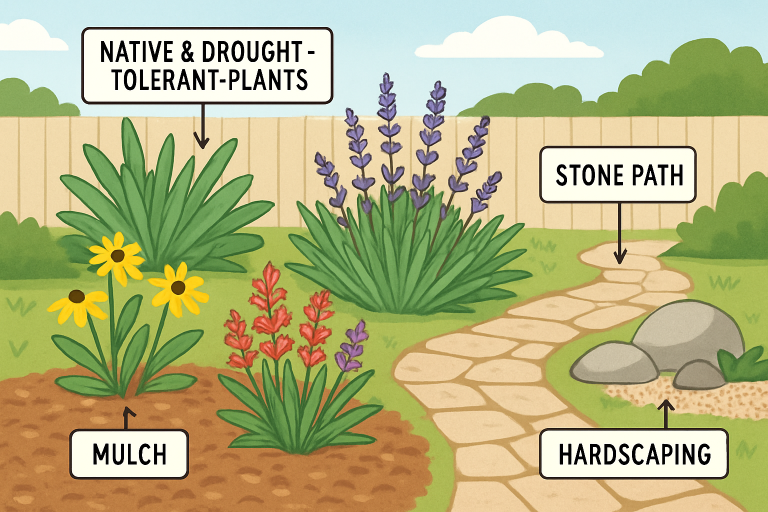
Native plants are an ideal foundation for a low-maintenance garden. They are acclimated to the specific climate, rainfall, and soil conditions in your area, which means they require less watering, fertilizing, and pest control than exotic species. For gardeners in arid or variable climates, drought-tolerant selections such as lavender, agave, sedum, and ornamental grasses are especially useful. These plants can handle extended dry spells and still offer vivid color, structure, and pollinator support. By learning more about native gardening, you can boost the ecological health and beauty of your landscape.
Implement Mulching Techniques
Mulching is one of the simplest and most effective ways to reduce yard work. By spreading a thick organic layer of material such as wood chips, pine needles, shredded bark, or compost around your plants, you can discourage weeds, conserve soil moisture, and provide vital nutrients as the mulch breaks down. Mulch also helps regulate soil temperature and prevent erosion. Not only does it keep the garden looking neat and polished, but it also reduces the frequency of watering and fertilizing. According to Better Homes & Gardens, the benefits of mulching go beyond aesthetics and are vital for healthy roots.
Incorporate Hardscaping Elements
Hardscaping refers to the non-plant elements in a garden, such as stone walkways, patios, gravel beds, or decorative boulders. These features add year-round structure, direct foot traffic, and dramatically reduce the footprint that needs watering and weeding. Replacing turf or planting beds with patios, stepping stones, or gravel paths dramatically reduces long-term maintenance. Hardscaping also complements drought-tolerant and native plants to create a visually pleasing, functional, and resilient outdoor space.
Group Plants by Watering Needs
Hydrozoning—grouping plants with similar water needs is a cornerstone of smart, low-maintenance gardening. By placing drought-lovers together and clustering moisture-hungry plants separately, you make irrigation far more efficient. This practice ensures that each plant receives only the water it needs, preventing overwatering and wasted resources. For beds near structures, consider concentrating low-water plants in these areas to reduce the risk of excess moisture and foundation problems.
Opt for Perennials Over Annuals
One of the easiest switches you can make is to plant perennials. Unlike annuals, which require replanting every year, perennials come back with vigorous growth season after season. Their strong root systems boost drought tolerance and natural pest resistance, reducing your ongoing gardening chores. Popular options for low-maintenance gardens include coneflowers, hostas, sedum, black-eyed Susans, and daylilies. These produce vibrant blooms without constant attention and provide structure and color to the garden with little effort.
Utilize Efficient Irrigation Systems
Automated irrigation provides a reliable way to ensure your plants get the water they need while reducing waste and manual labor. Drip irrigation and soaker hoses focus water directly at the root zone, minimizing evaporation and preventing overspray onto paths or walls. These systems can also be set up on timers or linked to smart controllers that adjust watering based on rainfall and weather forecasts. Modern convenience ensures new plants get established with minimal effort, and mature gardens receive just enough hydration to stay healthy, further reducing routine maintenance.
Incorporate Ground Covers to Suppress Weeds
Ground covers are a finishing touch that can save hours of weeding each month. Low-growing choices like creeping thyme, sedum, ajuga, or vinca blanket the soil, crowding out weeds and stabilizing bare areas. They are particularly useful in places where grass struggles to grow, such as slopes or beneath trees. In addition to acting as a living mulch, ground covers often provide small flowers and support pollinators.
Final Thoughts
Designing a low-maintenance garden starts with thoughtful planning and smart plant choices. By combining hardscaping, mulching, automated watering, and native, hardy plants, you will enjoy a lush, beautiful landscape with far less effort. These steps are not just practical; they also create a resilient, sustainable, and eco-friendly garden that complements your lifestyle. Prioritizing low-maintenance solutions allows you to spend more time relaxing and enjoying your outdoor retreat with family and friends.