
The Benefits of Combining Formal Education with Self-Directed Learning
Key Takeaways
- Blending formal education with self-directed learning creates a flexible, personalized approach.
- Formal education builds foundational knowledge; self-directed learning develops specialized skills.
- This combination boosts engagement, skill growth, and retention.
- Success requires clear goals, diverse resources, and regular self-assessment.
- A balanced approach equips learners for modern careers and lifelong growth.
Introduction
As the world continues to evolve rapidly, the ways people acquire new knowledge and skills are shifting as well. Combining the structure of formal education with the independence of self-directed learning creates a richer, more adaptive educational journey. For learners who want to remain agile and competitive, blending both approaches is essential. Programs such as MSU Innovative Learning demonstrate how institutions are bridging the two worlds, helping individuals not only meet but exceed the demands of today’s careers.
Incorporating both formal and self-directed strategies empowers learners to pursue their passions while building foundational expertise. This synergy results in a flexible, sustainable, and highly personalized approach to education.
Understanding Formal Education
Formal education refers to the organized systems where learning occurs in classrooms, through standardized curricula, and under the supervision of certified instructors. This approach has long been the backbone of academic success. Through coursework, lectures, and exams, students build a foundation in critical thinking, problem-solving, and discipline. Accreditation and degrees achieved through formal channels open professional doors and validate a person’s hard-earned knowledge.
By promoting collaboration, peer learning, and structured progression, formal education ensures learners receive a comprehensive and validated understanding of their chosen subjects. According to the George Lucas Educational Foundation, the consistency offered by formal education provides a crucial framework for intellectual and personal development.
Self-directed learning puts individuals in control of their educational trajectory. Rather than following a prescribed path, learners identify subjects of interest, set their own goals, and find resources that align with personal needs. Driven by curiosity and a desire for continuous improvement, this mode of learning is highly adaptable and crucial in an era of constantly emerging information and technologies.
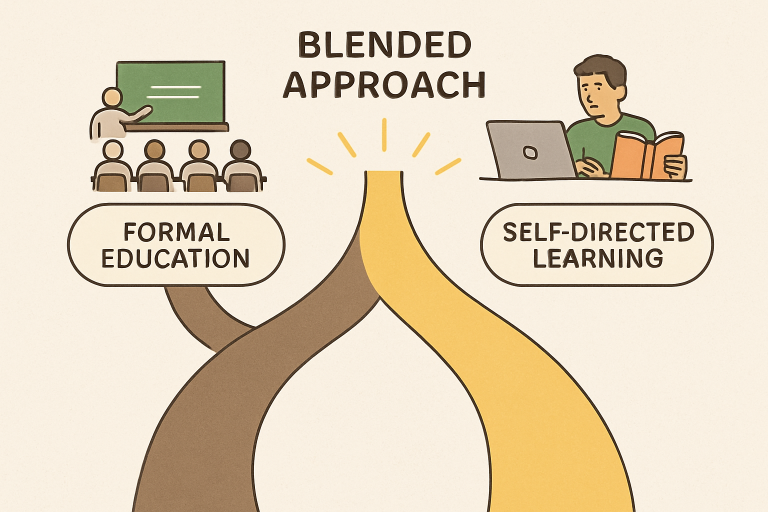
Advantages of Blending Both Approaches
- Personalized Learning Paths: By integrating formal education and self-directed learning, individuals can customize their experience, progressing at their own pace and depth into topics that resonate with their aspirations and career goals.
- Enhanced Skill Acquisition: Formal settings introduce foundational concepts, while self-directed learning offers room to develop specialized and advanced competencies that are often required in the modern workforce.
- Increased Engagement: The autonomy to choose aspects of learning leads to greater enthusiasm, retention, and overall satisfaction, ultimately translating into improved academic outcomes and professional growth.
Implementing a Blended Learning Strategy
- Set Clear Goals: Begin by articulating what you want to achieve. Identify specific competencies or knowledge areas and use these as a guide when selecting formal courses and informal self-learning activities.
- Utilize Diverse Resources: Explore a mix of textbooks, online courses, workshops, seminars, podcasts, and real-world projects. This variety deepens understanding and keeps the learning experience engaging.
- Regular Self-Assessment: Consistently measure your progress against your goals. Reflect on what methods work best for you and adjust your approach to maximize both efficiency and satisfaction.
Challenges and Considerations
Achieving a balance between formal and self-directed learning comes with its own set of challenges. Effective time management is crucial, as learners must juggle assignments, personal projects, and other responsibilities. Developing discipline to adhere to self-imposed deadlines and avoid distractions is equally important. There is a risk of information overload when exploring a wide range of resources. Therefore, it is vital to regularly evaluate whether self-directed learning efforts are truly complementing traditional studies or spreading attention too thin.
Intentional planning and honest reflection are essential to making the most of this dual approach. Equipping yourself with productivity tools and maintaining clear boundaries between activities can help ensure a sustainable, balanced learning experience.
Final Thoughts
The integration of formal education and self-directed learning creates a holistic, flexible path for both personal and professional development. By leveraging the strengths of each approach, learners are better prepared to meet the evolving demands of the modern world. As lifelong learning becomes increasingly important, embracing a blended educational strategy is a powerful way to achieve enduring success and fulfillment.