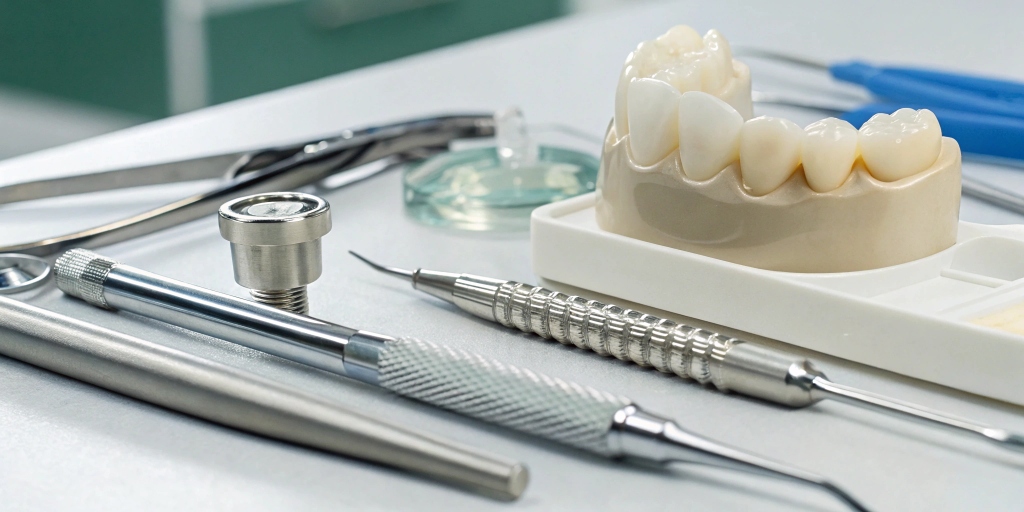
Digital Dental Implant Techniques for Precision and Predictability
The landscape of dental implantology is undergoing a remarkable transformation driven by advances in digital technology. These innovations have brought new levels of precision and predictability to dental procedures, shaping a future where outcomes are more accurate and complications become less common. By embracing digital workflows, clinicians can streamline processes, deliver higher-quality results, and elevate the patient journey from start to finish. For professionals and patients seeking excellence in implantology, educational opportunities from institutions like the Pikos Institute can provide in-depth training in the latest techniques and tools. As digital methods permeate all stages of implant treatment, from imaging and modeling to design, placement, and even postoperative care, dental practices that implement these tools can expect to see substantial improvements in efficiency and consistency. Patients also benefit from less invasive procedures and faster recovery times, resulting in a more comfortable and satisfying experience.
Digital Imaging and 3D Modeling
The integration of high-resolution imaging technologies, including Cone Beam Computed Tomography (CBCT) and intraoral scanners, enhances the planning and accuracy of dental implant procedures. These technologies provide detailed, three-dimensional visualizations of oral structures that help clinicians assess bone density and address anatomical challenges, allowing for personalized surgical approaches. Intraoral scanning creates accurate digital impressions, reducing the inefficiencies of traditional molds and leading to more precise diagnoses, shorter chair time for patients, and improved fit and aesthetics of prosthodontic restorations, according to the American Dental Association.
Computer-Aided Design and Manufacturing (CAD/CAM)
With the rise of CAD/CAM systems, the design and production of dental prosthetics have become highly efficient and customizable. Thanks to digital impressions and modeling, restorations such as crowns, bridges, and abutments can be fabricated with precise margins that integrate seamlessly into the patient’s existing structures. CAD/CAM workflows significantly reduce the gap between initial patient assessment and final prosthetic delivery, transforming what used to be a multi-week process into potentially same-day solutions. Beyond speed and accuracy, CAD/CAM systems enable the use of advanced materials and manufacturing techniques, further elevating the reliability and durability of dental implants. The entire workflow is traceable, enabling better quality control and communication across dental teams and laboratories.
Guided Implant Surgery
Virtually planned implant placement, facilitated by surgical guides, sets a gold standard for accuracy in modern dental implantology. The process involves creating a detailed digital treatment plan, which is then translated into a 3D-printed guide that fits securely in the patient’s mouth during surgery. This guide directs the drilling and placement process, ensuring that the implant is positioned at the correct depth, angle, and location.
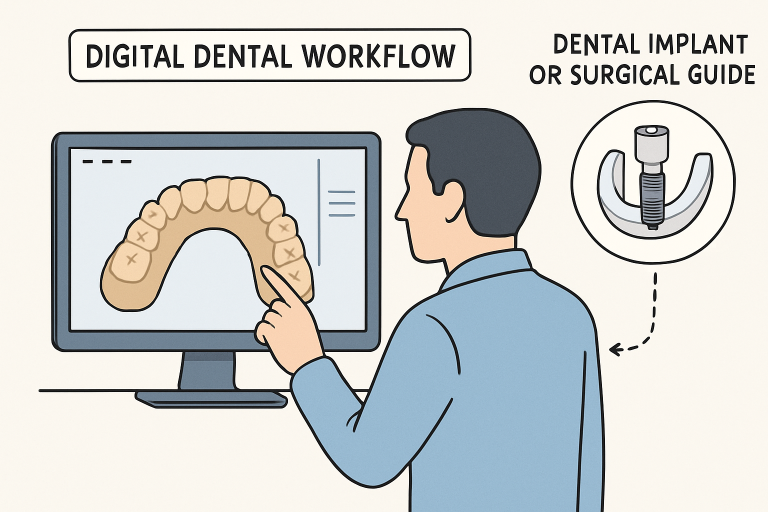
Recent research published by PubMed Central confirms that guided surgery yields significantly reduced deviation from planned implant sites, resulting in fewer complications and more predictable results. Guided surgery is especially advantageous in complex anatomical cases, minimizing guesswork and improving long-term outcomes.
Dynamic Navigation Systems
Dynamic navigation is a real-time, interactive technology that further boosts the precision of implant placement. These systems track the position of surgical instruments during the procedure and instantly compare them to the planned trajectory, displaying this information on a monitor for the clinician. This adaptability can be critical when unexpected variations in bone or tissue are encountered during surgery. Clinical data demonstrates that dynamic navigation systems can achieve mean deviations at the implant platform as little as 0.71 mm, with angular deviations below 2 degrees. Such consistency is invaluable when handling cases where accuracy is paramount to avoid complications or restore function in sensitive areas.
Artificial Intelligence in Implantology
Artificial intelligence (AI) is rapidly becoming an integral component of digital dental implantology. AI-powered software can analyze diagnostic images, automatically highlight optimal implant sites, and flag potential risk areas, reducing planning times and increasing confidence in clinical decisions. These sophisticated algorithms free up valuable clinician time and help standardize procedures across different operators and settings. Studies have shown that AI-driven systems can slash planning times by as much as 67 percent while maintaining or improving accuracy. As AI tools continue to evolve, they are likely to contribute even more to the safety, speed, and consistency of dental implant therapies.
Robotic-Assisted Implant Placement
The introduction of robotic assistance into dental implantology has set a new benchmark for surgical precision. These systems execute pre-planned surgical protocols with sub-millimeter fidelity, adjusting in real-time to intraoperative variables. Robotic technologies incorporate live feedback and AI algorithms to maintain optimal positioning, even as patient anatomy shifts or other conditions arise. Clinical studies have highlighted the ability of robotic platforms to minimize human error, with performance metrics that meet or exceed those of the most experienced surgeons. The adoption of robotic-assisted placement translates to more predictable outcomes and greater patient confidence in complex cases.
Benefits of Digital Workflows
Enhanced precision enabled by digital tools and workflows allows clinicians to deliver results that surpass functional and aesthetic standards. The use of digital imaging enhances patient safety by enabling the identification and avoidance of critical anatomical structures, thereby minimizing intraoperative and postoperative risks. Moreover, integrating digital technologies reduces treatment times, thereby minimizing disruptions to patients’ lives and overall discomfort. Additionally, these advancements lead to a better patient experience, marked by predictable, minimally invasive procedures that yield greater satisfaction and improved recovery outcomes.
Conclusion
Digital dental implant techniques have fundamentally changed clinicians’ capabilities and the quality of care patients receive. With technologies like advanced 3D imaging, CAD/CAM workflows, AI-based planning, and robotic-assisted placement, dental teams can achieve previously unattainable levels of precision and predictability. Staying current with these advancements and seeking continuing education through reputable platforms is key for any dental professional committed to delivering exceptional implant care in a rapidly evolving field.