How Modern IT Services Shape Business Success
In the digital era, harnessing the power of modern IT services is no longer a luxury but a necessity for business survival and growth. The pace of technological change demands that organizations continually adapt by integrating new IT solutions, including advanced cybersecurity, automation, and sustainability initiatives. Partnering with experts like CIO Solutions gives businesses a competitive advantage by providing the comprehensive support and expertise necessary to stay ahead.
Seamless IT integration impacts every aspect of an organization, optimizing daily operations and empowering teams to focus on core business objectives. With resources and workflows managed efficiently, companies can navigate challenges while enhancing their ability to innovate, protect data, and scale sustainably.
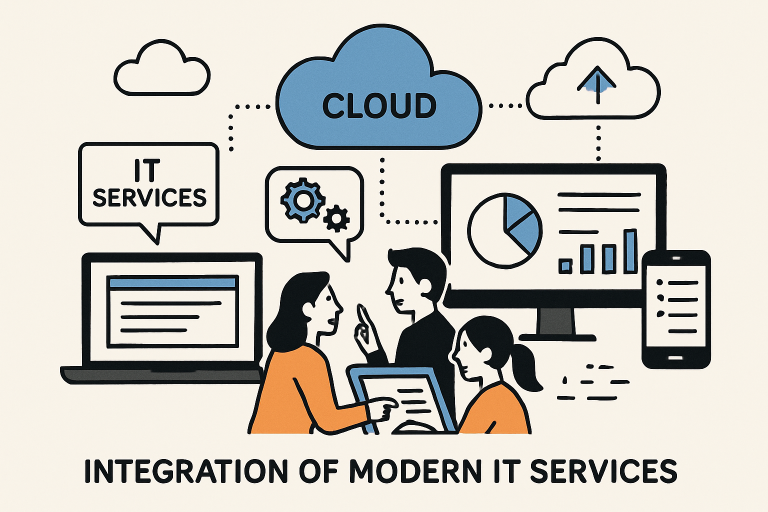
Modern IT services also help prepare companies for unexpected disruptions by reinforcing business continuity plans and disaster recovery strategies. From facilitating remote work environments to deploying scalable cloud resources, IT services are the backbone of operational resilience.
Additionally, businesses leveraging advanced IT services witness improved collaboration, rapid access to market insights, and new opportunities for digital transformation. Whether through automation, IoT, or cloud computing, the intelligent application of technology ensures a stronger foundation for success in today’s marketplace.
Enhancing Operational Efficiency
Modern IT services help organizations streamline operations with solutions such as automation, workflow optimization, and unified platforms. By automating repetitive tasks and integrating systems through enterprise resource planning (ERP), businesses can better allocate their human resources toward strategic initiatives. This transition from manual to automated processes reduces the risk of errors and frees employees to focus on value-generating work.
Enhanced communication tools and collaboration suites allow teams to connect effortlessly, whether on-site or remote. The overall result is a leaner operation that reduces costs, decreases downtime, and delivers improved products and services to customers.
Strengthening Cybersecurity Measures
The rapid rise in cyber threats has made robust cybersecurity a focal point for businesses of every size. Managed IT services offer comprehensive security suites that include real-time monitoring, proactive threat detection, and incident response services. This approach enables organizations to safeguard sensitive information, maintain regulatory compliance, and foster customer trust.
According to a recent IBM report, the global average cost of a data breach in 2024 reached $4.88 million, underscoring the importance of investing in up-to-date security posture management. In addition to technological defenses, IT services provide critical employee training to help mitigate risks from within.
Facilitating Digital Transformation
Digital transformation is the foundation of business innovation today. It entails reinvention by embedding digital technology into all areas, enhancing both customer experiences and internal processes. Leading IT service providers play a pivotal role by advising on strategy, executing migration to new platforms, and supporting continuous improvement.
Research by Harvard Business Review shows that organizations investing in cloud computing, artificial intelligence, and automation are significantly more likely to achieve greater value and market differentiation. The right IT partner helps businesses make these transitions smoothly and cost-effectively.
Leveraging AI and Automation
Artificial Intelligence and automation are critical to driving operational excellence. Machine learning algorithms analyze volumes of data in real time, offering actionable insights that can drive innovation and agility. Automation, meanwhile, takes over repetitive and time-consuming tasks, reducing operational costs and the likelihood of human error.
From marketing analytics to logistics forecasting, AI-driven platforms enable real-time decision-making and predictive analytics. This strategic advantage allows companies to anticipate shifts, respond to market demands, and deliver better customer experiences.
Adopting Cloud Computing
Cloud computing is transforming how organizations operate, enabling on-demand access to data and applications. With scalable infrastructure, businesses can rapidly adjust resources to match their evolving needs, whether scaling up to meet demand or optimizing costs during quieter periods.
Cloud-based collaboration platforms empower seamless communication between teams anywhere in the world. This flexibility supports the rise of remote work, enhances overall business continuity, and improves collaboration and file-sharing processes.
Ensuring Business Continuity
Disruptions, such as natural disasters or cyber incidents, can halt operations and threaten a company’s future. Modern IT services support business continuity by providing disaster recovery solutions and automated backups. These services ensure data is regularly backed up, easily accessible, and quickly restored, reducing downtime and securing client trust.
Formulating and routinely testing robust recovery plans empowers businesses to respond proactively, minimize losses, and maintain service even in challenging times.
Embracing IoT and Edge Computing
The rise of the Internet of Things (IoT) and edge computing expands businesses’ digital capabilities by enabling real-time data collection and processing at the source. This leads to more intelligent systems and immediate insights that allow for predictive maintenance, efficient resource allocation, and streamlined logistics.
Connected devices provide invaluable data to inform decisions, improve product quality, and enhance customer experiences. As edge computing reduces latency, businesses can respond to operational issues more quickly and gain a technological edge.
Prioritizing Sustainability in IT
Sustainability is increasingly a central theme in IT strategies. Companies are adopting greener data centers, more innovative energy management, and sustainable methods for hardware disposal to minimize environmental impact. Responsible IT practices not only protect the environment but also lead to operational savings and regulatory compliance.
As consumers and stakeholders become more eco-conscious, businesses demonstrating sustainability through IT are better positioned to build brand loyalty and gain market trust.
By leveraging comprehensive IT services, forward-thinking businesses can achieve improved operational efficiency, strong cybersecurity, seamless digital transformation, and sustained growth. Balanced with a focus on innovation and sustainability, modern IT is the engine powering business success today and for years to come.