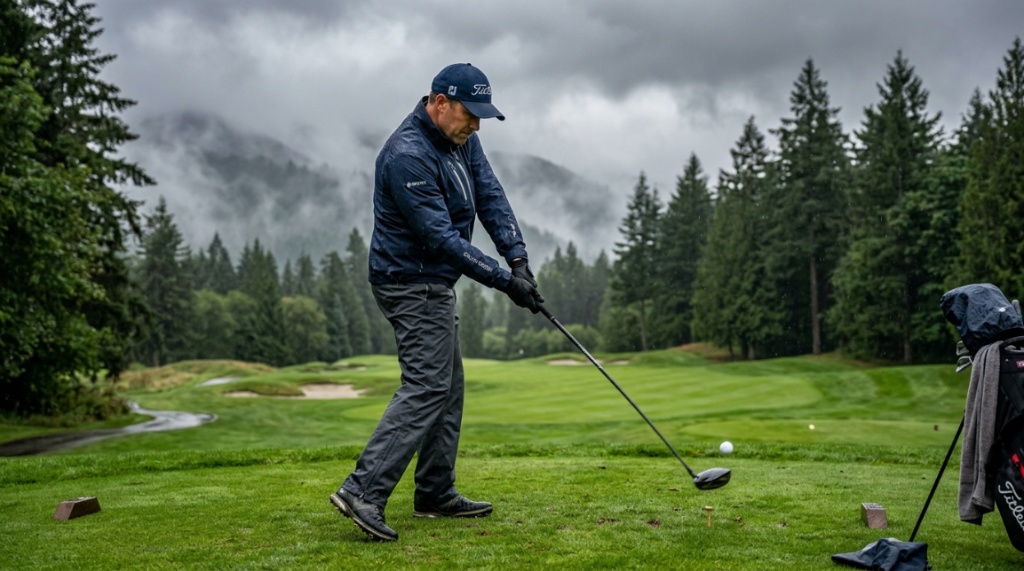
How to Select Waterproof Golf Rain Gear in Washington
You’ve booked a prime tee time at Chambers Bay or Gold Mountain, but the Puget Sound forecast shows an 80% chance of rain. Your current “waterproof” jacket leaves you feeling damp and miserable by the turn. Does this sound familiar? Choosing the right waterproof golf rain gear in Washington isn’t about luxury; it’s about salvaging your round and protecting your game. From the Olympic Peninsula’s mist to the Cascade foothills’ downpours, you need gear that performs. Let’s cut through the marketing hype and help you select gear that keeps you dry, comfortable, and focused on your swing, not the weather.
What Makes Washington Rain Different for Golfers?
Washington rain is rarely a brief shower; it’s often a persistent, wind-driven drizzle that tests the limits of any fabric. Unlike dry climates, the humidity here means your sweat and external moisture combine, creating a unique challenge. You need gear that balances complete waterproofing with breathability to prevent internal condensation.
Understanding the “Wet Bulb” Effect on the Course
When temperatures hover in the 40s and 50s, you lose heat faster than you think. The “wet bulb” effect means that even if the air isn’t freezing, the moisture pulls heat from your body. This is why a simple waterproof shell fails; you need a system that combines a moisture-wicking base layer with a breathable yet fully sealed outer layer.
Why Breathability is Non-Negotiable Here
A jacket with a 20,000mm waterproof rating is useless if it traps sweat. In Washington’s damp cold, you’ll generate heat walking from cart to green. If that heat can’t escape, you’ll be soaking wet from the inside. Look for fabrics that offer at least 15,000g/m² of breathability to manage your microclimate.
Wind Resistance: The Silent Game-Killer
Coastal winds can penetrate poorly designed zippers and seams. A waterproof jacket that isn’t windproof will chill you to the bone. Ensure your gear has sealed seams and a durable water repellent (DWR) finish that helps wind and water bead off the surface rather than seeping through the weave.
Which Waterproof Membrane Technology Actually Works?
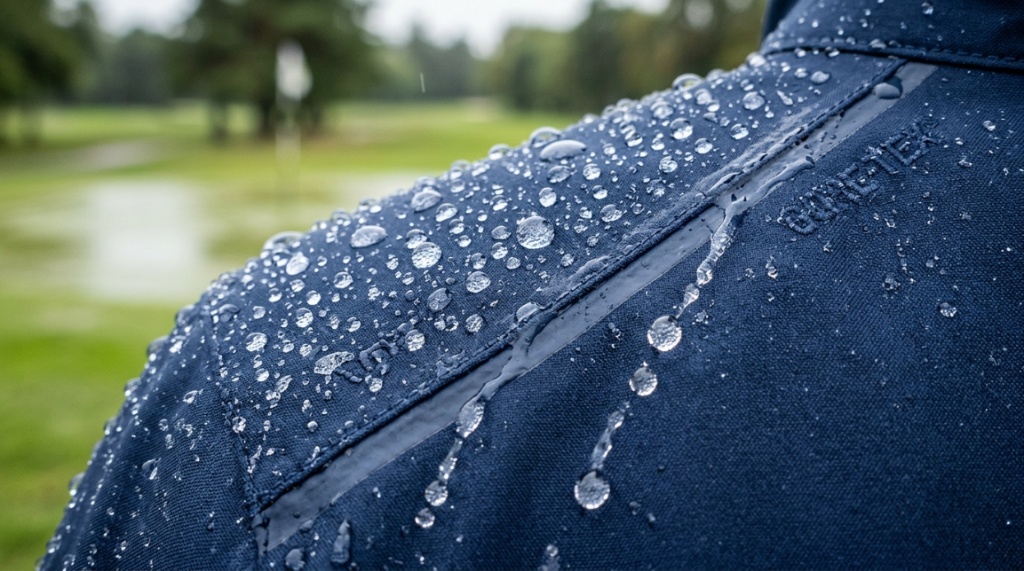
The core of your gear lies in its membrane. Two dominant technologies exist: ePTFE (like Gore-Tex) and polyurethane (PU) coatings. For Washington’s relentless rain, you need a membrane that won’t break down after repeated washings or constant use.
Gore-Tex Pro vs. Standard ePTFE: Pros and Cons
Gore-Tex Pro offers maximum durability and breathability, making it ideal for hardcore golfers who play year-round. Standard ePTFE is lighter and more affordable but may wear out faster when constantly exposed to moisture and friction from golf bag straps.
| Feature | Gore-Tex Pro | Standard ePTFE | PU Coating |
|---|---|---|---|
| Breathability | Excellent (25k+) | Good (15-20k) | Poor (5-10k) |
| Durability | Very High | Medium | Low |
| Weight | Heavier | Light | Heavy |
| Best For | Year-round play | Spring/Summer | Emergency Use |
The Rise of Proprietary Membranes (e.g., Futurelight)
Brands like The North Face have developed their own membranes to rival Gore-Tex. These often offer superior flexibility and stretch, which is fantastic for a golf swing. However, verify the hydrostatic head rating; ensure it exceeds 20,000mm for reliable Washington rain.
Why Taped Seams and Waterproof Zippers are Critical
Water always finds the path of least resistance—typically through a needle’s hole. Fully taped seams are non-negotiable. Similarly, standard zippers leak under pressure. Look for water-resistant (not just water-repellent) zippers on all pockets and the main closure.
How to Fit a Rain Jacket for a Golf Swing?
A rain jacket that fits well in a business meeting will likely restrict your backswing. The fit must be athletic but generous enough to allow for a full shoulder turn and arm extension. Try on the jacket wearing your typical golf base layers to ensure proper sizing.
The “Reach Test” for Shoulder Mobility
Stand in a golf stance and mimic your address position. Can you raise your arms straight overhead without the jacket hem riding up to your ribs? If so, the shoulders are cut correctly. Look for articulated elbows and pre-curved sleeves.
Length and Hem Design: Tuck or Stay?
Choose a jacket that is long enough to cover your lower back when you bend over but short enough to avoid bunching at your waist. An adjustable hem with a single-handed drawcord allows you to cinch it tight in the wind without distraction.
Cuff Closure: VELCRO vs. Elastic
Elastic cuffs are easier to get on and off but can be too loose. Velcro cuffs allow you to seal around your golf glove, keeping rain out. Ensure the cuff closure is adjustable and doesn’t create a bulky mass under your glove that interferes with your grip.
Why Waterproof Trousers Are the Unsung Hero
Most golfers focus on the jacket, but wet legs lead to cold, stiff hips and knees. In Washington, waterproof trousers are essential for the winter season. They prevent water from soaking through and wicking up your base layer, which directly impacts your lower body stability.
Full-Zip vs. Ankle-Zip Trousers
Full-zip trousers are the easiest to put on over spiked shoes without removing them, making them a caddie favorite. Ankle-zip pants are lighter and pack smaller but are a hassle to pull on in a downpour. For Washington, prioritize function over compactness.
Reinforced Sits and Knees
Look for reinforced fabric on the seat and knees. These areas experience friction from bending and sitting. A durable fabric here prevents premature wear, which is crucial for a climate where gear sees heavy use during the wet season.
Using Suspenders (Braces) for Better Fit
Waterproof trousers can slide down during your swing without a belt. Suspenders keep them positioned correctly at your natural waist, preventing that distracting “crack-of-dawn” exposure and ensuring full coverage when you bend over to mark your ball.
When Should You Choose a Rain Suit Over a Jacket?
If your round consistently lasts over 4 hours in steady rain, a full rain suit (jacket + trousers) is always superior to just a jacket. The suit works as a system, preventing water from traveling from your wet trousers up under your jacket layer.
Material Weight: 2-Layer vs. 3-Layer
2-layer suits are affordable and flexible but can feel clammy. 3-layer suits (where the membrane is bonded to an inner lining) are more durable, breathable, and pack down smaller. For daily use in Washington, invest in a 3-layer system.
The Case for a “Storm” Fit
A contemporary “storm” fit provides extra room in the chest and shoulders without looking like a tent. This allows for a natural swing and thermoregulation. Avoid tight-fitting “athletic” cuts that are designed for city rain, not golf course functionality.
How to Layer Effectively Beneath Your Rain Gear?
Your rain gear is the shield, but your base layers are the armor. Proper layering ensures you stay warm without overheating, which is vital for maintaining your touch on putts and chips. The goal is to trap air, not sweat.
Base Layer: Merino Wool vs. Synthetic
Merino wool is the gold standard for Washington golf because it regulates temperature even when damp. Synthetic fabrics (polypropylene) are cheaper but can cultivate odor. Avoid cotton at all costs; it retains moisture and steals body heat rapidly.
Mid-Layer Insight for Southern Washington
In places like Vancouver, WA, winters are slightly milder but wetter. Use a lightweight fleece or a breathable softshell as a mid-layer. Ensure your mid-layer is slim-fitting so your rain jacket isn’t stretched too tight, which compromises its waterproof deflection.
Venting Strategies During Your Round
Open pit zips and hand-warmer pockets are excellent for dumping heat quickly during a long walk up a hill. On windy days, keep your zips closed but open the neck line to release moisture. Adjust these vents strategically at each hole to maintain your ideal body temperature.
Which Brands Dominate the Washington Golf Scene?
Local golfers have tested brands for decades. While celebrity brands like Galvin Green and Kjus hold high prestige, they often come with a premium price tag. Brands like FootJoy, Zero Restriction, and Adidas consistently deliver reliable performance in the PNW’s specific conditions.
Galvin Green vs. FootJoy: Is Premium Worth It?
Galvin Green is the ultimate luxury, offering unmatched breathability and cut quality, but a full suit can exceed $1,000. FootJoy’s HydroSeries provides 90% of the performance at half the cost. For the average golfer playing 2-3 times a week, FootJoy offers better value. Planning to upgrade your kit for the course? Make sure you check out how far a budget golf hunting rangefinder really measures to ensure your distance control stays accurate even in wet weather conditions.
Zero Restriction: The Local Hero
Zero Restriction is a direct competitor to Galvin Green, known for its high-quality fabrics and windproof construction. They are highly regarded in the Pacific Northwest for their waterproofing claims, which they back with a solid warranty—a sign of confidence in a challenging climate.
Direct-to-Consumer brands like Stitch and Inesis
Affordable options like Inesis (from Decathlon) have improved massively. Their gear is surprisingly breathable for the price, making them perfect for the weekend warrior who doesn’t play in extreme downpours. However, they often lack the durability of premium brands.
Can You Use Ski Gear Instead of Golf Rain Gear?
Technically, yes, but it’s not recommended. Ski jackets are usually too bulky, insulated, and lack the swing-specific articulation needed for golf. They also restrict rotation, which can cause you to alter your swing path and develop bad habits.
The Mobility Difference
Golf rain gear is cut with a four-way stretch to accommodate the rotation of the torso. Ski gear is designed for forward movement and falls, not torsion. Wearing ski gear will likely lead to a blocked follow-through.
Weight and Packability Concerns
Ski gear is heavy and takes up half your golf bag. Golf-specific suits are designed to be packable into a small pouch, saving room for your various accessories and a pullover. Consider the practicality of carrying your ski gear up and down the fairway.
Where to Buy and How to Test Waterproof Gear?
While online research is helpful, purchasing waterproof gear is a tactile experience. You need to feel the fabric and test the zippers. Local pro shops often have a selection, but big box stores offer more variety. Hugo’s recommendations on fabric technology are spot on.
The “Shower Test” at Home
If buying online, perform a home test. Wear your base layer and the new jacket, then stand in a warm shower for 2 minutes. Check for water ingress around the collar and chest. This simulates heavy rain better than any spray bottle.
Reading Reviews for PNW-Specific Feedback
Look for reviews that mention “Pacific Northwest” or “Seattle.” A review from a golfer in Arizona is irrelevant to your needs. They will emphasize breathability for heat, whereas you need data on waterproofing endurance over half a day of drizzle.
Unbiased Comparison Guides
For a comprehensive, data-driven breakdown of the latest options, consider consulting an expert guide that compares and tests the best waterproof suits specifically for the Washington climate. You can find a detailed analysis of the top performers online to guide your decision.
How to Care for Your Waterproof Gear to Extend Its Life?
Your expensive rain gear will fail prematurely if you don’t maintain it. The DWR finish wears off, and grease from the course will clog the membrane’s pores. Proper care is not optional; it’s a requirement for longevity in a wet climate.
Washing Instructions: The Tech Wash
Never use standard laundry detergent. Use a specialized “tech wash” that removes oils and dirt without damaging the membrane. Wash on a gentle cycle with cold water and rinse thoroughly. A second wash with a DWR re-proofer is necessary to restore water beading.
Drying and Storage
Dry your gear naturally, away from direct heat. Tumble drying with a low heat setting can reactivate the DWR, but avoid high temperatures, as they delaminate the fabric. Store your jacket hanging, not compressed in a ball at the bottom of your bag.
Frequently Asked Questions
Is expensive golf rain gear worth the investment?
Yes, for golfers in Washington who play year-round, premium gear is worth it. High-end membranes (ePTFE) last longer, breathe better, and maintain waterproofing over time. Cheap gear often delaminates within a season, costing you more in the long run.
Can I wear a waterproof jacket if it doesn’t have pit zips?
Yes, but you will likely overheat during active play. Pit zips are a critical ventilation feature for regulating body temperature. Without them, you face a tradeoff between staying dry from rain and staying dry from sweat. Choose a model with pit zips for comfort.
How do I stop my rain trousers from riding up during my swing?
Use suspenders or buy trousers with an integrated silicone waistband. A cambered fit that follows the curve of your spine also helps. Ensure the trousers have a higher back rise to maintain coverage when you bend over the ball.
Do I need waterproof shoes, or is a spiked shoe enough?
Waterproof shoes are essential in Washington. Spiked shoes often have mesh uppers. Look for shoes with a Gore-Tex or similar waterproof lining. Pair them with water-resistant socks to keep your feet dry even if water goes over the collar.
What is the single most important feature for Washington golf?
Breathability combined with seam sealing is the most important combination. You can have a 30,000mm waterproof rating, but if the jacket can’t breathe, you’ll be wet inside from condensation. Look for a high MVTR (Moisture Vapor Transmission Rate) for comfort.
Are there any benefits to wearing a rain vest over a full jacket?
Yes, a rain vest is excellent for late autumn when you need core warmth and water resistance. It allows your arms to move freely and prevents overheating. However, sleeves are often the first part to get wet and cold, so it’s not a full replacement.
How often should I re-waterproof my gear?
DWR treatment should be refreshed every 3-5 washes or at the start of each cold season. If water no longer beads up on the surface and instead soaks into the face fabric, it’s time to apply a new DWR coating.
Conclusion: Be Unstoppable in the Rain
Selecting the right waterproof golf rain gear in Washington is about respecting the environment and knowing your own body. You don’t need to buy the most expensive item; you need the right item. Focus on a breathable membrane, fully taped seams, and a fit that allows your swing to be fluid. This week, take a hard look at your current gear. If it lacks ventilation or has scuffs on the DWR coating, it’s time to upgrade. By investing in the proper layered system, you transform wet, miserable rounds into memorable, competitive golf. So, check the forecast, suit up correctly, and tee off with confidence. Your next great round is waiting rain or shine.