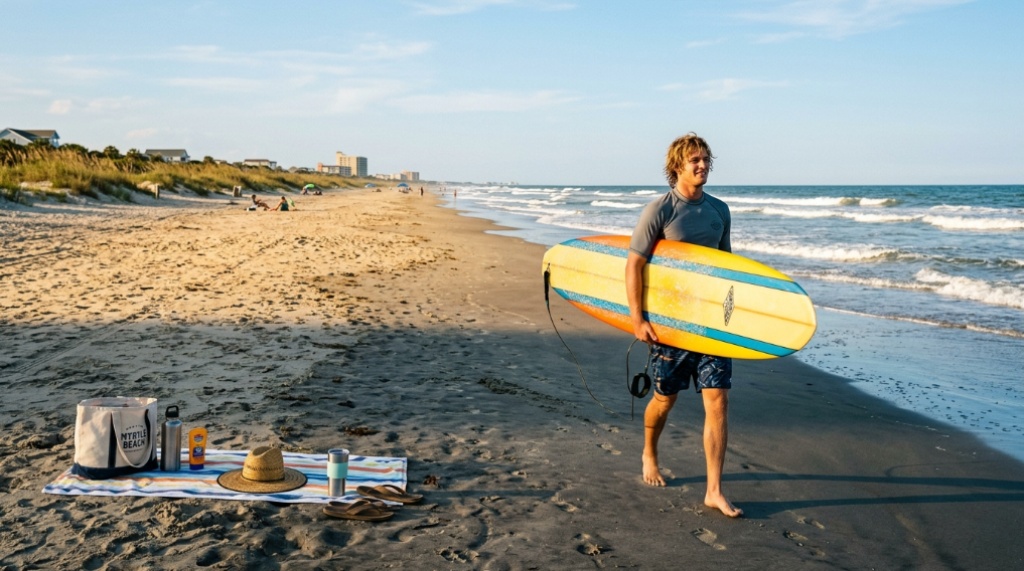
Essential Beach Gear for a South Carolina Surf Day
You park near the pier, eager to paddle out, and take two steps onto the sand. By the time you reach the waterline, your feet are burning, your flip-flops are buried somewhere behind you, and you’re already questioning your footwear choices. South Carolina surf days come with their own quirks: powdery sugar sand that scorches by mid-morning, warm water that makes a full wetsuit feel ridiculous, and long beach walks between the parking lot and a decent break. If you want to know which gear actually earns its place in your bag before you paddle out, read more about how sand socks solve one of the most overlooked problems on Lowcountry beaches.
Quick Answer
The essential gear for a South Carolina surf day boils down to sun protection, foot protection, and a board setup matched to small, warm, wind-driven waves. Prioritize a good surf hat or rash guard, sand socks or booties for hot sand and shell hash, reef-safe sunscreen, a leash that suits the day’s conditions, and a soft-top or fish shape for mushy surf. Leave the thick wetsuit at home unless it’s winter.
Key Takeaways
- South Carolina’s powdery sand gets painfully hot by late morning, so foot protection like sand socks or thin booties solves a problem most surfers don’t think about until they’re hopping across the beach.
- Water temperatures along the Grand Strand and Lowcountry stay mild for much of the year, which means board shorts and a rash guard cover most sessions between spring and fall.
- Summer surf in South Carolina is often small and wind-driven, so a longer board or a fish shape will catch more waves than a short high-performance thruster.
- Sun protection matters more than most people expect because UV exposure on the water is amplified by reflection, even on hazy days.
- Cheap flip-flops won’t survive the walk from the car to the break — plan your footwear around the actual distance you’ll cover.
What Makes a South Carolina Surf Day Different
South Carolina doesn’t surf like California, and it doesn’t surf like Florida either. The state’s coastline runs from the Grand Strand down through Charleston and into the Lowcountry, and the wave conditions change noticeably as you move south. Most of the year, waves are small — often knee to waist high — and shaped by local wind rather than long-period groundswell. That matters for gear because the equipment that works in head-high Pacific surf is often overkill here.
The two conditions that shape your gear list most are sand temperature and water temperature. South Carolina beaches are famous for fine, powdery sand that absorbs heat quickly. By 10 or 11 a.m. in summer, bare feet on dry sand can become genuinely painful. Meanwhile, ocean temperatures in the summer often sit in the low 80s°F, which means you’re not wearing a wetsuit — you’re wearing board shorts and a top, and the gear decisions shift entirely toward sun and foot protection.
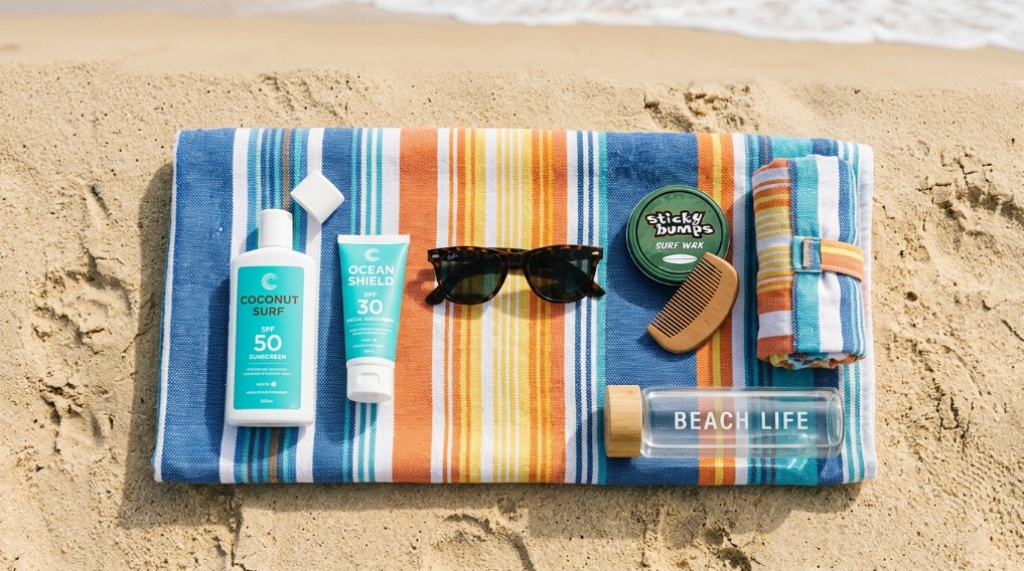
Foot Protection: The Most Overlooked Piece of Gear
If you surf in South Carolina between May and September, foot protection is not optional. It’s the difference between a relaxed walk to the lineup and a sprint across hot sand while carrying a board under one arm.
Sand Socks vs. Traditional Booties
Sand socks are thin, low-profile footwear designed specifically for walking on hot sand and protecting against shell hash and debris. Traditional surf booties are thicker, often neoprene, and designed for cold water and reef protection. On a typical South Carolina summer day, sand socks make far more sense than booties because the water is warm and you don’t need thermal insulation.
Booties can still be useful in winter when water temperatures drop, or on beaches with heavier shell coverage where the extra sole thickness helps. But for a summer session at Folly Beach or Myrtle Beach, sand socks are usually the more comfortable choice, Before heading out into the water, make sure you protect your ears properly by learning How to Use Moldable Surf Ear Plugs for a Better Fit.
What to Look For
- A snug but not tight fit — loose sand socks can slide off in the shorebreak.
- A grippy sole that works on wet sand, not just dry.
- Quick-drying material so they don’t stay damp for the drive home.
- Enough coverage to protect against both heat and small debris.
Sun Protection That Actually Holds Up
UV exposure on the water is significantly higher than on land because water and wet sand reflect sunlight back at you. Even on a hazy South Carolina afternoon, you can burn faster than expected. The gear that handles this best is layered, not singular.
Rash Guards and Long-Sleeve Tops
A long-sleeve rash guard is the single most effective piece of sun protection for warm-water surfing. It blocks UV on your shoulders, back, and arms — the areas most exposed while paddling. Look for UPF-rated fabric and a fit that stays in place when you’re paddling hard.
Surf Hats and Visors
A surf hat with a chin strap protects your face, ears, and neck without flying off in the shorebreak. Visors work for some surfers, but they leave the top of your head exposed and can shift during duck dives. If you burn easily, a full-brim surf hat is the more reliable option.
Sunscreen
Mineral-based, reef-safe sunscreen is the standard recommendation for ocean sports. Apply it before you leave the house, not just at the beach, because it needs time to absorb. Reapply every couple of hours, especially after wiping out or sitting on the board.
Board and Leash Choices for Small, Warm Surf
Most South Carolina surf days serve up small, soft waves that break close to shore. A short, high-performance thruster that works well in punchy reef breaks will often feel sluggish here. Choosing a board suited to the conditions makes more difference than almost any accessory.
Board Shape
- Longboards and mid-lengths: Best for catching small, mushy waves and for beginners. Extra volume means easier paddling and more waves per session.
- Fish shapes: Good for small waves with a bit of push. Wide, thick, and fast down the line.
- Soft-tops: Great for beginners and crowded beach breaks, where a foamie won’t injure anyone nearby.
- Shortboards: Better saved for hurricane swell or the occasional clean, larger day.
Leash Length and Thickness
Match leash length to board length. A leash that’s too short creates tension during wipeouts, and one that’s too long tangles easily in the shorebreak. For small-wave South Carolina days, a standard-length leash in a moderate thickness is fine — you’re not likely to snap a cord in knee-high surf.
Wetsuit vs. No Wetsuit: A Seasonal Breakdown
One of the most common questions about South Carolina surfing is whether you need a wetsuit. The short answer is: sometimes, but far less often than you’d think.
| Season | Typical Water Temp Range | Recommended Gear |
|---|---|---|
| Summer (June–August) | Upper 70s to low 80s°F | Board shorts, rash guard |
| Fall (September–November) | Mid 70s cooling to low 60s°F | Spring suit or 2mm top late in season |
| Winter (December–February) | Upper 50s to low 60s°F | 3/2mm fullsuit |
| Spring (March–May) | Low 60s to low 70s°F | 2mm top or spring suit early, boardshorts by May |
These ranges are approximate — water temperatures shift year to year based on currents and weather patterns. The general principle holds: South Carolina water stays warm enough that full wetsuits are only really needed in the coldest winter months.
Small Gear That Makes a Big Difference
Beyond the board, the leash, and your sun protection, a few small items round out a well-planned South Carolina surf day.
- Board bag: Protects your board from heat damage in the car. A reflective or light-colored bag keeps wax from melting and your board from baking.
- Waterproof phone pouch: Useful if you’re surfing alone or want to check tide charts from the beach.
- Rinse kit or water jug: A gallon of fresh water at the car makes the post-session transition much more comfortable.
- Tide and swell app: South Carolina surf is dramatically tide-dependent. Checking the chart before you load the car saves a lot of wasted trips.
- Dry bag or towel: Small but useful for keeping keys, phone, and snacks dry while you’re in the water.
Common Gear Mistakes to Avoid
Some of the most frustrating surf days come down to gear decisions that seemed fine at home but fell apart on the beach.
- Wearing flip-flops for the walk to the break. They fall off in the sand, slow you down, and offer no protection from hot sand. Sand socks or lace-up shoes you can leave at the boardwalk work better.
- Skipping sunscreen because it’s cloudy. UV penetrates cloud cover and reflects off water. Burns happen on hazy days more often than people expect.
- Bringing a shortboard for knee-high surf. You’ll paddle more and ride less. Match the board to the forecast.
- Forgetting a towel or change of clothes. Sand gets everywhere. A cheap beach towel and a dry shirt make the drive home far more pleasant.
- Ignoring the tide chart. Many South Carolina breaks only work at certain tides. Showing up at the wrong stage of the tide can mean flat water or shore pound.
Frequently Asked Questions
Do I need a wetsuit to surf in South Carolina?
For most of the year, no. From late spring through early fall, water temperatures are warm enough for board shorts and a rash guard. A wetsuit becomes useful in late fall and essential in the winter months, typically a 3/2mm fullsuit.
Are sand socks worth it for South Carolina beaches?
Yes, especially in summer. South Carolina’s fine sand gets very hot during the day, and walking barefoot from the parking lot to the water can be genuinely painful. Sand socks offer light protection without the bulk of traditional booties.
What kind of surfboard works best in South Carolina waves?
Longboards, mid-lengths, fish shapes, and soft-tops generally work best because most days offer small, soft waves. Shortboards are better reserved for hurricane swell or the occasional larger, cleaner day.
Is the surf in South Carolina good for beginners?
Many South Carolina beaches are well-suited to beginners because the waves are typically small, the water is warm, and the sand bottom is forgiving. A soft-top longboard and a basic understanding of rip currents are a good starting point.
What time of day is best for surfing in South Carolina?
Early morning often brings lighter winds and cleaner conditions, while late afternoon can pick up sea breeze chop. Tide matters more than time of day at many breaks, so check the tide chart before planning a session.
Do I need reef-safe sunscreen in South Carolina?
Reef-safe, mineral-based sunscreen is a good choice regardless of location because it’s generally gentler on marine environments and often holds up well during water sports. Apply before you leave and reapply throughout the session.
Conclusion
A successful South Carolina surf day comes down to matching your gear to warm water, hot sand, and small waves. Prioritize foot protection, sun protection, and a board that catches the mush. Keep your bag lean — a rash guard, sunscreen, sand socks, a leash, and a tide check are enough for most sessions. If you’re new to the area, start with the simpler breaks and build your gear list around what actually gets in your way. The less time you spend dealing with hot sand and sunburn, the more time you’ll spend in the water.