

Tips for Stress-Free Moves for Busy Families
Key Takeaways
- Start planning early to avoid last-minute stress.
- Involve the entire family in the moving process to promote unity and reduce anxiety.
- Maintain consistent routines for children and adults alike.
- Use professional services when needed for a hassle-free move.
- Keep essentials and important items within easy reach during the transition.
Moving is often ranked among life’s most stressful events, especially for busy families managing hectic schedules and various responsibilities. Whether you are moving across town or to a new state, a well-organized approach can help reduce anxiety and keep your family on track throughout the process. For seamless guidance and personal support during your move, the team at Your Home Wichita offers expert resources and local insights. By following thoughtful strategies, you can transform a complicated experience into one your family can manage with confidence.
Rather than letting chaos take over, a few practical steps can make all the difference. Early preparation, open communication, and the right support are essential for a smooth transition. As you embark on this journey, it is important to anticipate challenges and address them proactively. Adopting a family-focused approach provides children with security and keeps parents prepared for moving day and beyond. With well-thought-out routines and a little teamwork, your move can be both efficient and positive.
Start Planning Early
Successful moves begin with early and detailed planning. Make a checklist or moving calendar as soon as you know relocation is on the horizon. Outline all critical milestones, including scheduling the moving company, collecting packing supplies, and notifying schools or utility companies of your address change. A step-by-step approach breaks the process into manageable pieces, which is key for busy households with competing demands. Addressing tasks weeks in advance allows you to handle unexpected surprises with a calm mindset.
Involve the Whole Family
Getting every family member involved lightens the workload and encourages cooperation. Assigning age-appropriate responsibilities gives children ownership of their personal space and lessens the fear of change. Kids can help pack toys or decide what to donate or keep, while teens might assist with logistics, such as researching moving companies or tracking inventory. According to experts, involving children in the process fosters a sense of control and security, making the move more comfortable for everyone.
Maintain Daily Routines
A move can disrupt your family’s sense of stability. Maintaining daily routines such as regular bedtimes, meal schedules, and after-school activities can help nurture emotional well-being. Knowing what to expect each day soothes uncertainty. Even small traditions like reading at bedtime or family meals can offer familiar comfort, reassuring children that some parts of life remain steady even as surroundings change. This sense of normalcy goes a long way in smoothing the transition for both kids and adults.
Declutter Before Packing
Packing is significantly easier when you scale back your possessions in advance. Go room by room to sort out what to keep, donate, sell, or throw away. Letting go of unneeded items means less packing, fewer moving boxes, and a lighter load for movers or trucks. This step helps you save money on moving costs and sets the stage for a fresh start at your new address.
Pack an Essentials Box
In the first few days of your new home, quick access to basic necessities is crucial. Prepare a clearly labeled box or bag containing toiletries, charger cables, a change of clothes, favorite snacks, basic kitchen gear, and important documents. This essentials kit saves you from searching through stacks of boxes and ensures comfort after a long moving day. Place this box in your car or in a designated spot for easy retrieval upon arrival.
Label Boxes Clearly
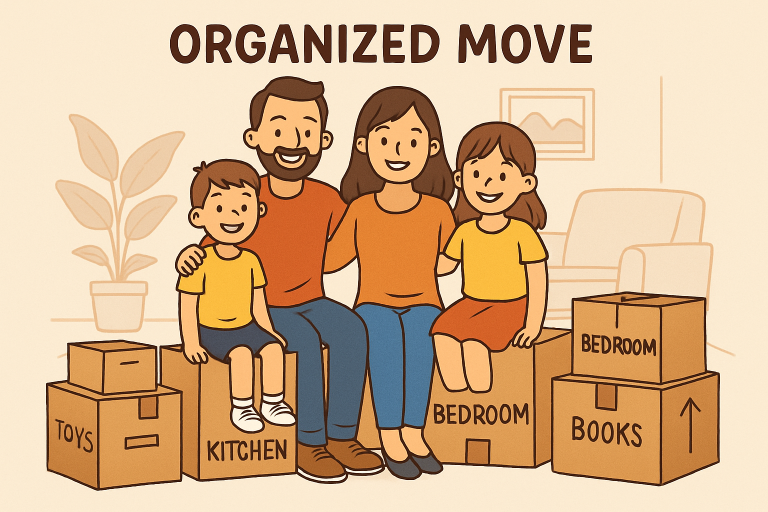
Organizing boxes with detailed, legible labels speeds up your move and makes unpacking far more efficient. Label not only the destination room but also include a brief list of contents. For example, a box marked “Kitchen: Plates, Glasses, Utensils” is faster to sort than one marked simply “Kitchen.” Color-coding or using large, permanent markers increases visibility and helps both movers and family members put boxes in the right spots, streamlining the entire settling-in process. Clear labeling prevents delays and confusion and is widely recommended by moving experts.
Utilize Professional Services
Hiring professional movers or packers relieves much of the physical and organizational strain of relocating. Professionals understand how to protect furniture, maneuver bulky items through tight spaces, and stick to timelines. Research local companies for reliability, insurance coverage, and experience with family moves. Request in-home estimates and check customer reviews before finalizing arrangements. Some movers even provide packing materials or specialty moving kits for delicate or valuable items. This investment allows you to delegate labor-intensive tasks, freeing up energy to focus on settling your family.
Keep Important Documents Safe
Amid boxes and moving trucks, documents such as passports, birth certificates, insurance records, and school transcripts are easily misplaced. Designate a separate, clearly labeled folder or lockbox for these essentials and keep it with you throughout your move rather than loading it onto the moving truck. This safeguard prevents costly delays in documentation and provides peace of mind during your transition.
Final Thoughts
While moving as a busy family presents unique challenges, thoughtful preparation and teamwork can make the process much smoother. Plan ahead, lean on trusted partners, maintain consistent routines, and organize essentials for peace of mind. By staying proactive and organized, you will set a positive tone for your new chapter in your new home.
