How to Choose the Best Toner Cartridges for Busy Office Printing
Modern offices depend heavily on fast and reliable printing for invoices, reports, shipping labels, contracts, and marketing materials. According to industry research, offices still print thousands of pages every month despite the rise of digital workflows. In fact, many businesses spend nearly 3% of their annual revenue on printing-related costs. Therefore, choosing the right toner cartridge can directly affect productivity, print quality, and operating expenses. Many companies focus only on printer models, yet toner selection matters just as much. This guide explains how to choose the best toner cartridges for busy office printing while reducing waste, avoiding downtime, and improving long-term efficiency.
Understand Your Office Printing Volume First
Every office has different printing needs based on staff size, workload, and document types. Some businesses print only invoices and forms, while others produce large presentations and color brochures daily. Therefore, you should calculate your monthly page volume before purchasing toner cartridges. This simple step helps prevent overspending on unsuitable cartridge types.
Many businesses pair toner decisions with printer selection because both affect printing efficiency together. If your office regularly handles shipping documents or bulk labels, you can also explore printer options for shipping label operations to improve overall workflow performance. Matching the right printer and toner system creates better print consistency and lower maintenance costs. As a result, offices avoid frequent interruptions during busy working hours.
Low-volume offices usually benefit from standard-yield cartridges because they print fewer pages monthly. However, medium and large offices should consider high-yield or extra-high-yield cartridges for better cost efficiency. High-capacity cartridges reduce replacement frequency and save employee time throughout the month. Consequently, teams can focus more on productive tasks instead of printer maintenance.

Choose Between OEM and Compatible Toner Cartridges
OEM toner cartridges come directly from printer manufacturers and guarantee maximum compatibility with specific devices. These cartridges usually deliver consistent print quality, accurate color reproduction, and reliable page yields. However, OEM products often cost significantly more than compatible alternatives. Therefore, businesses must balance quality expectations with budget limitations.
Compatible toner cartridges come from third-party manufacturers and often provide lower-cost printing solutions. Many reliable compatible brands now offer impressive print quality and dependable performance for office environments. Nevertheless, poor-quality generic cartridges can leak toner or damage internal printer components. For this reason, businesses should only buy compatible cartridges from trusted suppliers with strong reviews and warranties.
Some offices use a hybrid approach by selecting OEM cartridges for color printing and compatible cartridges for standard black-and-white documents. This strategy reduces operational expenses while maintaining professional output where color accuracy matters most. Additionally, it allows companies to test third-party cartridges gradually without fully changing their printing system. As a result, risk stays low while savings increase steadily.
Pay Attention to Page Yield Ratings
Page yield indicates how many pages a toner cartridge can print before replacement becomes necessary. Manufacturers usually measure yield using standardized ISO testing methods with average text coverage. However, actual results often vary depending on document design, graphics, font size, and print density. Therefore, businesses should treat advertised page yields as general estimates rather than exact numbers.
Busy offices benefit greatly from high-yield toner cartridges because they reduce interruptions during large print jobs. Employees spend less time changing cartridges, and IT teams handle fewer maintenance requests throughout the workweek. Moreover, high-yield cartridges typically reduce printing cost per page over time. Consequently, companies gain better long-term financial efficiency.
Some organizations overlook the hidden labor cost of replacing cartridges too frequently. In fast-paced workplaces, even short printer interruptions can delay operations and affect employee productivity. This issue becomes especially noticeable in warehouses, accounting departments, and customer service offices with constant document output. Therefore, page yield should always remain a major purchasing factor.
Check Toner Compatibility Carefully
Printer compatibility remains one of the most important factors when buying toner cartridges. Even cartridges that look nearly identical may not function correctly with certain printer models. Therefore, businesses should always confirm exact printer model numbers before ordering replacement toner. A small compatibility mistake can create expensive delays and wasted supplies.
Modern printing technology continues evolving rapidly, especially in commercial office environments. Businesses exploring automation and smarter print management systems can also learn about future developments in digital printing technology to better prepare for long-term office upgrades. Understanding these trends helps companies choose toner systems that remain practical for future growth. As a result, offices avoid outdated printing investments.
Many manufacturers now use firmware updates that block unsupported cartridges from working properly. This issue affects certain compatible toner brands more than others. Therefore, offices should verify firmware compatibility before installing third-party cartridges in newer printers. Additionally, businesses should keep backup cartridges available during critical work periods.
Consider Print Quality Requirements
Not every office requires the same level of print quality for daily operations. Law firms and financial offices mainly print text-heavy documents where sharp black output matters most. Meanwhile, marketing agencies often need vivid graphics and accurate color reproduction for presentations and promotional materials. Therefore, toner selection should align with actual business requirements.
High-quality toner produces cleaner text edges, smoother gradients, and fewer smudges during large print runs. Inferior toner sometimes creates faded output, streaks, or uneven coverage that damages professional presentation quality. Consequently, customer-facing businesses should prioritize toner consistency over short-term savings. Professional print appearance directly influences brand credibility and customer trust.
Offices located in humid climates may also notice different print quality performance compared to dry environments. High humidity can affect toner flow and paper handling inside printers. Therefore, businesses in tropical regions should store toner cartridges in cool and dry conditions whenever possible. Proper storage significantly improves cartridge lifespan and print reliability.
Evaluate Cost Per Page Instead of Cartridge Price
Many buyers focus only on cartridge price without calculating the actual printing cost over time. However, a cheaper toner cartridge may deliver fewer pages and require more frequent replacements. Therefore, businesses should always compare cost per page rather than purchase price alone. This calculation provides a more accurate view of long-term operating expenses.
You can calculate cost per page by dividing cartridge price by estimated page yield. For example, a $120 cartridge printing 6,000 pages costs less per page than a $60 cartridge printing only 2,000 pages. Although the first option seems expensive initially, it delivers better overall value. Consequently, businesses reduce total printing expenses over several months.
Large organizations often negotiate bulk toner contracts with suppliers to lower cost per page even further. Bulk purchasing also reduces emergency orders and shipping delays during high-demand periods. Moreover, suppliers sometimes offer recycling programs and maintenance support for long-term clients. These extra benefits can improve operational efficiency significantly.
Look for Reliable Toner Cartridge Features
Reliable toner cartridges often include advanced design features that improve performance and reduce printer wear. Some premium cartridges contain anti-leak seals, improved toner distribution systems, and high-quality imaging drums. These features help maintain stable print quality during heavy daily usage. Therefore, businesses should examine product specifications carefully before purchasing.
Smart chip technology also plays an important role in modern toner cartridges. Many cartridges now monitor toner levels accurately and communicate directly with office printers. This feature helps teams plan replacements before printers completely stop working. As a result, offices experience fewer unexpected workflow interruptions.
Another overlooked feature involves cartridge packaging quality during transportation and storage. Poor packaging may expose toner to moisture, heat, or impact damage before installation. Consequently, businesses should buy toner from suppliers that use protective packaging and secure shipping methods. This simple precaution prevents many avoidable printing problems.
Understand Environmental and Recycling Considerations
Environmental responsibility has become increasingly important for modern businesses and office operations. Many toner cartridges contain recyclable materials that reduce landfill waste and environmental impact. Therefore, offices should prioritize brands offering cartridge recycling programs and eco-friendly manufacturing practices. Sustainable printing choices also improve corporate social responsibility efforts.
Remanufactured toner cartridges provide another environmentally friendly option for cost-conscious businesses. Manufacturers clean, refill, and test these cartridges before resale. High-quality remanufactured cartridges often perform surprisingly well in everyday office environments. However, companies should still buy them from reputable suppliers with strong quality controls.
A unique issue many blogs rarely mention involves toner dust accumulation inside poorly ventilated printing rooms. Over time, excessive toner particles can affect air quality in busy office spaces with constant printing activity. Therefore, organizations should maintain proper ventilation around large printing stations and clean equipment regularly. This practice protects both employees and printer performance.
Match Toner Choices to Office Climate and Environment
Office environment conditions can influence toner performance more than many businesses realize. Hot climates may cause toner clumping during storage, especially in poorly ventilated rooms. Meanwhile, cold environments can create condensation problems that affect printer components and paper handling. Therefore, climate conditions should influence toner storage and usage practices.
Dusty warehouse offices and industrial facilities require extra attention because airborne particles can enter printers easily. In these locations, sealed toner cartridges and regular printer cleaning become extremely important. Otherwise, toner contamination may reduce print quality and increase maintenance costs. Consistent cleaning schedules help prevent long-term hardware issues.
Offices located near coastal regions often experience higher humidity levels throughout the year. High moisture exposure may affect toner consistency and paper feeding reliability. Therefore, businesses in humid environments should use climate-controlled storage areas whenever possible. This simple adjustment improves toner lifespan and printing stability considerably.
Best Practices for Managing Office Toner Inventory
Efficient toner inventory management prevents unnecessary delays and emergency purchases during busy office periods. Businesses should track average monthly toner usage for each printer model. This information helps teams maintain accurate stock levels without excessive overordering. Consequently, offices reduce both downtime and wasted storage space.
Many companies now use centralized toner management systems for large office networks. These systems automatically monitor cartridge levels and notify staff when replacements become necessary. Additionally, some advanced platforms generate usage reports that help reduce unnecessary printing. Better visibility often leads to improved cost control.
Businesses should also rotate stored toner inventory regularly to avoid aging issues. Although toner cartridges generally last a long time, improper storage can still reduce performance over several years. Therefore, offices should follow first-in-first-out inventory practices whenever possible. Organized storage improves both efficiency and product reliability.
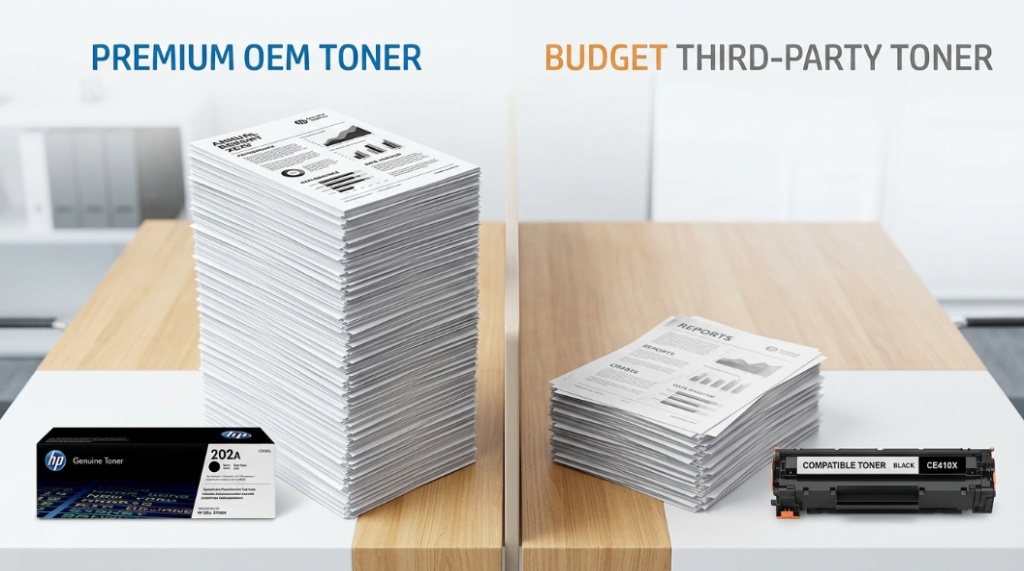
Signs Your Office Uses the Wrong Toner Cartridge
Frequent paper jams often indicate toner compatibility or quality problems inside office printers. Poor-quality cartridges may also produce faded text, streaks, or uneven black coverage across documents. Therefore, recurring print defects should never be ignored during daily operations. Small issues can quickly become expensive maintenance problems.
Another warning sign involves unusually fast toner depletion despite normal printing volume. Low-quality cartridges sometimes contain less toner than advertised or distribute toner inefficiently during printing. Consequently, offices experience higher replacement frequency and increased operational expenses. Monitoring actual page output helps identify these problems early.
Some businesses also notice increased printer noise or overheating after installing unsuitable cartridges. This issue may occur because internal components work harder to compensate for inconsistent toner distribution. Therefore, offices should replace problematic cartridges immediately to avoid long-term printer damage. Preventive action often saves significant repair costs later.
Conclusion
Choosing the best toner cartridges for busy office printing requires more than comparing prices on a supplier website. Businesses must evaluate print volume, compatibility, page yield, environmental conditions, and long-term operating costs carefully. High-quality toner improves productivity, reduces downtime, and protects expensive office printers from avoidable damage. Additionally, smart toner management strategies help companies maintain consistent workflow efficiency throughout the year. If your organization wants smoother printing operations and lower printing expenses, now is the perfect time to review your toner strategy while also exploring modern digital printing innovations that support future office growth.
FAQs
How often should offices replace toner cartridges?
Offices should replace toner cartridges whenever print quality declines or toner levels become critically low.
Are compatible toner cartridges safe for office printers?
High-quality compatible cartridges from trusted suppliers are generally safe for most office printers.
What is the biggest advantage of high-yield toner cartridges?
High-yield cartridges reduce replacement frequency and lower overall printing costs.
Can humidity affect toner cartridge performance?
Yes, high humidity can affect toner flow, paper handling, and print consistency.
Why does cost per page matter more than cartridge price?
Cost per page shows the true long-term printing expense for business operations.