Businesses Can Stop Commercial Pest Problems With Pointe Pest Control
Key Takeaways
- Commercial pest control works best as an ongoing process of inspection, monitoring, prevention, treatment, and follow-up.
- Pest activity can affect sanitation, inventory, customer confidence, employee comfort, and daily operations.
- Pointe Pest Control creates service plans around the property, pest pressure, season, and operational needs.
- Early action can help managers address pest-conducive conditions before visible activity becomes more disruptive.
A pest issue at a business is rarely limited to one sighting. Activity in a kitchen, storage room, loading area, break room, or customer-facing space can quickly become an operational concern. Pointe Pest Control provides commercial pest management built around finding pest activity, identifying contributing conditions, and developing a service plan for the specific business. For commercial property managers, the goal is not simply to remove a visible pest. It is to reduce the conditions that allow pests to return. That can include food sources, moisture, clutter, gaps around utility lines, unsecured waste areas, and overlooked access points around doors, docks, and exterior walls.
Why Commercial Properties Need Pest Control Before Problems Escalate
Businesses have distinct pest risks because they often handle frequent deliveries, shared spaces, food or waste, inventory, public traffic, and multiple points of entry. A visible pest can affect a visitor’s impression of the property, while hidden activity may create concerns in places that are not inspected every day. Businesses seeking a practical, property-specific response can work with Pointe Pest Control to schedule an inspection and discuss the building’s use, pest concerns, access requirements, and preferred service timing. Rodents are a particularly important example. The CDC explains that rodents can carry diseases that spread directly or indirectly to people, and that it is easier to control them before they become established in a building. Managers should watch for droppings and gnaw marks, particularly in cabinets, storage areas, mechanical rooms, and spaces near food or water.
How Pointe Pest Control Approaches Commercial Pest Management
Pointe Pest Control frames commercial service as a continuing partnership rather than a one-time extermination visit. Its process centers on monitoring, detection, prevention, targeted service, staff education, and follow-up. This approach gives business managers a clearer way to respond to both current activity and conditions that may support future pest problems.
Inspection and Detection
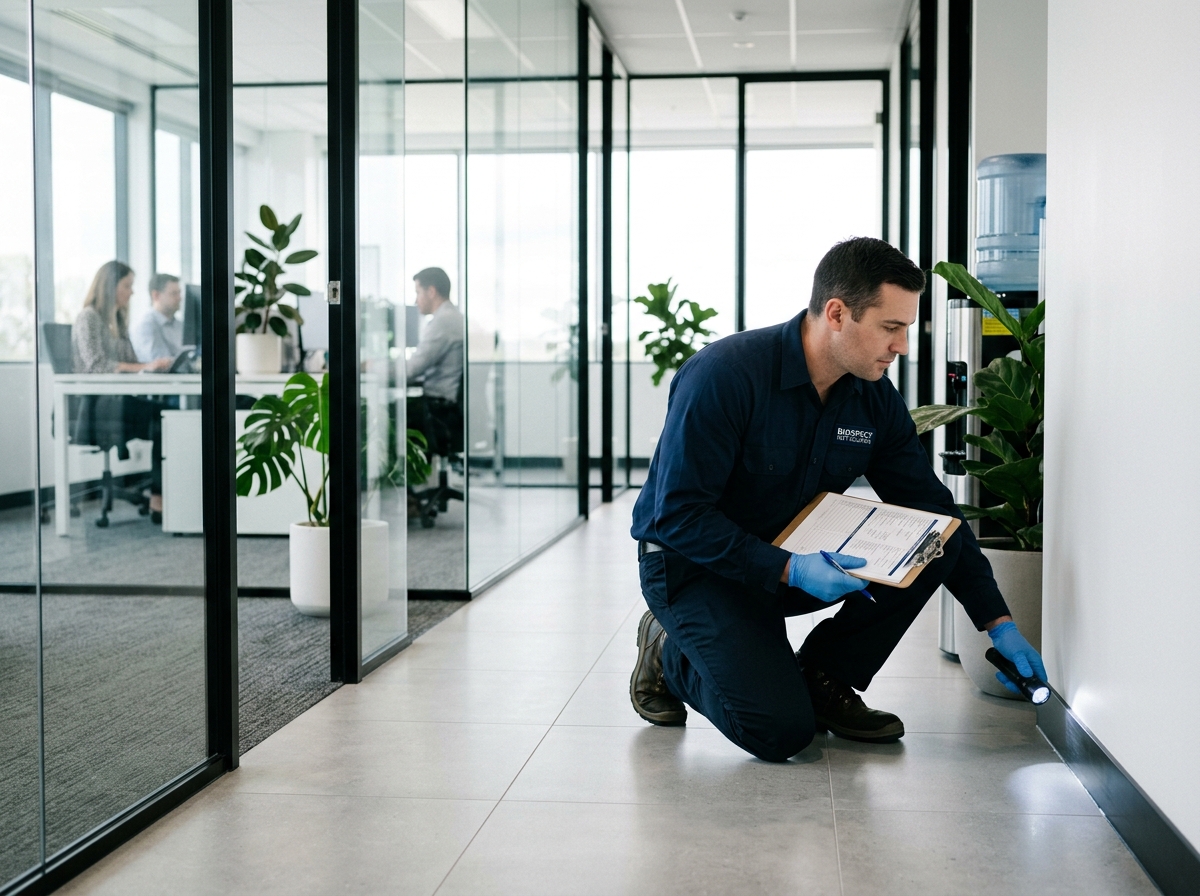
An effective plan begins with an inspection of indoor and outdoor areas where pests may enter, feed, nest, or travel. Pointe Pest Control notes that technicians may use visual inspection and discreet monitoring stations to help locate the source of activity. This allows the service plan to focus on the areas that need attention rather than treating every part of a facility the same way.
Customized Planning
A restaurant, warehouse, office, daycare, and apartment complex do not have the same traffic patterns or pest pressures. Pointe Pest Control develops commercial plans around the property type, seasonal conditions, sensitive areas, and business operations. Treatment methods may need to change as weather, pest behavior, occupancy, or building conditions change.
Education and Follow-Up
Daily practices play an important role in commercial pest prevention. Pointe Pest Control educates on-site staff about prevention measures and how to get the most from service. The company also states that customers can call between scheduled visits for follow-up treatment, and that it will return at no additional charge if pest activity persists after a service call until the problem is resolved.

Commercial Environments Pointe Pest Control Can Serve
Pointe Pest Control lists experience serving a range of commercial settings, including apartment complexes and rental units, warehouses and storage facilities, professional offices, restaurants and cafés, county and government buildings, gyms, daycares, and dental offices. Each setting calls for a different emphasis:
- Restaurants and cafés: Attention to kitchens, food storage, drains, delivery areas, waste handling, and customer spaces.
- Warehouses and storage facilities: Inspection of loading docks, exterior gaps, inventory zones, pallet storage, and rodent travel routes.
- Offices and gyms: Low-disruption service for occupied spaces, break rooms, restrooms, and shared entrances.
- Apartment communities: Coordination among property managers, maintenance teams, and residents when activity may affect more than one unit.
- Daycares, dental offices, and sensitive facilities: Careful planning around people, equipment, schedules, and restricted areas.
Pest Problems That Can Affect Business Operations
Rodents, Roaches, and Ants
Rodents can leave droppings, gnaw marks, and nesting material, while roaches and ants may be drawn to food, moisture, cracks, drains, and protected harborages. In a commercial setting, recurring sightings often indicate an access route or condition that requires more than a surface-level response. Inspection and monitoring help determine where activity is concentrated and which prevention steps are most relevant.
Flies, Spiders, Mosquitoes, and Stinging Insects
Flying insects can be associated with waste, drains, standing water, exterior lighting, or food preparation areas. Spiders may indicate that other insects are present around a building, while mosquitoes can breed around standing water. Stinging insects also require thoughtful attention near entrances, patios, playgrounds, and employee gathering areas. Pointe Pest Control can tailor commercial services to the pest and the location where activity occurs.
Why Prevention Is More Reliable Than Emergency Treatment
Emergency treatment may be necessary when a pest issue is already visible, but preventive service can reduce surprises. Regular visits create opportunities to identify early evidence, review monitoring devices, evaluate changing conditions, and recommend repairs or sanitation improvements before activity becomes widespread.
- Inspect vulnerable indoor and exterior areas.
- Document pest signs, likely entry points, and attractants.
- Reduce food, water, and shelter sources where possible.
- Use monitoring and targeted treatments appropriate to the property.
- Review results and adjust the plan as conditions change.
Preparing for a Commercial Pest Control Inspection
Managers can help make an initial inspection more productive by recording where and when pests were seen, saving photos when it is safe to do so, and noting recent changes such as construction, plumbing problems, deliveries, landscaping work, or waste-storage issues. Providing access to kitchens, storage rooms, utility areas, loading zones, and the exterior perimeter can also help identify contributing conditions.
Frequently Asked Questions
How often should a business schedule pest control?
There is no single schedule that fits every property. Service frequency should reflect the building type, pest concern, season, operational requirements, and inspection findings.
Can commercial service be discreet?
Yes. Pointe Pest Control describes its commercial work as clean, professional, and discreet. Specific scheduling, access, and treatment details can be discussed during the inspection.
What should a manager report before service begins?
Share the type of pest observed, where activity occurred, when it was first noticed, any damage or droppings found, and any areas with food, moisture, waste, or recurring maintenance concerns.
Commercial pest control is most effective when it protects the business before a small issue becomes a larger interruption. With customized planning, trained technicians, prevention guidance, monitoring, and follow-up support, Pointe Pest Control gives Chicagoland businesses a structured way to manage pest risks while keeping operations moving.
Conclusion
Commercial pest control is most effective when it is treated as an ongoing part of property maintenance rather than a response to a single pest sighting. Regular inspections, monitoring, prevention, and follow-up can help businesses identify conditions that may attract pests and address them before they become more disruptive. With a service plan tailored to the building, pest activity, season, and daily operations, Pointe Pest Control can help Chicagoland businesses manage common pest concerns while maintaining cleaner, more comfortable work environments. Managers can also support prevention by keeping food and waste areas clean, addressing moisture issues, sealing potential entry points, and reporting early signs of activity. A consistent approach makes it easier to respond to pest issues while reducing the conditions that allow them to return.