How to Find a Safe Baby Bathtub Texas
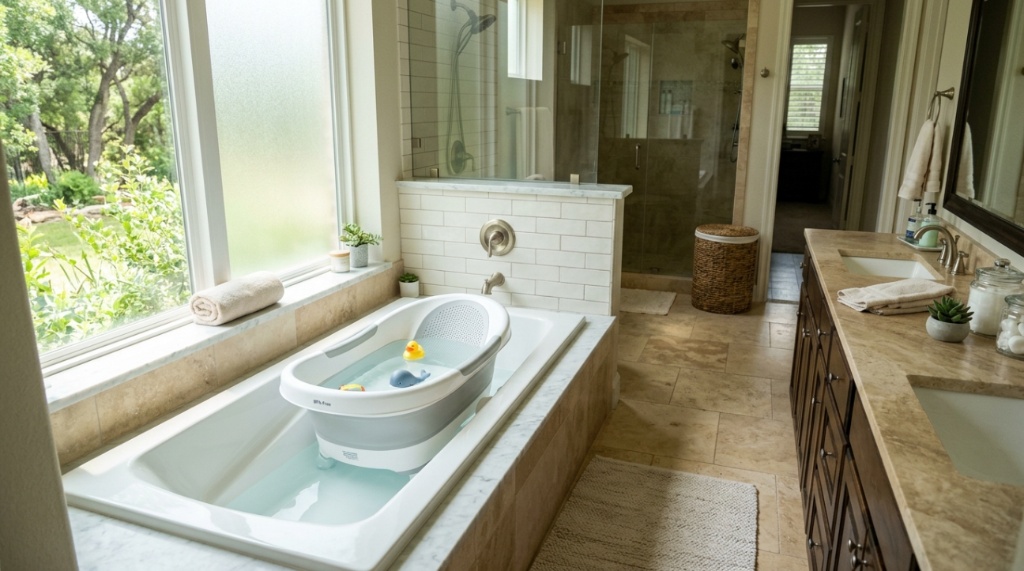
Bringing a newborn home comes with a long list of safety considerations, and bath time ranks near the top. The reality is that standard bathtubs are not designed for infants, especially in Texas homes where tubs vary from deep garden soakers to older, slippery porcelain models. Parents often worry about slips, falls, and the stress of managing a wriggly baby with one hand. The good news is that finding a safe baby bathtub Texas families trust doesn’t have to be overwhelming. This guide breaks down the specific safety features to look for, the best types of tubs for different ages, and the practical mistakes to avoid so bath time stays calm and secure.
Key Takeaways
- Slips and falls are the biggest bath-time risks, so prioritize tubs with textured, non-slip surfaces and secure anti-slip suction cups over aesthetic designs.
- Age and physical development matter more than brand; a newborn’s needs are very different from a six-month-old who can sit up unassisted.
- Temperature regulation is a critical safety feature in warmer climates; look for tubs with built-in thermometers or use a separate reliable one.
- Your bathroom’s physical layout and your own comfort level (including back strain from bending) should dictate whether a bucket tub, sling tub, or convertible tub is best.
- Never leave a child unattended in any amount of water, even with the most highly rated safety tub on the market.
Why Tub Design Matters More Than You Think
The primary reason infants need a dedicated baby bathtub is anatomical fit. A standard adult tub places the baby in a reclined position that leaves the head unsupported and the airway at risk if the baby slides. Baby bathtubs are engineered to maintain a specific angle that keeps the head above water. Additionally, they offer a smaller surface area, which makes it easier to securely grip the baby with one hand while washing with the other.
In Texas, where many homes have granite or tile surrounds and deeper soaking tubs, the transition area between the baby tub and the adult tub is also a hazard. A baby tub with a wide, flat base and strong suction cups will stay anchored to the bottom of the adult tub, preventing the entire unit from tipping if the baby kicks off the side.
The Role of Non-Slip Surfaces and Grip
Plastic becomes dangerously slick when combined with soap. A safe baby bathtub Texas parents should look for must include a textured interior (often referred to as a “grip” or “non-slip” surface) on both the seat area and the backrest. This is not a luxury feature; it is the primary defense against a baby sliding down into the water. Similarly, the exterior base of the tub must have either rubberized strips or suction cups. If the tub slides across the adult bathtub, it can bash against the faucet or the side of the tub.
Is a Newborn Sling Tub the Safest Starting Point?
For newborns under three months, the primary risks are temperature regulation and head control. A newborn sling tub, which includes a hammock or sling stretched across a small frame, is often the safest choice for this stage. The sling keeps the baby partially cradled, reducing the need for the parent to support the head constantly, and it minimizes the baby’s exposure to cold air.
However, these tubs have a trade-off. They are often less durable for the long term and the sling requires regular washing to prevent mold. They also make it slightly harder to clean the baby’s skin folds because the fabric is in the way. If you choose a sling tub, ensure the sling clips securely and does not stretch to the point where the baby’s bottom touches the hard plastic base.
Once the baby gains neck strength but cannot yet sit independently, a simple sloped tub or a “bucket” style tub is often safer and more functional than a sling. These provide a solid molded surface that follows the baby’s spine and forces a reclined posture.
Key Safety Features to Prioritize in Texas
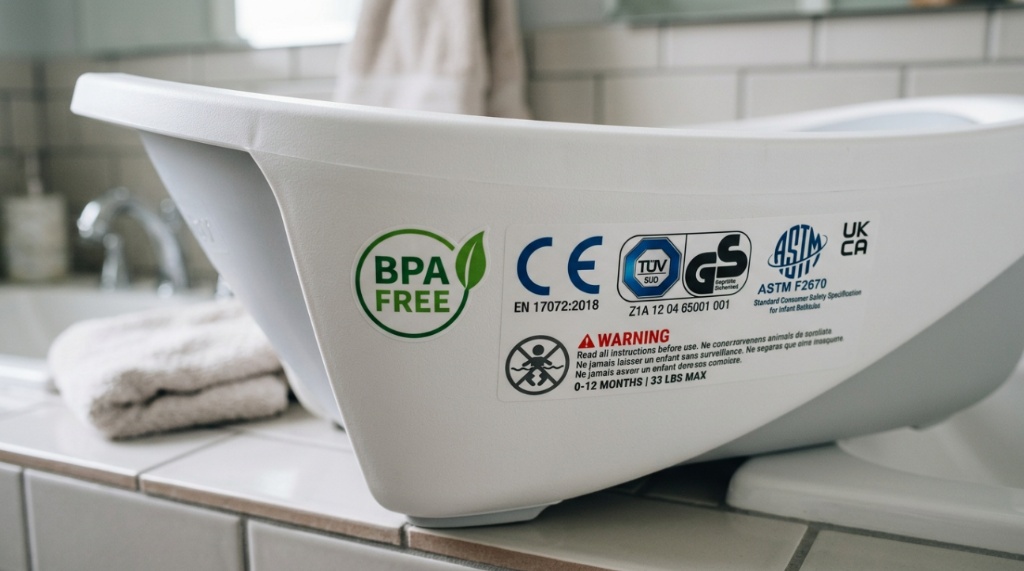
While aesthetics are nice, safety features are the deciding factors. When comparing options, do not compromise on the following elements:
- Temperature Indicator: Texas water heaters are often set high. A built-in plug that changes color when water is too hot (above 100°F) removes guesswork and is faster than testing with a wrist.
- Drain Plug Style: Look for a plug that acts as a “water stop” so you don’t have to hold the tub upright to drain it. A slow-release plug at the bottom is easier to manage and prevents dumping cold water on the baby.
- No Sharp Edges or Holes: Check for rough seams from the injection molding process. Also, avoid tubs with small decorative holes where fingers could get pinched.
- Suction Cup Quality: The suction cups should be strong enough to require significant force to pull off the floor of the adult tub. Test them in the store (or immediately upon arrival) by placing the tub on a flat, dry surface and tugging.
- Weight and Portability: You will likely carry this tub from the bathroom to a counter or bring it into the shower. A tub that is too heavy or awkward to carry becomes a drop risk.
Understanding the “Convertible” Tub Advantage
Many parents purchase a newborn sling tub first and then switch to a larger tub later, costing more money and storage space. A convertible or “grow-with-me” tub solves this by offering two to three stages in one unit. Typically, these have a newborn insert that fits into a larger shell. Once the baby sits up, you remove the insert to create a larger bathing area.
The safety benefit here is consistency. You are not re-learning the dynamics of a new tub every few months. However, the downside is that these tubs are usually bulkier and take up more floor space in the bathroom. They can also be heavier. For small Texas condos or apartments, a single-purpose small bucket tub may be safer because it is lighter to manage and easier to store away from the edge of the adult tub.
How to Determine the Right Tub Size for Your Bathroom
It is crucial to measure your bathtub before purchasing. A baby tub with a very wide base may not fit securely between the curved sides of a standard 60-inch residential tub. If the baby tub is cramped against the side, it may not sit flat, leading to instability.
Measure the width of the flat bottom of your adult tub, the depth from rim to floor, and the location of the faucet. If you intend to use the baby tub in a shower stall, ensure the base footprint is small enough to fit within the stall’s perimeter. If you plan to use it on a countertop, verify the counter can hold the weight of the water and the tub (easily 20+ pounds) without sagging.
Common Bath-Time Mistakes That Compromise Safety
Even the best equipment fails if the user makes certain errors. Awareness of these common pitfalls is just as important as choosing the right tub.
Overfilling the Tub
Baby bathtubs have a designated water line. Ignoring this line is a huge risk. Water should only reach the baby’s shoulders, no higher. Excess water increases buoyancy, making it harder to hold the baby securely and increasing the chance of the baby turning onto the stomach. Use only about two inches of water for newborns and up to the marked line for older infants.
Ignoring the Water Heater Temperature
Check your water heater thermostat. It is unsafe to have household water hotter than 120°F. Many baby burns happen when a parent adjusts the hot tap and it surges briefly. Always add cold water first, then warm water, and stir the bathwater thoroughly to eliminate hot spots before placing the baby inside. Never rely solely on a thermal color-changing plug; feel the water with your elbow as a backup check, Just as community standards reflect local pride—much like exploring What a Well-Kept Verge Says About a Town ensuring your nursery meets top safety regulations starts with choosing certified, reliable gear for your baby.
Comparing Bathing Options: Bucket vs. Sloped vs. Inflatable
Choosing the style depends on your baby’s age and your physical situation. There is no single “best” tub, but there is a best tub for your specific home setup.
Sloped tubs are ideal for newborns and pre-sitters. They are simple, lightweight, and have a rigid structure that does not wobble. The downside is that they take up a lot of storage space and are only useful for the first four to six months.
Bucket tubs (like the Puj Flyte style or classic “sponge” tubs) are compact and fold flat. They are excellent for travel or small bathrooms. However, they do not sit up high, which may cause significant back pain for tall parents. They also offer less structural support for a newborn’s head than a sloped tub.
Inflatable tubs are great for travel but are the least safe as a primary tub. They are prone to punctures, and the soft walls do not provide sturdy support. If the air compresses, the baby can tip sideways. Avoid inflatable tubs as a daily-use solution.
| Feature | Sloped Tub | Bucket/Compact Tub | Convertible Tub |
|---|---|---|---|
| Best Age Range | Newborn to 6 months | Newborn to 12 months | Newborn to 2 years |
| Space Required | Medium | Minimal | Large |
| Head Support | Excellent (rigid) | Good (depends on model) | Excellent |
| Portability | Low | High | Low |
| Common Risk | Storage tripping hazard | Back strain for parent | Heavy to lift when full |
How to Set Up a Safe Bathing Station
Safety extends beyond the tub itself. The setup area is where most incidents happen.
First, create a “grab-free” zone. Keep towels, soap, and washcloths within arm’s reach before you undress the baby. Never hold the baby while reaching for supplies. Secondly, never place the tub on an elevated surface like a countertop or table unless you are completely sure it is secure and you can maintain a firm grip with one hand on the baby at all times. Many pediatricians advise against countertop usage simply because the elevation increases fall risk if the tub shifts. The floor of the adult bathtub is often the safest location, despite the awkward bending.
To reduce back strain, consider a padded foam kneeler pad to place outside the tub. This allows you to get closer to the baby without slipping, reducing the chance of you losing your balance and dropping the baby.
Cleaning and Mold Prevention in Humid Climates
Texas humidity is a recipe for mold and mildew growth on baby gear. A baby bathtub is constantly wet and sits in a damp bathroom. Ensure the tub you choose has no crevices that are difficult to reach with a sponge. After each bath, drain the tub completely. Do not stack cups or toys inside the baby tub while it dries. Hang it up or prop it against the wall to allow air circulation.
Wash the tub weekly with hot, soapy water and a vinegar solution to prevent soap scum build-up, which becomes slippery. Avoid harsh bleach that can degrade the plastic and create rough surfaces.
Frequently Asked Questions
Can I use a bath seat instead of a baby bathtub?
No. Bath seats are intended for babies who can sit up independently and are not a safe substitute for a bathtub. They do not provide flotation safety and can tip over if the baby moves. A flat-bottomed baby tub is much safer until the child is confidently sitting and too big for the tub’s molded seat.
How long can a baby use a baby bathtub?
Most baby bathtubs are designed for use until the baby reaches about 12 to 24 months, or until the baby can sit up steadily and has outgrown the tub’s weight limit (usually around 25 lbs). Once the baby can pull to stand, transition to the regular bathtub is necessary, as the baby may try to climb out of the molded tub.
Is it safe to put the baby bathtub on a countertop?
It is safer to place the baby bathtub inside a larger, empty adult bathtub or shower floor. Countertops add fall risk. If you must use a countertop, ensure it is wide, completely dry, and that the tub has suction cups that firmly grip the surface. Keep one hand on the baby at all times.
How often should I replace the baby bathtub?
Replace the tub immediately if you notice cracks, rough edges, or if the suction cups no longer stick firmly to a flat surface. Also, replace it if the plastic becomes cloudy or sticky, which indicates degradation. Do not wait until a structural failure occurs during a bath.
Do I need a bath thermometer in Texas?
Yes. A thermometer is essential because water heater settings vary widely. Using a reliable thermometer removes the guesswork and prevents accidental scalds, which are a leading cause of injury in young children. A simple digital thermometer is more accurate than a plastic color-changing toy.
Conclusion
Selecting a safe baby bathtub in Texas comes down to evaluating your home’s specific tub shape, your baby’s current developmental stage, and the durability of the equipment. Prioritize rigid, non-slip materials and reliable temperature indicators over convenience features that may not add value. Remember that the tub is only one part of the safety equation; consistent supervision, proper water levels, and a clutter-free bathing station are equally essential. Take the time to measure your space and choose a tub with robust suction and sturdy construction, and you will create a secure foundation for many enjoyable bath times ahead.