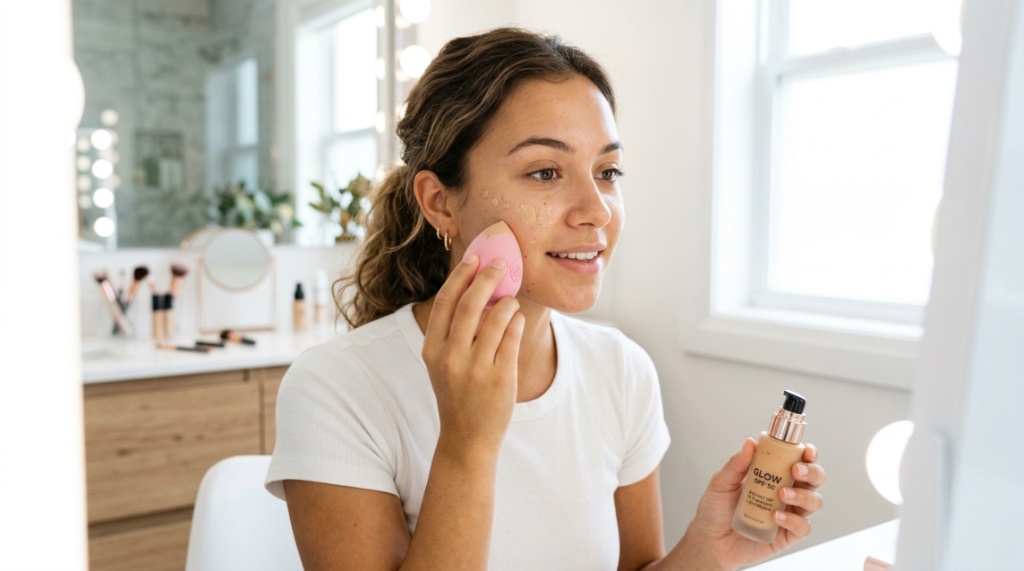
How to find SPF foundation that works
You’ve been burned before. You bought a tinted moisturizer claiming SPF 50, applied it generously, and still ended up with a sunburn on your nose by lunchtime. Or worse, that “sun protection” foundation left you looking like a chalky ghost by 10 AM. The struggle is real: you want flawless skin coverage and genuine UV protection, but most products fail at one or the other. The good news is that a genuine SPF foundation that works exists, but you need to stop shopping by marketing claims and start shopping by formulation, application technique, and SPF testing standards. Let’s cut through the noise and find the formula that actually protects your skin while making it look incredible.
What actually makes an SPF foundation effective for daily wear?
An effective SPF foundation combines a stable, broad-spectrum UV filter system with sufficient pigment coverage and cosmetic elegance. Without all three elements, the product fails either as sun protection or as makeup.
Broad-spectrum protection versus basic SPF labeling
SPF only measures UVB protection. If the bottle says “SPF 30” but does not say “broad spectrum,” you are getting zero UVA protection. UVA rays cause premature aging and skin cancer, so any SPF foundation that works must clearly state broad-spectrum protection on the label. Look for PA++++ ratings on Asian brands or “broad spectrum” on Western products.
Zinc oxide, titanium dioxide, or chemical filters: which is better?
Mineral filters (zinc oxide, titanium dioxide) provide physical protection that works immediately and reflects UV rays. Chemical filters (avobenzone, octocrylene) absorb UV radiation and convert it to heat. Mineral formulations are generally better for sensitive skin and provide more reliable protection under makeup, but they can feel heavier. Chemical filters tend to be lighter but require reapplication every two hours of sun exposure.
The role of pigment concentration in UV protection
Iron oxides in foundation shades actually boost UV protection, particularly in the visible light spectrum. This is especially important for people with melanin-rich skin who are prone to hyperpigmentation. A foundation with high pigment load naturally offers better protection than a sheer tint, even at the same SPF number.
Why do most SPF foundations fail to provide real sun protection?
Most SPF foundations fail because people apply them too thinly, the filters degrade quickly, or the formulation is unstable. The SPF number on the bottle is based on laboratory testing at 2 mg/cm² application, which is much thicker than how people actually wear foundation.
The application density problem nobody talks about
To achieve the labeled SPF, you need about half a teaspoon of foundation for your face and neck. Most people apply a pea-sized amount or less, which drops protection to SPF 5 or lower instantly. No matter how good the product is, if you apply too little, it will not protect you from sun damage.
Chemical filter instability and photodegradation
Chemical UV filters like avobenzone break down when exposed to sunlight. Within 60 minutes of application, the SPF can drop by 30 percent or more without proper stabilization technologies. Look for formulations that include photostabilizers like octocrylene or Tinosorb S to ensure the protection lasts longer.
Foundation mixing mistakes that ruin protection
Mixing your SPF foundation with a moisturizer, primer, or bronzer dilutes the UV filters. Even mixing two different SPF products can reduce overall protection because the filters may not work synergistically. Always apply your SPF foundation directly to clean, dry skin without mixing it with other products.
How much SPF do you really need in a foundation?
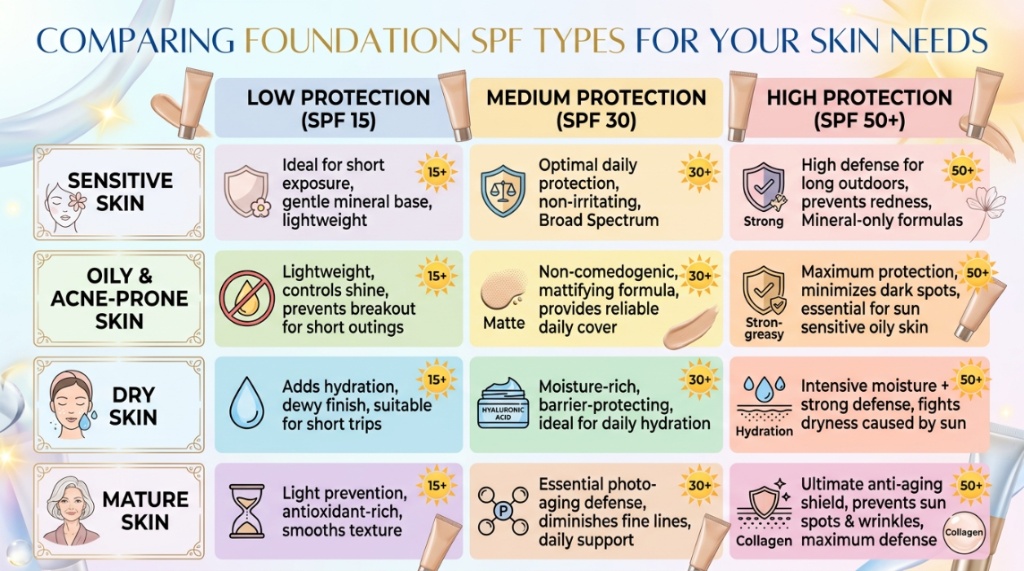
For adequate daily protection, you need at least SPF 30 in your foundation, but SPF 50 is significantly better because it compensates for under-application. SPF 15 or lower is essentially useless for sun protection when worn as makeup.
SPF 15 versus SPF 30 versus SPF 50: the real difference
SPF 15 blocks about 93 percent of UVB rays, SPF 30 blocks about 97 percent, and SPF 50 blocks about 98 percent. The difference between SPF 30 and SPF 50 may seem small, but because most people under-apply, that extra margin of protection can be the difference between burning and staying safe. A SPF foundation that works should start at SPF 30 minimum.
When SPF 50+ foundation is actually necessary
If you work near windows, drive frequently, have a history of skin cancer, or use retinol or AHAs, you need SPF 50 or higher. These situations increase UV exposure or skin sensitivity, making higher protection non-negotiable.
Which ingredients make an SPF foundation actually protect your skin?
The best SPF foundations combine zinc oxide, titanium dioxide, or stabilized chemical filters with antioxidants and moisturizing ingredients that support skin barrier function during sun exposure.
Zinc oxide: the gold standard for reliable protection
Zinc oxide is the only single ingredient that provides broad-spectrum UVA and UVB protection without degrading. It is also anti-inflammatory, which makes it excellent for acne-prone or sensitive skin. Look for non-nano zinc oxide for safer, longer-lasting protection that does not absorb into the bloodstream.
Antioxidants that boost SPF performance
Vitamin E, vitamin C, niacinamide, and ferulic acid help neutralize free radicals created by UV exposure. Foundations that include these antioxidants provide secondary protection beyond the UV filters. This is especially important because no SPF blocks 100 percent of UV rays.
Glycerin and hyaluronic acid for comfortable wear
High-SPF foundations can be drying, especially mineral formulations. Glycerin and hyaluronic acid help maintain skin hydration, preventing the flaky, cakey look that often discourages people from reapplying. Comfortable texture is essential for consistent daily use,While finding the perfect SPF foundation is key to healthy, protected skin, don’t forget to elevate your overall look. For those sunny days, check out our guide on Accessories That Lift an Ascot Outfit to add a touch of elegance to your outdoor ensemble.
How to apply SPF foundation for maximum protection
Apply your SPF foundation in thin, even layers using a damp sponge or brush, building up to full coverage rather than applying one thick layer. This ensures even distribution of UV filters across your entire face.
Step-by-step application for optimal coverage
- Start with clean, moisturized skin and let your skincare absorb for at least five minutes.
- Shake the foundation bottle well to redistribute UV filters.
- Dot the foundation across your forehead, cheeks, nose, chin, and neck.
- Blend outward using a damp makeup sponge, using pressing motions rather than dragging.
- Apply a second thin layer to areas that get the most sun: nose, cheekbones, and forehead.
- Allow the foundation to set for two to three minutes before applying powder or setting spray.
Common application mistakes that reduce protection
- Applying foundation over heavy silicone primers that prevent even distribution of filters.
- Using a dry brush that absorbs product and leaves uneven coverage.
- Skipping the neck and ears, which are high-risk areas for skin cancer.
- Relying on setting powder with SPF to boost protection instead of applying more foundation.
Can you rely solely on foundation for sun protection?
No, you cannot rely solely on foundation for sun protection unless you apply the correct amount and reapply every two hours. Most people do neither, making dedicated sunscreen necessary for adequate protection.
Why foundation alone is rarely enough for full-day protection
Foundation wears off throughout the day due to sweat, oil, and facial movements. Even a high-quality SPF foundation that works at initial application will lose effectiveness after four to six hours. Reapplying foundation over existing makeup is impractical, so layering a separate sunscreen underneath is the safer approach.
The two-layer strategy: sunscreen plus SPF foundation
Apply a lightweight, broad-spectrum sunscreen of at least SPF 30 under your makeup. Let it dry completely, then apply your SPF foundation on top. This two-layer method ensures you have protection even if your foundation wears off or gets smudged. The combination also compensates for under-application of either product.
How to choose the right shade and texture for your skin type
Choosing the right shade and texture is critical because if the foundation does not match your skin or feels uncomfortable, you will not wear it consistently, and inconsistent wear means zero sun protection.
Matching SPF foundation to your skin type
| Skin Type | Best Texture | Key Ingredients to Look For |
|---|---|---|
| Oily or acne-prone | Matte, oil-free liquid or powder | Niacinamide, salicylic acid, zinc oxide |
| Dry or dehydrated | Creamy, hydrating liquid | Glycerin, hyaluronic acid, squalane |
| Combination | Natural finish, buildable coverage | Ceramides, vitamin E, light-diffusing powders |
| Sensitive or rosacea | Mineral, fragrance-free | Zinc oxide, titanium dioxide, centella asiatica |
Shade matching for SPF foundations versus regular foundations
SPF foundations often have a limited shade range, and mineral formulations can oxidize or leave a white cast on deeper skin tones. Test the foundation on your jawline in natural daylight. If the formula contains zinc oxide, check for a “universal shade” or tinted version that adapts to your skin tone. Some brands now offer extensive shade ranges specifically for their SPF lines, so do not settle for a poor match.
How to test whether your SPF foundation actually works
The only reliable test is consistent use over time, but you can evaluate immediate performance by checking for white cast, wear time, and whether your skin feels protected during sun exposure.
The three-hour wear test
Apply your foundation as you normally would and check your skin after three hours. If you see separation, caking, or the SPF filters settling into fine lines, the formulation is not stable on your skin type. A good SPF foundation that works should maintain even coverage and feel comfortable for at least six hours.
UV camera test for at-home verification
Use a UV camera or UV-sensitive sticker to see how evenly your foundation distributes UV filters. Apply the foundation and take a UV photo. Dark areas indicate good protection, while lighter patches reveal spots where you missed coverage. This is the most objective way to verify your application technique and product effectiveness.
Which brands offer reliable SPF foundation with real protection?
Brands that prioritize sunscreen technology over cosmetic marketing usually deliver better protection. Look for companies that publish independent SPF testing results or partner with dermatologists.
Mineral-based SPF foundations worth considering
- Supergoop! Play All-Day Lotion SPF 50 with 100 percent mineral filters and a universal tint.
- Ilia Super Serum Skin Tint SPF 40 with non-nano zinc oxide and hyaluronic acid.
- BareMinerals Original Loose Powder Foundation SPF 15 with titanium dioxide and zinc oxide.
Chemical SPF foundations with high protection ratings
- Shiseido Synchro Skin Self-Refreshing Foundation SPF 30 with advanced photostabilization.
- La Roche-Posay Toleriane Teint Foundation SPF 25 with ceramides and thermal spring water.
- IT Cosmetics Your Skin But Better CC+ Cream SPF 50 with iron oxides and antioxidant complex.
How to reapply SPF foundation without ruining your makeup
Reapplication is the hardest part of SPF foundation use, but it is necessary for all-day protection. Use a powder sunscreen, a setting spray with SPF, or a cushion compact for easy touch-ups without smearing your existing makeup.
SPF powders for midday reapplication
Mineral SPF powders like Colorescience Sunforgettable or Supergoop! Setting Powder allow you to dust on additional protection over your foundation. Use a fluffy brush and press the powder into the skin rather than sweeping it across, which can disturb your makeup.
SPF setting sprays for convenient touch-ups
Setting sprays with SPF 30 or higher, such as Coola Makeup Setting Spray SPF 30, can be sprayed over finished makeup without disturbing it. This is the easiest reapplication method for people who wear full-coverage foundation and do not want to mess up their look,Always apply your SPF foundation that works directly to clean, dry skin without mixing it with other products.
Frequently Asked Questions
Can I use my regular sunscreen under an SPF foundation?
Yes, and this is actually recommended for optimal protection. Apply a broad-spectrum sunscreen of at least SPF 30, let it dry for five minutes, then apply your SPF foundation on top. The combined protection will be more reliable than using either product alone.
Does higher SPF in foundation mean better protection?
Higher SPF numbers provide marginally better UVB protection, but the real benefit is compensation for under-application. A foundation labeled SPF 50 applied thinly may still offer SPF 15 to 20, whereas an SPF 15 applied thinly may offer only SPF 4 or 5.
How long does SPF foundation last on the skin?
SPF foundation lasts about four to six hours under normal conditions. Sweat, humidity, and facial oils significantly reduce wear time. You should reapply every two hours if you are outdoors or near windows, and immediately after sweating or swimming.
Is mineral SPF foundation better than chemical SPF foundation?
Mineral SPF foundations are generally better for sensitive skin and provide more stable protection because they do not degrade in sunlight. Chemical SPF foundations are lighter in texture and easier to blend, but require careful formulation to maintain photostability.
Can I skip sunscreen if my foundation has SPF 50?
No, because most people do not apply enough foundation to achieve the labeled SPF. Using a separate sunscreen underneath ensures you meet the minimum protection threshold even if your foundation wears off or is applied too thinly.
Does SPF foundation expire and lose effectiveness?
Yes, SPF foundations lose effectiveness over time. UV filters degrade, especially when exposed to heat and light. Check the expiration date on the bottle, and discard any foundation that smells off, changes texture, or separates in the bottle.
Can I mix SPF foundation with a moisturizer or primer?
No, mixing dilutes the UV filters and reduces protection. If you need extra hydration, apply moisturizer first, let it absorb, then apply foundation separately.
Your next step to protected, beautiful skin
Finding a genuine SPF foundation that works is about more than reading labels or chasing trendy brands. It requires understanding how UV filters behave on your skin, applying the correct amount, and committing to reapplication habits that actually protect you from sun damage. Start by choosing a broad-spectrum SPF 50 foundation with either zinc oxide or stabilized chemical filters, then practice applying it in thin, even layers using a damp sponge. Layer a separate sunscreen underneath for backup protection, and use a powder or spray SPF for midday touch-ups. Your skin deserves protection that looks beautiful and actually works. Stop settling for products that promise protection but deliver disappointment, and start using the strategies in this guide to make every application count. Your future skin will thank you.