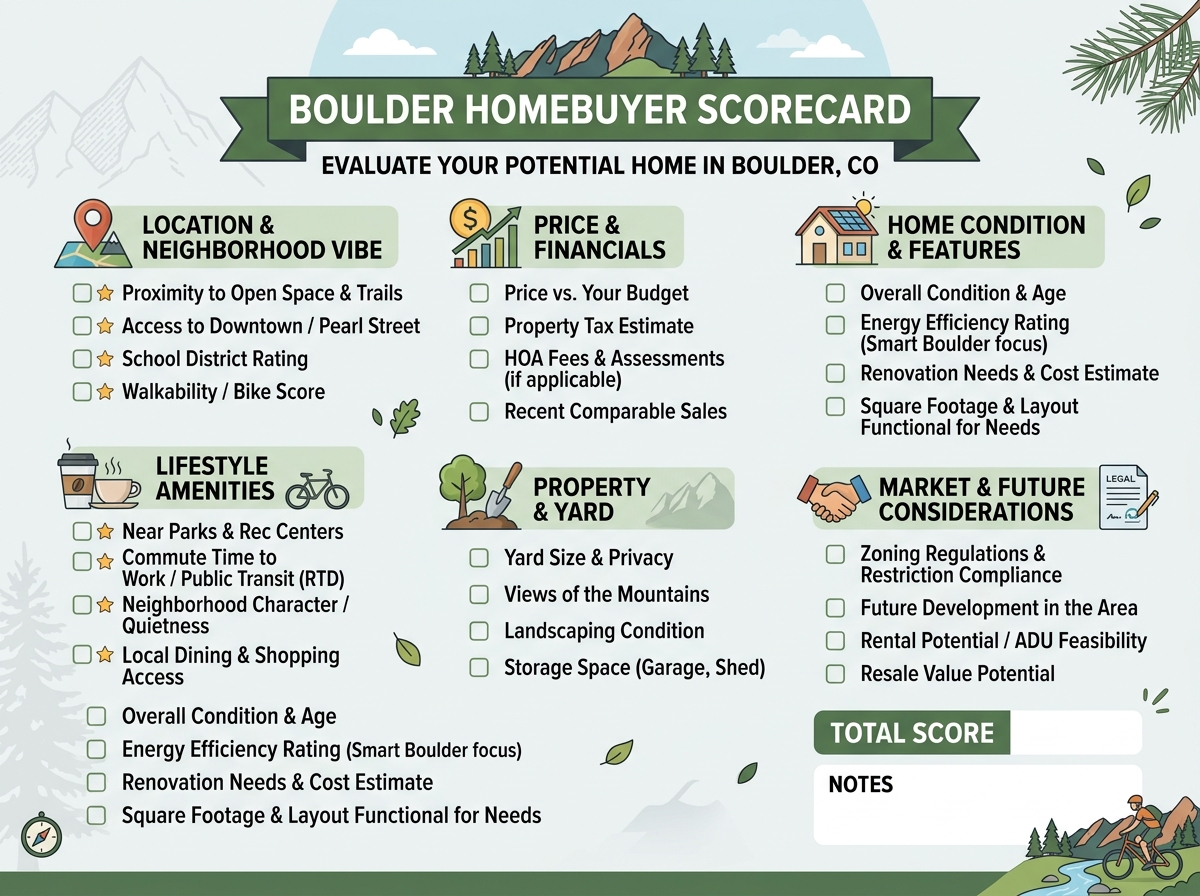
The 2026 Boulder Homebuyer Scorecard: How To Compare Neighborhood Fit Before You Tour
A beautiful kitchen, a sunny backyard, and a well-staged living room can make almost any listing feel compelling. But the right home is more than the structure itself. If the commute is frustrating, daily errands take too long, parking is difficult, or the area does not support the lifestyle you actually live, even an impressive house can feel like the wrong choice after move-in.
Before scheduling a full weekend of showings, create a short list of areas that match your priorities. For buyers comparing Boulder, Longmont, Louisville, and nearby Boulder County communities, Boulder, CO real estate agent Kim Hullett provides local market guidance through Kim Hullett Real Estate, a site with home search, valuation, neighborhood, buying, and selling resources. With experience representing buyers, sellers, and investors across Boulder County and Colorado, the brand can provide useful context when a listing’s price or appearance does not tell the full story.
This scorecard approach helps you compare areas based on real life rather than first impressions. It focuses on daily travel, total ownership costs, outdoor access, property condition, future flexibility, and resale appeal. Use it to narrow your search before you become emotionally attached to a particular address.
Boulder-area buyers may be choosing between city neighborhoods and nearby communities with very different housing types, traffic patterns, lot sizes, and access to services. A smaller home near the places you use every week may be a stronger fit than a larger home that adds time and expense to every routine.
Step 1: Define the Daily Life the Home Must Support
Start with your actual calendar, not an idealized version of it. Write down the places you visit most often during a normal week: work, school, child care, grocery stores, medical appointments, fitness classes, restaurants, trailheads, family members, or major roads. Then separate nonnegotiables from preferences.
For example, a buyer who commutes several days per week and hikes regularly may decide that a modestly sized home with convenient access to work and trails is more valuable than extra square footage farther away. Another buyer may prioritize a larger yard, quieter streets, or room for a home office. Neither choice is automatically better. The best option is the one that supports the buyer’s routine without stretching the budget.

Step 2: Compare Commute and Everyday Access
Do not rely on a map’s estimated travel time. Test the route during the hours you would actually use it, especially morning and evening traffic. If biking, walking, or transit matters, test those options too. A route that looks direct online may include uncomfortable crossings, limited winter maintenance, steep grades, or unreliable parking.
Visit promising areas at more than one time of day. Notice traffic volume, street activity, lighting, noise, and how quickly you can reach groceries, health care, schools, and other frequent destinations. Winter conditions deserve attention as well, particularly for properties on steeper streets or outside the most centrally maintained routes.
Step 3: Review Costs Beyond the Listing Price
The purchase price is only the starting point. Compare the likely monthly and annual cost of ownership for at least three realistic homes in different neighborhoods. Include property taxes, insurance, utilities, routine maintenance, landscaping, and expected repairs. A lower-priced home can become the more expensive option if it needs major work soon after closing.
For condos and townhomes, review HOA dues, fee history, reserve funding, master insurance coverage, rules, and any pending special assessments. For older detached homes, look closely at roof age, windows, electrical panels, plumbing, heating equipment, drainage, and insulation. An inspection can identify concerns, but a buyer should also budget for the ordinary upkeep that comes with the home’s age and design.
Step 4: Check Zoning and Future Changes
A property may seem perfect until you learn that a planned project could affect traffic, views, parking, or noise. Likewise, a buyer may assume they can add an accessory dwelling unit, expand the home, change the lot, or create a dedicated workspace without first confirming what is allowed.
Use the City of Boulder’s zoning resources as a starting point for understanding permitted uses, development standards, density, setbacks, and property-specific questions. Zoning information should always be confirmed with the appropriate city or county department before it becomes part of an offer strategy or renovation plan.
Step 5: Study Long-Term Neighborhood Plans
Current conditions matter, but so does the direction of the area. Long-range planning can influence housing growth, mobility improvements, open-space protection, public facilities, commercial activity, and road design. A quiet street today may change over time, while an area with limited conveniences may gain new services.
The Boulder Valley Comprehensive Plan is a useful official starting point for reviewing broad land-use, transportation, housing, and conservation goals. It is also worth looking for neighborhood-specific planning information, since a local plan often offers more practical detail than a broad market summary.
Step 6: Score Lifestyle Fit, Not Just Features
Give each neighborhood a score from one to five in the following categories. Keep notes explaining the number, because the reason behind a score is often more useful than the score itself.
- Daily travel: Can you reach work, school, errands, and regular appointments without adding unnecessary time?
- Monthly cost: Are taxes, fees, utilities, insurance, and likely maintenance manageable?
- Outdoor lifestyle: Are parks, trails, open spaces, and recreation close enough to use frequently?
- Property risk: Are drainage, slope, aging systems, deferred maintenance, or access concerns reasonable for your budget?
- Future fit: Could the home still work if your household, work arrangement, or mobility needs change?
- Resale appeal: Would a range of future buyers likely value the location, layout, access, and condition?
Step 7: Look Past the Staging and Inspect the Block
Walk beyond the property line. Check sidewalk conditions, drainage paths, street lighting, parking pressure, traffic speed, nearby businesses, and the general upkeep of surrounding homes. Visit on both a weekday and a weekend when possible. The same ZIP code can include blocks with very different noise levels, student activity, seasonal traffic, and buyer appeal.
Pay attention to what cannot easily be changed after closing. Cabinets can be replaced. Paint can be updated. A difficult driveway, a loud intersection, or a recurring parking problem is much harder to solve.
Common Questions Buyers Ask in 2026
Should buyers choose the cheapest neighborhood?
Not necessarily. A lower price may reflect longer travel times, fewer services, higher maintenance demands, or a location that appeals to a narrower pool of future buyers. Compare total ownership cost and convenience instead of using the list price alone.
How many neighborhoods should buyers compare?
Begin with three to five areas that fit the budget and the daily routine. Once you test commutes, review active listings, and visit the streets, narrowing the list becomes much easier.
Do schools matter for buyers without children?
They can. School access may influence neighborhood demand and resale, even when it is not part of your own household’s decision. Verify current attendance boundaries directly with the relevant school district rather than relying on a listing description.
Is a larger home always a better value?
No. A well-located, smaller home in sound condition may offer a better overall experience than a larger property with major repairs, high utility costs, or a long commute. Layout, location, usable outdoor space, and condition can matter more than square footage.
Before Making an Offer
- Confirm zoning and permitted uses.
- Review comparable recent sales with similar location and condition.
- Estimate taxes, insurance, utilities, HOA costs, and maintenance.
- Visit the street at different times of day.
- Review disclosures, permits, HOA documents, and inspection concerns.
- Compare the home with at least two realistic alternatives.
Let the Scorecard Lead the Search
The best Boulder-area neighborhood is the one that supports your routine, financial plan, and likely future needs. Scoring areas before touring helps reduce emotional decision-making and keeps the search focused on what will matter after the excitement of a showing fades. A short, well-researched list can make a 2026 home search clearer, faster, and more confident.