How to Pick the Best Fish Scale for Saltwater Fishing
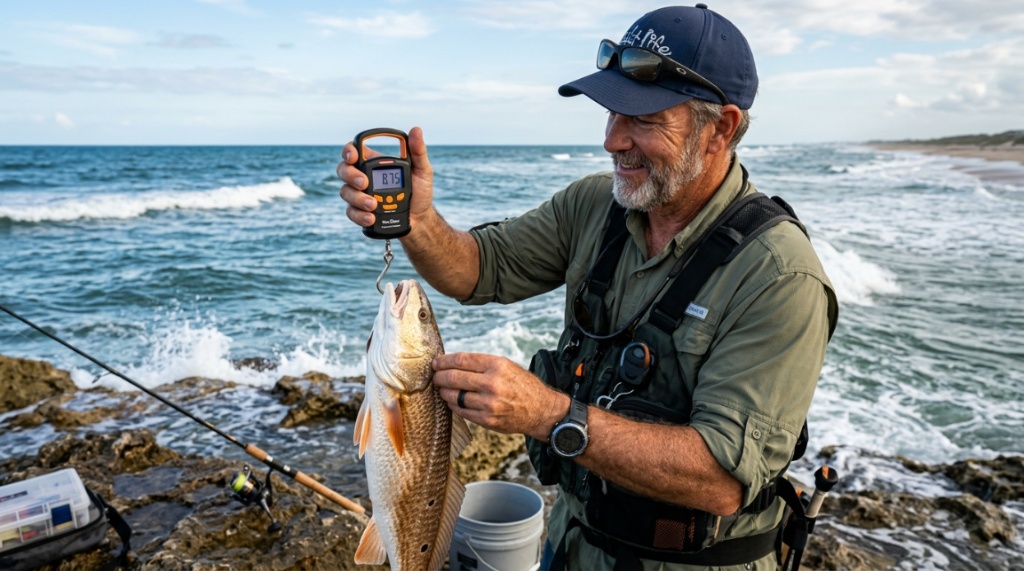
You’ve just landed a monster redfish. Your arms are burning, the tide is pushing, and you need a weight for the bragging rights—or the tournament slip. But your old scale is rusted solid, and the digital readout died three trips ago. This is the exact frustration every saltwater angler knows too well. Choosing a reliable weighing device isn’t about grabbing the cheapest option on the rack; it’s about finding a tool that survives the corrosive ocean environment, reads accurately when it matters, and won’t fail you mid-fight. In this guide, I’ll walk you through the specific features that separate a true offshore workhorse from a freshwater toy. You’ll learn exactly how to evaluate durability, capacity, and readability so your next purchase lasts for years, not just one season. Whether you target speckled trout from a kayak or grouper from a party boat, the right best saltwater fish scale is a non-negotiable part of your tackle.
What Makes a Fish Scale Suitable for Saltwater Use?
A saltwater fish scale must resist corrosion, handle hefty weight loads, and provide a clear readout under wet, slippery conditions. Unlike freshwater models, these tools are built with sealed electronics, stainless steel components, and corrosion-resistant coatings. If a scale isn’t explicitly rated for marine environments, the salt spray will quickly destroy its internal circuitry and metal parts.
Corrosion Resistance Is Non-Negotiable
The primary enemy of any fishing tool is oxidation. Look for scales made with 304 or 316 stainless steel hardware, anodized aluminum bodies, or fully sealed ABS plastic casings. Avoid painted metal surfaces that chip easily. Weighing a fish with a rusty hook attachment is not only unsanitary but also dangerous if the metal snaps under load. I always check the product description for the term “marine-grade” or “saltwater-safe.” If the manufacturer doesn’t mention it, assume it isn’t suitable.
Sealed Electronics and IPX Ratings
Water ingress is the second biggest killer of digital scales. A quality saltwater scale should have an IPX6 or IPX7 rating, meaning it can withstand powerful water jets or temporary submersion. Cheap scales often have exposed seams around the battery compartment and buttons. Before buying, open the battery door in the store (if possible) and inspect the gasket thickness. A thick rubber O-ring is a sign of thoughtful engineering. Salt crystals get into everything, so a sealed keypad is just as important as the load cell.
The Importance of a Stainless Steel Hook or Clip
The weighing mechanism—whether a hook, a clip, or a cradle—must be made of stainless steel. Zinc-plated or nickel-plated hooks will rust within weeks. For larger fish like cobia or snapper, a heavy-duty stainless steel hook with a locking mechanism prevents the fish from shaking loose while you read the weight. For smaller species, a flat clip or a fish gripper attachment is gentler and more practical.
Why Accuracy Matters More Than You Think
Accuracy in a saltwater scale isn’t just about bragging rights; it directly impacts compliance with fishing regulations. Many coastal states impose strict slot limits and size restrictions. If your scale is off by a half-pound, you could unknowingly keep a fish that’s out of season, leading to hefty fines. You need a scale that is calibrated to within +/- 1% of the true weight.
Understanding Load Cell Technology
Most modern digital scales use a strain gauge load cell. The quality of this component determines long-term accuracy. Cheaper scales use a single-point sensor that becomes inaccurate when pressure isn’t applied directly below the hook. High-end units use a multi-point or S-type load cell, which is less prone to angular errors. When testing a scale, hang a known weight (like a 5-lb dumbbell) and gently swing it. If the reading fluctuates wildly, the load cell is subpar.
Calibration and Zeroing Functions
Saltwater environments cause metal fatigue and component drift over time. Look for a scale with an external calibration mode (using a known weight) or a simple “zero” function to offset the weight of your net or cradle. Does the scale automatically turn off? You also want a “hold” function that locks the weight reading on the screen, so you can look at the display after you’ve lifted the fish clear of the rail. You should never have to guess the weight while a thrashing fish is swinging around.
Tolerance for Temperature Fluctuations
Heat inside a boat console can ruin a cheap scale. Overheating damages the LCD screen and expands the plastic casing, shifting the internal alignment. Premium scales feature temperature compensation circuitry. If you fish in tropical climates, look for a scale rated for operation up to 122°F. Leaving a cheap scale in a black tackle bag under the sun is a surefire way to get a permanently stuck “8888” on the display.
How Much Weight Capacity Do You Really Need?
You should choose a capacity that is roughly double your target species’ average weight. This ensures you are always measuring in the middle of the sensor’s range, which is where accuracy is highest. If you typically catch 5-15 lb fish, a 50-lb capacity scale is perfect. If you are chasing tarpon or giant trevally, a 200-lb scale is necessary.
Matching Capacity to Your Target Species
Let’s break this down by fishery. For inshore fishing (redfish, snook, seatrout), a 50-lb scale is the sweet spot. For nearshore reef fishing (snapper, grouper, amberjack), a 100-lb scale is common. For offshore pelagics (tuna, mahi-mahi, sailfish), you’ll want 200-300 lbs. A key tip: the hook size on a 300-lb scale often won’t fit in the mouth of a 5-lb trout, so you may need to use a cradle or a sling for small fish on a big scale.
The Problem with Overrated Cheap Scales
There are many budget scales on Amazon that claim 500-lb capacities. These are often dangerous. The internal components are the same as a 50-lb scale, but the software is set to a higher maximum. This means the gears and sensors are completely maxed out at 50 lbs, and the scale will likely break on a 100-lb tuna. Always buy from a reputable brand that lists the load cell specifications. A heavy-duty scale has a larger and thicker hook and shackle system.
Using a Cradle for Big Fish
Weighing a 100-lb tuna by the jaw can damage the fish’s internal organs and make it impossible to release healthy. For large fish, you need a weight cradle or a sling. This is a mesh or webbed cradle that holds the fish horizontally. In this case, the scale capacity must include the weight of the cradle (often 10-15 lbs). Always subtract the cradle weight using the tare function before lifting the fish.
Which Type of Scale: Digital vs. Spring vs. Beam?
Digital scales are the standard for accuracy, but quality spring scales can be more durable in extreme conditions. Beam scales (like the old-school hanging scales) are extremely accurate but not practical for moving boats. For most modern anglers, a high-quality digital scale is the best choice, provided it has sufficient waterproofing.
Digital Scales: Pros and Cons
Digital scales offer unmatched precision (often to 0.1 lb or 0.05 kg) and easy-to-read backlit screens. They also include features like temperature display and average weight readings. The downside is battery dependence and potential electronics failure. However, a good digital scale from a reputable brand (like Rapala or Brecknell) can last a decade because they use Hermetically sealed switches and waterproof microprocessors,Before heading out to weigh your biggest catch, make sure your setup is complete with the Best Affordable Fishing Lines Every Angler needs for saltwater conditions.
Spring Scales: The Legacy Choice
Spring scales (dial face) do not require batteries. They rely on a mechanical spring that stretches to move a needle. These are inherently waterproof and nearly indestructible under normal use. The trade-off is accuracy—they are typically only accurate to +/- 0.5 lbs. Also, they suffer from “spring fatigue” over time, losing their zero point. I would only recommend them for anglers who fish in the surf where sand and salt constantly coat equipment.
Digital vs. Mechanical: A Comparison Table
| Feature | Digital Scale | Spring Scale |
|---|---|---|
| Accuracy | +/- 0.1 lb | +/- 0.5 lb |
| Battery Required | Yes (2x AAA usually) | No |
| Waterproofing | IPX7 (if rated) | Fully waterproof |
| Durability | High (sealed electronics) | Very High (simple mechanics) |
| Readability | Excellent (night vision) | Poor in low light |
| Best Use Case | General inshore & offshore | Extreme abuse environments |
How to Test a Fish Scale’s Accuracy at Home
To validate a new saltwater scale, you don’t need expensive weights. You can use a standard 5-gallon bucket of water. A gallon of water weighs 8.34 lbs, so 5 gallons weighs 41.7 lbs (plus the bucket weight). Hang the bucket from the hook and compare the reading to your calculated total. This simple test will expose a faulty scale instantly,Before heading out to weigh your biggest catch, make sure your setup is complete with the Best Affordable Fishing Lines Every Angler needs for saltwater conditions.
Step-by-Step Calibration Test
- Weigh your bucket on a standard bathroom scale to establish the tare weight.
- Fill the bucket with exactly 5 gallons of water.
- Attach the bucket to your fish scale’s hook or clip.
- Lift smoothly and allow the reading to stabilize (3-5 seconds).
- Compare the reading to the expected weight (bucket + 41.7 lbs).
- Repeat 3 times to check consistency. If it fluctuates more than 0.2 lbs, return the scale.
Testing the “Hold” Function
Most digital scales have a “hold” button that freezes the display. To test this, overload the scale slightly and observe how quickly it locks the number. A slow lock means the electronics are slow, which can lead to underestimating a fish that is thrashing. You want a scale that locks on the peak weight, not the average bouncing weight. Some scales have a “peak hold” mode explicitly for fishing; ensure yours has this feature.
What Are the Best Brands for Saltwater Scales?
While I can’t name one single “best” model due to different fishing styles, several brands consistently produce top-tier saltwater gear. These companies have dedicated R&D teams for marine environments. best saltwater fish scale choices often come down to personal preference for weight, grip, and mounting options. Look for brands that offer replacement hooks and carabiners, as these wear out faster than the electronics.
Rapala and Mechanical Innovation
Rapala is famous for their touch-screen scales and the “Hologram” series. They feature a flexible hook that reduces stress on the fish’s jaw. Their scales use a unique haptic feedback system to confirm the reading is locked. They are pricier but offer excellent warranty support. If you prefer a crisp digital display that is readable in direct sunlight, this is a strong contender.
Brecknell: The Industrial Standard
Brecknell makes commercial-grade scales used in scientific research. The “Super Samson” is a popular choice among charter captains because it handles abuse and saltwater corrosion extremely well. They often have oversized hooks and thick aluminum casings. These are not flashy units, but they are reliable workhorses. If you are looking for a scale that will last 10+ years, this is your best bet.
Budget-Friendly Options That Aren’t Trash
The best saltwater fish scale doesn’t need to cost $100. Many Chinese-manufactured scales from reputable rebranders (like KastKing) offer decent accuracy if you look for IPX6 ratings and stainless hooks. However, you must be wary of fake load cell ratings. Stick to brands that openly advertise their calibration tolerances. A $30 scale with a strong hook is fine for most inshore anglers who don’t need laboratory precision.
Mountable Scales for Boats
If you own a center console, a deck-mounted scale is a game-changer. These units typically feature a long boom or a pulley system to hoist heavy fish. They are permanently fixed to the boat, so they are never lost or dropped. However, they suffer from constant UV exposure and salt spray. If you choose this route, ensure the housing is UV-stabilized to prevent cracking and that the electrical connections are sealed with dielectric grease.
Can You Use a Standard Luggage Scale for Fishing?
Technically, yes, but you shouldn’t. Luggage scales have the same basic load cell design as fish scales, but they lack the ergonomic handles and the corrosion-resistant coatings needed for saltwater. Additionally, their hooks are often too small for fish gills, and they don’t have a “peak hold” mode. Also, a luggage scale doesn’t have a zero/tare function that accounts for the weight of a fish gripper. You’ll end up accidentally weighing your hand glove and getting an inaccurate reading.
The Risks of Using Indoor Scales Outdoors
Indoor scales (for luggage or kitchen use) are not potted or sealed. The internal circuit boards are exposed. One splash of saltwater will cause a short circuit immediately. Even if they survive, the accuracy will drift drastically due to temperature and humidity. Always spend a little more for a device specifically designed for marine use; this is a case where you truly get what you pay for.
What About Smartphone App Scales?
Bluetooth scales that sync to your phone are growing in popularity. They allow you to log every catch digitally, charting growth over time. However, the Bluetooth antenna is an extra weak point. Look for a scale that supports Bluetooth 5.0 (longer range) and has a sealed antenna. The app should also work offline and sync later, since you won’t have signal offshore.
How to Maintain Your Saltwater Fish Scale
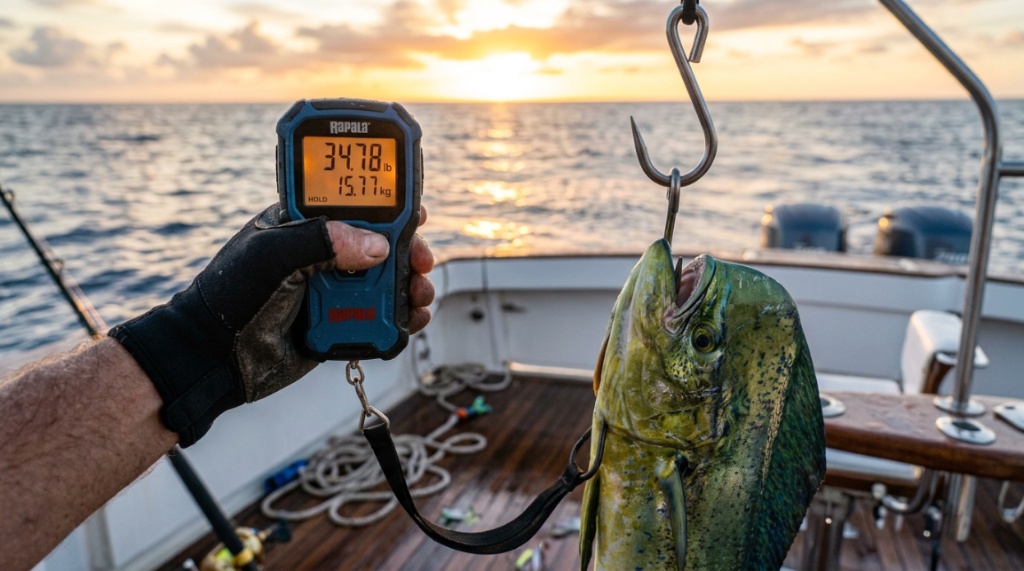
Rinsing with fresh water after every trip is the single most important maintenance step. Even with sealed electronics, salt residue will build up on the metal hook and the pivoting shackle. If you leave it caked in salt, the moving parts will seize. I keep a spray bottle of fresh water with a few drops of vinegar in my truck; a quick rinse and wipe down takes 30 seconds.
Cleaning and Lubrication Routine
- Rinse the scale body and hook with fresh water immediately after use.
- Dry with a soft microfiber cloth.
- Apply a light coat of silicone spray to the hook swivel and the carabiner.
- Remove the battery after long periods of storage (off-season).
- Store in a dry, heated area; do not store in a damp locker.
- Check the calibration annually by using a known weight.
Battery Life and Storage
Cold and heat both drain batteries faster than usual. If you fish in winter, keep the scale close to your body (inside a jacket) to preserve battery life. For summer, keep it in a shaded, ventilated location. Many scales drain 5% of battery per day just from the internal clock. If you don’t want to be caught with a dead battery, buy a scale that uses a 9-volt battery (longer shelf life) rather than watch batteries.
Signs You Need a Replacement
If the digital display shows random characters, flickers, or doesn’t zero out, your scale is compromised. Another sign is a gritty feeling when you turn the swivel hook. This indicates internal corrosion. Finally, if the reading is always exactly the same regardless of the weight you hang (e.g., always shows “2.4”), the load cell has collapsed. Replace it immediately—do not trust it for tournament weigh-ins.
Is a Floating Fish Scale Worth the Extra Cost?
Floating scales are a lifesaver for kayak anglers and wade fishermen. Dropping a scale overboard is common when unhooking a fish at the side of the boat. A floating scale costs about 20% more, but the peace of mind is worth it. They use foam inserts or air-tight chambers in the handle to stay afloat, but the foam can get waterlogged over time if the outer shell cracks.
Pros and Cons of Floats
Pros: Saves money in the long run by preventing loss, easier to spot in murky water (often neon colors), and adds a layer of buoyancy that protects the electronics from impact. Cons: The float housing is bulky, it can get caught on rod holders, and it adds a few ounces of weight. If you solely fish from a large boat with a fly bridge, a float is unnecessary.
Magnetic Catch and Landing Net Scales
Some modern scales integrate directly into the handle of a rubberized landing net. These are incredibly convenient because you don’t have to remove the fish from the net to weigh it. They typically have a digital readout in the handle. However, the weight of the net itself must be tared out, and the sensor’s capacity is often lower. These are great for catch-and-release trout fishing but not for heavy surf species.
What Features Do You Need for Tournament Weigh-Ins?
For slam tournaments, the scale must meet the sanctioning body’s accuracy requirements (usually accurate to 0.25 lb). You’ll need a scale that can be sealed with a zip tie or have a calibration certificate. Standard fishing scales won’t suffice for official weigh-ins; you’ll likely need a certified hanging scale. But for informal club weigh-ins, a portable digital scale is fine if it displays weight in increments of 0.1 pound.
Peak Hold and Maximum Memory
In tournaments, you need a scale that can store multiple weights. Some digital scales have a memory function that logs the last 10 weights. This is also useful for tracking your personal best over a season. Look for a scale with a clear “memo” button; otherwise, you’ll need a notebook and pen, which is harder to handle when hands are slimy.
Measuring Length vs. Weight
Many tournaments require a length measurement alongside the weight. Some advanced scales include a built-in tape measure or a lip-grip that integrates a ruler. However, these functional additions are often gimmicky. It is better to use a dedicated bump board for length and a separate scale for weight. Combining tools usually compromises both tasks.
Frequently Asked Questions
Can I use a steel leader as a scale attachment?
Yes, but it’s not recommended. The steel leader can cut into the fish’s mouth. It’s better to use a wide-bore hook or a cradle. A steel leader also adds weight to the system, which you must subtract. The diameter can also damage the gill rakers of fish.
How often should I calibrate my saltwater scale?
At minimum, check the calibration every 3 months or after any heavy use (over 50 fish). For commercial or tournament use, calibrate monthly. Most digital scales have a simple calibration mode that uses a 5-lb weight or a specific know-weight protocol.
Are digital scales allowed in all fishing locations?
Yes, digital scales are legal everywhere. However, some parks and national seashores prohibit the use of scales that are potentially harmful to oversized fish. In catch-and-release zones, consider using a non-invasive measuring board instead. But for keeping fish, digital is fine.
What is a “lip-grip” scale and do I need it?
A lip-grip scale combines a fish gripper (like a BogaGrip) with a weighing sensor. It is excellent for inshore fishing because it minimizes handling and keeps your fingers away from sharp gill plates. They are more expensive but very effective. You must ensure the springs in the jaw holding the lip are strong enough not to slip on slimy fish.
Does humidity affect the scale’s sensor?
Yes, high ambient humidity causes condensation to form on the circuit board, which can eventually corrode the solder joints and cause erratic readings. That’s why a sealed housing with IPX7 rating is crucial in the Gulf Coast or Florida Keys. Silica gel packets inside the battery compartment can help, but they must be replaced periodically.
Can I wash my scale in a dishwasher?
No, never. Dishwashers use aggressive detergents and high heat that will destroy the plastic housing and strip the waterproofing grease from the buttons. Hand washing with gentle dish soap and a sponge is the only safe method.
What is the difference between a 50 lb and 200 lb scale hook?
The hook diameter is thicker on a 200 lb scale, making it harder to fit inside a small jaw. Additionally, the spring or load cell sensitivity is tuned differently. A 50 lb scale measures small increments (0.1 lb) better than a 200 lb scale on a small fish. Always choose the lowest capacity that safely covers your target fish.
Conclusion
Picking the best saltwater fish scale is about matching the tool to your specific fishing habits, not chasing the highest number or the lowest price. I’ve broken down the core requirements—corrosion resistance, sealed electronics, accurate load cells, and the right physical capacity—so you can make a confident choice. Remember that no scale is maintenance-free; a quick freshwater rinse and a dry storage spot will extend the life of any unit significantly. Whether you choose a heavy-duty mechanical dial or a high-tech Bluetooth model, you now know what to inspect, how to test it, and when to trust it. Don’t let a cheap scale cost you an accurate record or a legal headache—invest in a tool that respects your passion. Now that you’re armed with this knowledge, check the model in your boat bag and see if it meets these standards. Upgrade if necessary, and get back to fishing with confidence.