Why Do Hybrid Batteries Fail in Seattle, WA?
Hybrid batteries can fail in Seattle mainly because of age, repeated cycling, poor cooling, moisture, and neglected maintenance. Seattle’s mild climate usually helps batteries, but cold weather can still reduce hybrid efficiency by around 30%. Therefore, owners of low fuel consumption autos should understand local battery stress before assuming the battery simply wore out.
Why Seattle Conditions Matter for Hybrid Batteries
Seattle does not have the extreme heat found in desert regions. However, frequent rain, cool temperatures, short trips, and long periods of damp weather affect vehicle systems. The National Weather Service recorded 7.37 inches of rain at Seattle Tacoma Airport in December 2025 alone.
Moreover, hybrid batteries depend on controlled temperature and airflow during repeated charge and discharge cycles. When the battery operates outside its preferred temperature range, the system can reduce electric assistance. Over time, repeated stress can expose weaknesses in aging battery cells.
Seattle drivers also face frequent stop and go traffic across busy urban routes. Consequently, the hybrid system may cycle between electric assistance and gasoline power many times. That repeated cycling does not automatically damage a healthy battery, but older cells can lose capacity faster.
Another factor involves vehicle storage habits. A hybrid that sits unused for long periods can develop problems with its smaller 12 volt battery. That battery differs from the high voltage traction battery, yet its failure can create confusing hybrid system symptoms.
How Rain, Moisture, and Undercarriage Wear Add Stress
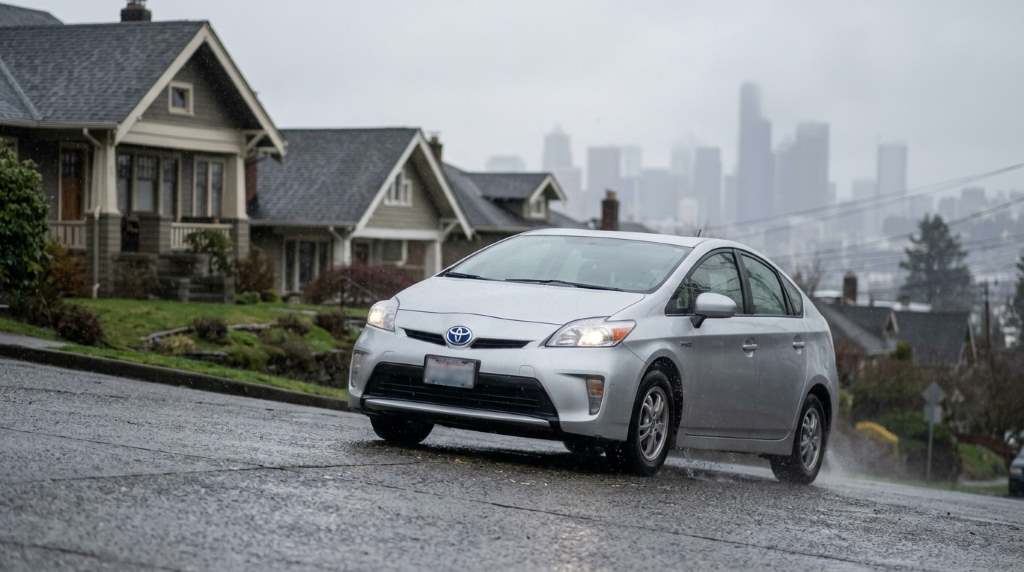
Rain itself does not normally destroy a properly sealed hybrid battery. However, moisture can expose weaknesses in seals, wiring, connectors, and surrounding vehicle components. Regular undercarriage maintenance reduces breakdown risk and can reveal corrosion before it spreads.
Seattle’s wet roads can also carry dirt and road debris into areas beneath the vehicle. Over time, grime can collect around connectors, shields, and cooling passages. Therefore, routine inspections matter more when a vehicle regularly travels through wet conditions.
Water intrusion creates a different concern when a damaged seal allows moisture into protected areas. Electrical faults can then produce warning lights or abnormal battery behavior. However, technicians should confirm water intrusion before blaming the traction battery.
Drivers should watch for several warning signs after heavy rain:
- Unexpected hybrid system warning lights
- Repeated 12 volt battery failures
- Electrical accessories behaving strangely
- Moisture around interior battery compartments
- Unusual battery cooling fan activity
Importantly, these symptoms do not prove that the high voltage battery has failed. A professional diagnostic scan can separate battery problems from wiring, sensor, charging, or control system faults.
Which Hybrid Battery Actually Failed?
Many owners hear the word battery and immediately think about the expensive traction battery. Yet most hybrids contain both a conventional 12 volt battery and a high voltage battery. Understanding the difference can prevent unnecessary repair bills.
The 12 volt battery powers computers, lights, locks, displays, and startup electronics. Meanwhile, the high voltage battery supplies electric drive assistance and stores regenerative braking energy. A weak 12 volt battery can prevent the vehicle from entering Ready mode, creating symptoms that resemble a major hybrid failure.
Modern vehicle technology also makes replacement decisions more important than ever. Drivers who regularly compare benefits of upgrading to a new vehicle should consider battery age alongside overall vehicle condition.
Before approving an expensive traction battery replacement, ask the technician to verify these areas:
- 12 volt battery voltage and health
- High voltage battery diagnostic codes
- Individual battery block performance
- Battery cooling system operation
- Electrical connectors and wiring
- Charging and regenerative braking performance
This diagnostic sequence can prevent a common mistake. Replacing the traction battery without identifying the original fault may leave the real problem unresolved.
What Usually Causes Hybrid Battery Failure?
Hybrid battery failure rarely comes from one Seattle specific cause. Instead, several factors usually combine as the battery ages. Understanding those factors makes diagnosis much easier.
1. Natural Battery Aging
Every rechargeable battery gradually loses capacity through repeated chemical reactions. Battery materials change during charging and discharging, which eventually reduces available energy. The Department of Energy explains that repeated cycling can cause structural changes inside battery electrodes.
Therefore, an older hybrid battery may still work while providing less electric assistance. The vehicle computer can compensate for declining performance until certain cells weaken significantly. At that point, warning lights may appear suddenly.
2. Weak Individual Cells
A hybrid battery pack contains multiple cells or modules working together. If one section becomes significantly weaker, the entire pack can lose balance. Consequently, the vehicle may limit electric assistance to protect the system.
This explains why some older hybrids show inconsistent battery performance. The vehicle can operate normally during one drive and show reduced battery assistance during another. Temperature, traffic, and battery load can expose the weak section.
3. Restricted Battery Cooling
Hybrid batteries generate heat while delivering and accepting electrical energy. Most systems use dedicated airflow to keep battery temperatures within an acceptable range. If dust or debris blocks the cooling path, battery temperatures can rise unnecessarily.
Cabin dust can also collect around battery cooling intake areas. Therefore, owners should keep those vents clear and inspect them during regular service. A technician can check fan operation when battery temperatures appear abnormal.
4. Long Periods Without Driving
Hybrid vehicles generally tolerate normal use well, but prolonged inactivity creates separate electrical concerns. The 12 volt battery can gradually discharge while the vehicle remains parked. Eventually, that weak battery can cause multiple warning messages when the driver tries to start the vehicle.
Consequently, do not assume every no start event means traction battery failure. Test the 12 volt system first and confirm the vehicle’s diagnostic codes. This simple step can prevent an expensive misdiagnosis.
5. Short Trips and Heavy Winter Demands
Cold weather can reduce hybrid fuel economy because the vehicle needs more energy for heating and operation. The Department of Energy estimates around a 30% fuel economy reduction for hybrids during cold conditions.
Short trips can make the effect more noticeable because the vehicle spends less time reaching efficient operating temperatures. Frequent cold starts can also increase energy demands. Therefore, repeated short journeys can make an aging battery appear weaker.
6. Corrosion and Electrical Problems
Seattle’s wet environment makes electrical inspection worthwhile, especially on older vehicles. Corrosion can affect connectors, grounds, sensors, and other electrical components. These faults can create battery related warning codes without proving that the battery itself failed.
For that reason, technicians should inspect the complete electrical system before condemning the battery pack. A complete diagnosis should include wiring, connectors, grounds, sensors, and cooling equipment. This approach produces a more reliable repair decision.
How to Recognize a Failing Hybrid Battery
A failing battery often gives drivers several clues before complete failure occurs. However, individual symptoms can overlap with ordinary vehicle problems. Look for patterns instead of relying on one warning sign.
Common symptoms include:
- Rapid battery charge and discharge changes
- Reduced electric driving assistance
- More frequent gasoline engine operation
- Lower fuel economy than usual
- Hybrid warning messages
- Battery cooling fan running frequently
- Weak acceleration under certain conditions
- Battery gauge moving unusually quickly
One especially useful clue involves battery state of charge. A healthy system usually manages its charge level within a controlled range. If the gauge repeatedly swings between high and low levels, technicians should investigate battery health.
Reduced fuel economy also deserves attention when driving habits remain unchanged. However, colder weather, tire pressure, traffic, and heating demand can also increase fuel consumption. Therefore, compare performance across similar driving conditions before reaching a conclusion.
What Seattle Hybrid Owners Can Do to Prevent Battery Problems
Prevention starts with simple habits rather than expensive modifications. Keep the battery cooling intake clean and avoid blocking ventilation areas with cargo. Also, follow the manufacturer’s inspection schedule for the specific hybrid model.
Next, pay attention to changes rather than waiting for a major warning. If fuel economy drops suddenly, schedule a diagnostic inspection. Early testing can identify cooling problems, weak modules, or 12 volt battery issues before they become larger problems.
Parking habits also matter during colder periods. Covered parking can reduce exposure to freezing conditions and help vehicle batteries operate more effectively. The Department of Energy recommends covered parking as one useful cold weather measure for electrified vehicles.
Use these maintenance habits consistently:
- Keep battery cooling vents unobstructed
- Inspect the 12 volt battery regularly
- Check tire pressure during temperature changes
- Address warning lights promptly
- Inspect electrical connectors for corrosion
- Drive the vehicle regularly when possible
- Use qualified hybrid technicians for high voltage diagnosis
Additionally, avoid making battery decisions based solely on mileage. Age, operating conditions, maintenance history, and previous repairs all influence battery health. A well maintained hybrid can continue operating efficiently for many years.
Should You Replace or Repair a Hybrid Battery?
Replacement makes sense when testing confirms significant battery degradation or multiple weak modules. Repair may make sense when the problem involves a serviceable component or limited battery section. The correct answer depends on the vehicle’s age, condition, mileage, and expected future use.
For example, an older vehicle with several unrelated repairs may not justify a large battery investment. Conversely, a well maintained vehicle with strong mechanical condition may justify replacement. Therefore, evaluate the entire vehicle instead of considering battery cost alone.
Ask the technician for measurable diagnostic results before authorizing work. Request battery block readings, diagnostic codes, cooling system findings, and 12 volt battery results. These details make the repair decision much more transparent.
Also, compare the replacement decision with the vehicle’s remaining value and expected ownership period. A battery replacement can restore useful service when the rest of the vehicle remains reliable. However, another vehicle may make more sense when several major systems need attention.
When Should You Get a Professional Hybrid Battery Test?
Do not wait for complete failure if your hybrid shows repeated warning signs. A diagnostic test becomes especially important when the battery gauge behaves unusually or fuel economy drops sharply. Early testing can distinguish normal seasonal changes from genuine battery degradation.
Professional testing also matters because hybrid systems contain high voltage components. Attempting to open or repair the traction battery without proper training can create serious electrical hazards. Instead, use a technician with appropriate hybrid system experience and safety equipment.
Bring useful information to the appointment whenever possible. Record warning messages, recent fuel economy changes, unusual noises, and conditions when symptoms appear. These details can help the technician reproduce intermittent faults more efficiently.
Conclusion: Protect Your Hybrid Battery in Seattle
Hybrid batteries can fail in Seattle, but the local climate does not automatically make them unreliable. Age, battery cycling, cooling problems, moisture related electrical faults, weak 12 volt batteries, and driving habits matter more. Fortunately, regular inspection can catch many problems before complete battery failure.
Start by checking the cooling system, 12 volt battery, electrical connections, and diagnostic codes. Then compare battery performance with normal driving conditions before approving replacement. If your hybrid shows repeated warning signs, schedule a professional battery health test soon.
The best strategy combines routine maintenance with early diagnosis. Take action when performance changes, and avoid assuming that every battery warning means an expensive traction battery replacement.
Frequently Asked Questions
Does Seattle weather damage hybrid batteries?
Seattle weather usually does not directly damage healthy hybrid batteries, but moisture, cold temperatures, and poor maintenance can contribute to problems.
How long does a hybrid battery usually last?
Hybrid battery lifespan varies by vehicle, battery chemistry, age, driving conditions, maintenance, and operating temperature.
Can a bad 12 volt battery look like hybrid battery failure?
Yes, a weak 12 volt battery can create startup problems and warning messages that resemble larger hybrid system faults.
Does cold weather reduce hybrid battery performance?
Yes, cold temperatures can reduce hybrid efficiency and increase energy demands during vehicle operation.
Should I replace my hybrid battery immediately?
No, confirm the battery fault through professional diagnostics before approving a high voltage battery replacement.