How to Select a Gentle Fish Net for Bettas
You scoop, your betta darts, and suddenly those delicate fins are snagged on a rough mesh—again. It’s a frustrating moment every betta owner dreads. The problem is clear: standard fish nets, designed for hardy species, can shred a betta’s flowing fins, cause stress, and even lead to infection. If you’ve been avoiding netting your betta for tank maintenance, you’re not alone. The solution lies in choosing a gentle fish net for bettas, a tool specifically designed to protect those fragile fins while still being practical for the aquarist. This guide walks you through exactly what to look for, from mesh material to handle design, so you can handle your betta with confidence and care.
What Makes a Fish Net Gentle for Bettas?
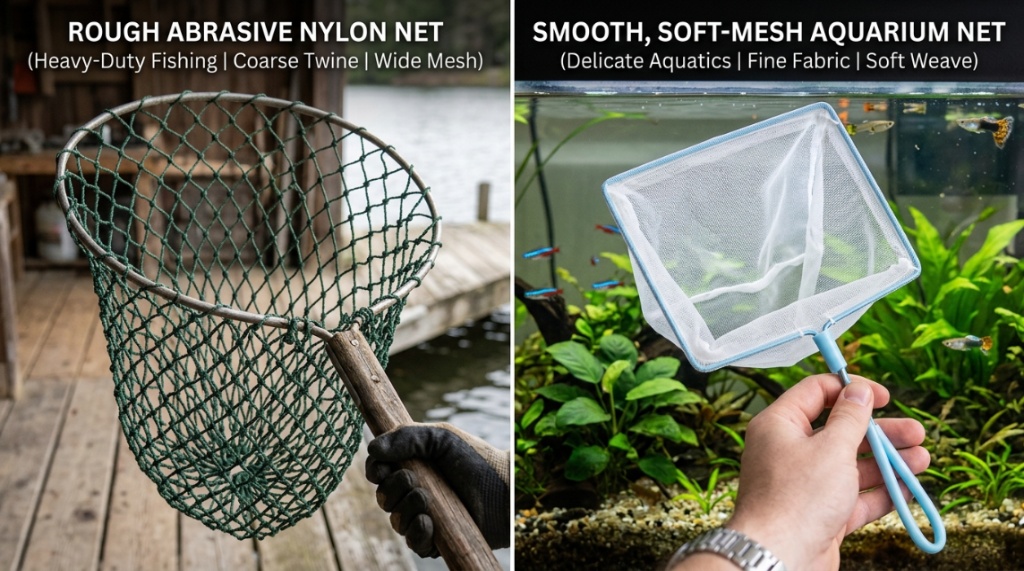
A gentle fish net for bettas uses ultra-fine, soft mesh that glides across delicate fins without snagging or tearing. Unlike standard nets with coarse nylon or polyester knots, betta-safe nets prioritize fin safety above all else.
Mesh Material Matters Most
The mesh material is the single most important feature. Standard nets often feature stiff, knotted nylon that can catch on betta fins like Velcro. A gentle betta net uses micro-mesh or soft polyester with very tight weaves. These materials are smooth to the touch and have no rough edges. Always run your fingers across the mesh before purchasing. If it feels abrasive, it will feel worse on your betta.
Knotless Construction for Smooth Scooping
Knots are the enemy of betta fins. Knotted nets create tiny points where fins can snag, causing rips and tears. Look for “knotless” nets. These are woven in a way that creates a seamless, smooth surface. When you scoop your betta, the entire net surface contacts the fish evenly, reducing friction injury.
Fine Weave Density
Mesh size is measured by holes per inch. For bettas, you want a mesh so fine that it resembles a soft fabric. A common recommendation is a net with at least 10-12 holes per inch. This prevents fins from poking through the mesh openings, which is a primary cause of damage. The net should look almost like a delicate handkerchief, not like a standard fishing net.
Why Can’t I Use a Standard Fish Net for My Betta?
Using a standard fish net is one of the quickest ways to injure your betta’s fins and cause severe stress, which can compromise their immune system and lead to diseases like fin rot.
The Risk of Fin Damage and Tears
Betta fins are incredibly delicate membranes, similar to the webbing between your fingers. Standard nets, with their coarse mesh and sharp knots, act like sandpaper. A single panicked dart into a rough net can tear a fin lobe, creating a ragged edge. These tears are not just cosmetic. They are open wounds that can become infected, leading to fin rot, a common and serious bacterial infection.
Stress and Its Hidden Health Consequences
Being netted is inherently stressful for a betta. Using a net that causes physical pain multiplies that stress exponentially. Elevated stress levels suppress a betta’s immune system, making them vulnerable to parasites like ich and velvet. A gentle net reduces the trauma of the experience, allowing your fish to recover faster after handling. A calm betta is a healthy betta.
Difficulty in Removing a Snagged Betta
If your betta’s fin gets caught in a standard net, you face a difficult choice. You can either pull, risking a severe tear, or try to untangle the fish while it is out of water, which can cause extreme stress and oxygen deprivation. A gentle net eliminates this nightmare scenario entirely, ensuring your fish enters and exits the water cleanly.
How Do Different Mesh Types Affect Betta Safety?
Not all soft mesh is created equal. Understanding the difference between micro-mesh, soft polyester, and traditional nylon is key to making the right choice for your betta’s safety.
Micro-Mesh: The Gold Standard
Micro-mesh nets are the top recommendation for bettas. They are typically made from a fine, woven polyester or microfiber that feels like a soft cloth. The weave is incredibly tight, often with over 15 holes per inch. These nets dry quickly, resist mildew, and are virtually impossible for a betta fin to penetrate. They are the safest option on the market.
Soft Polyester vs. Nylon Nets
Standard nylon nets are stiff, abrasive, and often have prominent knots. Soft polyester nets are a significant upgrade. They are more flexible and have a smoother surface finish. However, not all polyester nets are fine enough. Look for “ultra-fine” or “soft mesh” labels. Avoid any polyester net that feels rough when you rub it between your fingers.
Rubber-Coated Nets: A Cautionary Note
Some nets feature a rubberized or plastic coating designed to be gentle on fish slime coats. While the coating prevents snagging, the underlying mesh can still be coarse if the coating wears off. For bettas, a dedicated micro-mesh net is almost always preferable to a rubber-coated one, as the coating can sometimes degrade over time or feel sticky.
What Size Net Should I Buy for a Betta?
You need a net with a bowl depth of at least 4 to 5 inches and a width of 3 to 4 inches to accommodate a betta’s full body and fins without bending or cramping them.
Bowl Depth is Crucial
Bettas have tall, flowing fins that need vertical space. A shallow net will fold their fins horizontally, causing stress and potential damage. Measure the height of your betta’s fins and add an inch. A deeper bowl allows the betta to remain in a natural, upright position while being moved. A 4-inch deep net is a good minimum for a male betta with large fins.
Width and Length for Fin Clearance
The net should be wide enough that your betta’s fins do not extend over the rim. A 3-inch wide net is suitable for a female or plakat betta. For a male halfmoon or crowntail, a 4-inch wide net provides ample room. The length of the net frame is less critical, but a longer net can make scooping easier in a deep tank. Avoid tiny nets designed for fry or shrimp.
Handle Length and Your Comfort
While the net bowl is for your betta, the handle is for you. A handle that is 8 to 12 inches long provides good control without being unwieldy. For deep tanks (over 18 inches tall), a longer handle of 15 to 20 inches helps you reach the bottom without submerging your hand. Ensure the handle is ergonomic and provides a secure grip, especially when wet.
Which Net Frame Materials Are Safest and Most Durable?
The frame should be smooth, seamless, and made of rust-proof materials like plastic or stainless steel, with no exposed sharp edges or seams that could scrape your betta.
Plastic Frames: Lightweight and Safe
High-quality plastic frames, typically made of nylon or ABS, are lightweight, float, and do not rust. The key is to look for a frame that is solidly molded with no sharp mold lines. Run your finger around the entire rim. Any rough spot needs to be filed down or sanded before use. Plastic is a safe choice for most hobbyists.
Stainless Steel Frames: Rust-Proof but Be Careful
Stainless steel frames are incredibly durable and non-corrosive, even in saltwater. However, they can have sharp edges at the weld points where the frame connects to the handle. Inspect these welds carefully. If they feel sharp, you can cover them with a small piece of aquarium-safe silicone tubing. A well-made stainless steel frame is excellent, but a poorly finished one is dangerous.
Avoiding Sharp Edges and Seams
Cheaper nets often have frames with large seams or rough edges. These can scrape your betta’s side or snag fins. Always perform a tactile inspection. You can also gently rub the frame against a piece of pantyhose. If the pantyhose snags, the frame is not safe for your betta. The frame should be completely smooth.
How to Properly Use a Gentle Net on Your Betta
Using a gentle net correctly minimizes stress and prevents injury. It is about technique, not just the tool. Slow, deliberate movements are your best friend.
Step-by-Step Scooping Technique
- Move the net slowly into the tank, allowing your betta to see it.
- Guide your betta into the net using gentle water currents or by coaxing it with a finger on the other side of the glass.
- Scoop in a smooth, fluid motion, lifting the net straight up.
- Keep the betta in the water-filled net at all times until you reach the destination container.
- Lower the net into the new water and gently tilt the net to allow the betta to swim out on its own.
Pre-Netting Preparation
Before you ever net your betta, have the destination tank or container ready. Fill it with water from the same source and temperature. Clear the tank of any decorations that could snag fins. Slightly dimming the lights can help calm your betta. Patience is the most important preparation.
What to Avoid During the Process
Never chase your betta around the tank. This causes extreme panic and can lead to them jumping. Do not squeeze or grip the betta through the net. If your betta gets tangled, stop immediately and carefully pour water over the net until the fish relaxes and can be freed. Above all, never lift your betta completely out of water for more than a few seconds.
Can a Gentle Fish Net Prevent Stress-Related Diseases?
Yes, using a gentle fish net for bettas is a direct stress reduction tool that helps prevent common stress-induced illnesses like fin rot, ich, and velvet.
Stress and the Immune System Link
Stress triggers the release of cortisol in fish, which suppresses immune function. A rough netting experience adds to your betta’s chronic stress load, especially if netting is frequent (e.g., for tank cleaning). A gentle net reduces the physical trauma and panic associated with handling, leading to lower cortisol levels and a stronger immune system.
Preventing Fin Rot Through Better Handling
Fin rot often starts when a fin is physically damaged and bacteria invade the wound. By preventing tears and rips with a gentle net, you remove the entry point for harmful bacteria. Combined with clean water, gentle handling is one of the most effective preventive measures against this common disease.
Reducing the Risk of Parasitic Infections
Ich and velvet parasites are opportunistic. They target fish that are stressed and immunosuppressed. A single traumatic netting event can be enough to trigger an outbreak in a fish that was carrying low levels of parasites. Gentle netting helps keep your betta’s stress levels low, making it a harder target for these pathogens.
When Should You Replace Your Betta’s Net?
Replace your betta’s net at the first sign of fraying, rough spots, or any tears in the mesh. A damaged net is just as dangerous as a standard net.
Signs of Wear to Watch For
Inspect your net every time you use it. Look for loose threads, pulled loops, or thin spots in the mesh. Frayed edges around the frame are a major red flag. If the handle becomes cracked or develops sharp edges, it is time for a replacement. Any damage compromises the net’s integrity and safety.
How to Clean and Maintain Your Net
Rinse the net thoroughly in dechlorinated water after every use. Soak it in a solution of water and aquarium-safe disinfectant (like a 10% bleach dip for 30 seconds, then heavy rinsing) to prevent the spread of disease. Allow the net to air dry completely before storing. Never let a wet net sit in a damp environment, as this promotes mildew and bacterial growth.
Storing Your Net for Longevity
Store your net in a cool, dry, and well-ventilated area. Do not fold the mesh or store it under heavy objects, as this can create permanent creases and weaken the fibers. Hanging the net is the best storage method. A well-maintained, high-quality gentle fish net for bettas can last for years.
Are Round Nets or Flat Nets Better for Bettas?
Round nets are generally better for bettas because they provide a deeper, more uniform bowl that supports the fish’s fins from all sides, reducing the chance of folding or bending.
Round Nets: Full Support and Deep Bowls
A round net creates a natural, deep pouch. When you scoop a betta, the net forms a complete circle that cradles the fish. This is ideal for bettas with large, heavy fins like halfmoons and rose tails. The round shape prevents the fins from spilling over the edges, providing 360-degree support. They are the preferred shape for most betta keepers.
Flat or Square Nets: Advantages and Drawbacks
Flat or square nets are excellent for scooping fish from the bottom of the tank or for catching multiple small fish. However, their shape creates corners where delicate fins can get caught or folded. For a single betta, the risk of corner snagging often outweighs any benefit. If you use a square net, ensure the corners are very soft and well-stitched.
The Importance of a Shallow Vs. Deep Bowled Net
Never confuse a flat net with a shallow net. All betta nets, regardless of shape, should have a deep bowl. A deep bowl allows the net to hold a significant amount of water, keeping the betta fully submerged during transport. This is critical for their gill function and overall comfort. A shallow bowl forces the fish into an unnatural, uncomfortable position.For tank cleaning, a dedicated gentle fish net for bettas minimizes the stress of the occasional necessary move.
Frequently Asked Questions
Can I use a shrimp net for my betta?
While shrimp nets are often made of fine mesh, they are typically too small for a betta. The net bowl is usually very shallow and narrow, which will cramp and stress your betta. A dedicated betta net or a general fine-mesh aquarium net of the correct size is a much better choice.
Is a white or black net better for bettas?
Black netting may be slightly less visible to your betta against a dark tank background, potentially causing less alarm. White nets make it easier for you to see your betta clearly inside the net. For the fish, the color is less important than the mesh quality and size. Choose based on your own preference for visibility.
How often should I net my betta?
You should only net your betta when absolutely necessary, such as for tank transfers, hospital treatments, or major tank rescapes. Frequent netting is stressful. For routine water changes, you can often leave your betta in the tank.
Can I sanitize my betta net?
Yes, you can. Soak the net in a solution of 1 part bleach to 10 parts water for 30 seconds. Then, soak it in a dechlorinator solution (double the recommended dose) for 5 minutes. Finally, rinse thoroughly with dechlorinated water. Never use soap or detergent, as residues are deadly to fish.
Why does my betta not like being netted?
Being netted triggers a natural fear response in fish, as it mimics being caught by a predator. This is instinctual and cannot be trained away. Your goal is to minimize this fear by using a gentle, soft net and using smooth, non-threatening movements. A smaller, less invasive net can also help.
Is it okay to use a net with a long handle?
A long handle is perfectly fine and often necessary for deep tanks. Just ensure the net bowl is the appropriate size for your betta. The handle length does not affect the safety of the net itself, provided you have good control over your movements.
Can a net cause a betta to jump out of the tank?
Yes. If a betta is extremely stressed or chased aggressively, they may jump. To prevent this, always move slowly, scoop gently, and cover the tank opening with your free hand if you are netting near the surface. A gentle net reduces the initial panic that can trigger a jump.
Conclusion
Selecting a gentle fish net for bettas is one of the simplest yet most impactful upgrades you can make for your fish’s well-being. The right net is defined by its ultra-fine, knotless micro-mesh, a deep bowl that respects the vertical volume of your betta’s fins, and a completely smooth frame. This single tool does more than just move your fish—it actively prevents physical injury, reduces crushing stress, and helps stave off common stress-related illnesses like fin rot. Your betta deserves that level of care. Now that you know exactly what to look for, you can go beyond typical “fish nets” and find a tool that truly puts your betta’s safety first. Your next step is to inspect your current net with a critical eye—if it does not meet these standards, it is time for a change. Make the choice today to give your betta the gentle handling it deserves.