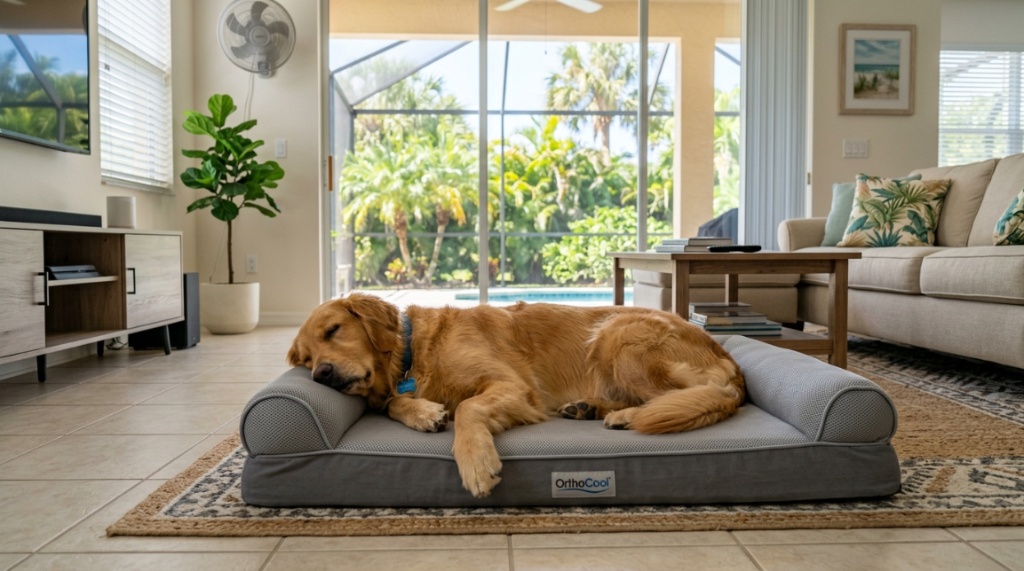
How to Keep Your Dog Cool with Orthopedic Beds in FL
Living in Florida means dealing with intense heat and humidity for a large part of the year. If your dog is a senior, suffers from joint pain, or simply loves lounging indoors, you know how quickly they can overheat. The challenge is finding a bed that offers both the joint support they need and the cooling relief they crave. You need a solution that addresses comfort and temperature control simultaneously. This guide explores how to choose the best cool orthopedic dog beds florida residents rely on, what features actually matter, and how to help your furry friend stay comfortable all year round.
Why Florida Heat Changes Your Dog Bed Choice
In Florida, a standard plush bed can trap body heat, turning what should be a comfortable resting spot into an uncomfortable, sweaty trap. Dogs don’t sweat like humans; they rely on panting and vasodilation in their paws to cool down. When they lie on a bed that retains heat, their body struggles to regulate temperature. This is especially dangerous for brachycephalic breeds (like Bulldogs and Pugs) and senior dogs with thicker coats.
Choosing a bed solely for orthopedic support ignores the environmental reality of your location. The ideal bed must actively work to dissipate heat while still providing the pressure-relieving support that orthopedic designs are known for. Without this dual function, you risk your dog avoiding the bed altogether, choosing the cool tile floor instead—which offers zero joint support.
The Difference Between “Cooling” and “Breathable”
Many manufacturers use these terms interchangeably, but they are not the same. A breathable bed allows air to circulate, which helps prevent moisture buildup. A cooling bed actively removes heat from the dog’s body. In Florida’s humidity, you need both. A bed with a breathable mesh cover but no cooling gel will still feel warm. Conversely, a gel bed with a non-breathable polyester cover will trap sweat against the skin. Look for beds that specify “cooling gel” or “phase change material” rather than just “air mesh.”
Key Features to Look For in a Cooling Orthopedic Bed
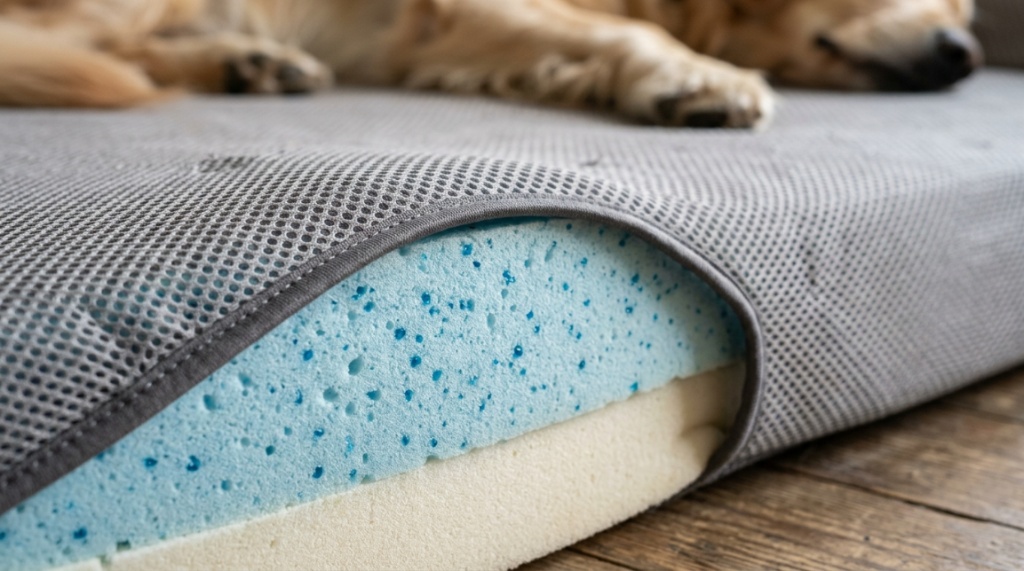
When shopping for a bed that must perform double duty, you cannot just pick the first memory foam option you see. You need to evaluate specific components that contribute to both temperature regulation and joint health. Here are the critical features to prioritize.
Gel-Infused Memory Foam
This is the gold standard for dual-purpose beds. The gel is embedded into the foam to draw heat away from your dog’s body. Unlike traditional memory foam, which conforms to the body and traps heat, gel-infused foam is designed to maintain a neutral temperature. The foam itself should be at least 3 to 4 inches thick to provide adequate joint support for medium to large breeds. If the foam is too thin, your dog will bottom out, negating the orthopedic benefits.
Cooling Gel Pads vs. Phase Change Material
Some beds include a removable cooling gel pad, while others use Phase Change Material (PCM). A gel pad is a physical pouch that feels cool to the touch. However, it can warm up after prolonged contact. PCM is a more advanced technology that absorbs, stores, and releases heat to maintain a constant temperature. For Florida, PCM is often superior because it actively regulates temperature rather than just feeling cold initially. However, PCM beds are typically more expensive.
Cover Material and Construction
The cover is your first line of defense against heat. Look for covers made from natural fibers like cotton or bamboo, or high-tech synthetics designed for moisture-wicking. Avoid heavy upholstery-grade fabrics. The cover should also be removable and machine washable. In Florida, mold and mildew are concerns; a washable cover prevents allergens and bacteria from building up in the humid climate.
Evaluating the Best Options for Florida Homes
With so many products on the market, it helps to categorize them by how they function. This makes it easier to match a bed to your dog’s specific needs and your home environment. The right choice depends on whether your dog runs hot, how much they weigh, and whether they are prone to chewing.
Elevated Beds with Orthopedic Inserts
These beds combine a raised mesh platform with a removable orthopedic pad. The elevation allows air to circulate underneath the bed, which is incredibly effective in hot weather. The mesh surface is breathable, and the orthopedic insert provides the necessary support. This is an excellent option for dogs who tend to overheat quickly, as airflow is maximized. The downside is that the mesh surface can sometimes be less cozy than plush fabrics, though many dogs prefer the “hammock” feel.
Solid Foam Beds with Cooling Covers
This is the most common type of orthopedic bed. It features a solid block of gel-infused memory foam with a cooling cover. These are excellent for dogs with severe arthritis because they provide a stable, flat surface that doesn’t sag. The cooling effect comes from the gel in the foam and the breathable cover. These beds are generally more durable than those with separate gel packs, as there are no tubes or pouches that can puncture.
Hybrid Beds with Removable Cooling Packs
These beds allow you to freeze a cooling insert and place it under the orthopedic foam. This provides intense, immediate cooling that lasts for several hours. This is ideal for the hottest summer days. However, they require planning ahead—you need to freeze the pack in advance. They also add bulk to the bed, which can be difficult to manage if you move the bed around the house frequently.
For a detailed breakdown of specific models and how they compare on durability and cooling efficiency, you can explore this resource on cool orthopedic dog beds florida to see which options align with your budget and your dog’s sleeping style.
Common Mistakes When Buying a Cooling Bed
Many pet owners make errors that lead to wasted money and an unhappy dog. Understanding these pitfalls can save you from a frustrating purchase. The most common mistake is assuming that all “cooling” beds work the same way.
- Ignoring the “Self-Cooling” Claim: Many beds claim to be self-cooling but only work if the room temperature is below the dog’s body temperature. In a hot Florida room, these beds will not cool effectively.
- Choosing Style Over Substance: A bed that looks like a couch may be aesthetically pleasing, but the high sides can trap heat. Opt for a flat or low-profile design for maximum cooling.
- Forgetting about Durability: Dogs dig and circle before lying down. A cooling gel layer that is not protected by a thick foam barrier can be punctured by claws. Ensure the cooling element is either deeply embedded or covered by a durable liner.
- Buying the Wrong Size: A bed that is too small forces the dog to curl up, reducing the surface area for heat dissipation. Always measure your dog from nose to tail base and add a few inches.
How to Extend the Life of Your Cooling Bed
Investing in a high-quality bed is only half the battle. To ensure it lasts through multiple Florida summers, you need to maintain it properly. Heat and humidity can degrade foam and encourage bacterial growth if not managed correctly.
Cleaning and Maintenance Tips
Always follow the manufacturer’s instructions, but a general rule is to wash the cover weekly in cold water. Do not use fabric softeners, as they can clog the pores of moisture-wicking fabrics. For the foam core, never submerge it in water. Instead, spot clean with a mild detergent and allow it to air dry completely in a shaded, well-ventilated area. Direct sunlight can break down the foam structure and cause it to yellow and crumble,
Managing high humidity and heat can sometimes trigger skin irritation or bacterial flare-ups, making regular grooming essential for your pet’s health; to learn more about soothing irritated skin, read our guide on how antiseptic antifungal dog shampoo helps treat skin infections.
Strategic Placement in Your Home
Where you place the bed matters just as much as the bed itself. Avoid placing the bed in direct sunlight, even if it is near a window. The sun will heat the bed up, overwhelming the cooling properties. Place the bed in a room with good air circulation, ideally near an air conditioning vent or a ceiling fan. If your home has tile or hardwood floors, the bed will stay cooler than if it is placed on thick carpet, which retains heat.
Frequently Asked Questions
Do cooling dog beds actually work in high humidity?
Yes, but the effectiveness depends on the technology. Gel-infused foam and Phase Change Materials work by absorbing heat from the dog’s body, which works regardless of humidity. However, evaporative cooling pads that rely on airflow will not work well in high humidity because the moisture cannot evaporate efficiently.
Can a cooling bed help with arthritis pain?
Yes. The orthopedic foam relieves pressure on joints, while the cooling effect reduces inflammation and swelling. Many pet owners find that a cool, supportive surface helps dogs with arthritis move more comfortably after resting.
Is it safe to leave a cooling gel bed in a hot car?
No. Never leave any pet bed in a hot car. The extreme heat can melt the foam, rupture the gel pack, and damage the structural integrity of the bed. It is also a safety hazard for your pet if they are in the vehicle.
How often should I replace my dog’s orthopedic bed?
Most high-quality orthopedic beds last between 2 to 3 years. If you notice the foam no longer springs back after your dog gets up, or if there is a visible indentation, it is time to replace it. A worn-out bed offers no joint support.
Conclusion
Keeping your dog cool and comfortable in Florida requires a strategic approach to their resting environment. The right bed is not a luxury; it is a necessity for their health and well-being. By focusing on gel-infused foam, breathable covers, and proper placement, you can create a haven for your dog that supports their joints and regulates their body temperature. Avoid the common pitfalls of ignoring humidity and prioritize function over style. With the right choice, your dog will have a comfortable, supportive place to rest, no matter how high the temperature climbs outside.